Food Culture
Tsukimi Dango

Image: yomi955 / Wikimedia Commons · CC BY 2.0
Tsukimi Dango
An offering shaped by season and locality.
Tsukimi dango are dumplings associated with Japanese moon-viewing observances, especially Jūgoya in the eighth month of the traditional calendar. They are offerings within a seasonal setting that may also include susuki grass, taro and other harvested produce. The familiar image of a pyramid of round white dumplings is only one presentation. Regional forms include Shizuoka’s flattened hesomochi, and household practice can differ in number, ingredients and arrangement. The important relationship is between food, the moon and the agricultural season, rather than one compulsory recipe. Museum displays and local food records help distinguish documented customs from modern decorative conventions or commercial seasonal sweets.
Moon
The calendar gives the observance its occasion.
Harvest
Produce connects it with the agricultural season.
Offering
Local foods and arrangements express the custom.
At a glance
- Japanese name
- 月見団子 (tsukimi dango)
- Principal occasion
- Jūgoya, traditional eighth month, fifteenth night
- Related observance
- Jūsanya, traditional ninth month, thirteenth night
- Offering context
- Moon viewing and seasonal produce
- Regional example
- Hesomochi in central and western Shizuoka
01
The dumplings belong to moon-viewing observance
Tsukimi means moon viewing. Jūgoya and Jūsanya are connected with particular dates in the traditional calendar, rather than one fixed modern September evening. Local practice may use different calendar arrangements. The dumplings are therefore best understood as part of an observance, not as a sweet whose identity depends on a single annual commercial release.
02
Dumplings share the display with plants and produce
Fujimi City’s Nanbata Castle Park presents moon-viewing offerings with susuki and harvested crops. Its account connects the names imomeigetsu and mamemeigetsu with taro and beans. The display makes visible the relationship between appreciating the moon and acknowledging the season’s produce.
- Dango
- Prepared dumplings placed as an offering.
- Susuki
- Grass used in the seasonal display.
- Harvested produce
- Taro and other crops connect the observance with agriculture.
03
Hesomochi shows why shape is regional
MAFF documents hesomochi as a moon-viewing dumpling from central and western Shizuoka. The dough is flattened and given a central indentation resembling a navel, the meaning of heso. Its record associates the custom with both Jūgoya and Jūsanya. This local example challenges the assumption that every authentic moon-viewing dumpling must be round and stacked in a pyramid.
04
Some customs connect offerings with neighbourhood life
Shizuoka City records local traditions in the Abe and Warashina river areas in which children receive or collect moon-viewing offerings. Such accounts describe a community’s customary arrangements. They should not be interpreted as permission to take food from an unfamiliar household or as a practice found everywhere in Japan.
05
Museums preserve the relationship between food and season
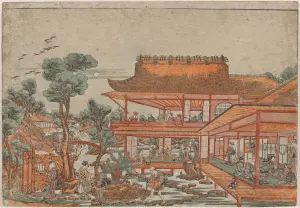
The Fuji City Museum’s moon-viewing activity combines making dumplings with harvesting taro for offerings. Nanbata Castle Park reconstructs displays in an old house. These examples show how food heritage can be taught through materials and setting, rather than through a recipe alone. Museum reconstructions should still be identified with the locality and period they interpret.
06
No single arrangement represents every household
Numbers, shapes and accompaniments vary. A particular museum display records one arrangement; it does not establish a rule for all Japan. Likewise, a modern dessert sold for the moon-viewing season may evoke the custom without reproducing a household offering. Tsukimi explains the wider observance, while Wagashi provides a broader context for Japanese sweets.
Sources
Last updated: