Film & Television
Jidaigeki
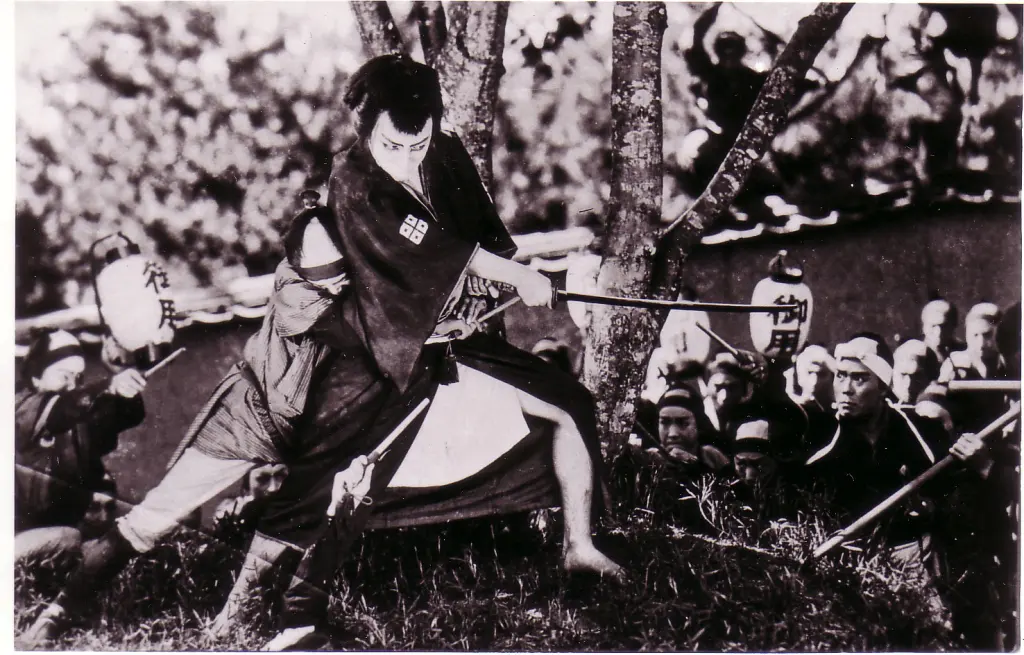
Image: Tsumasaburo Bando Productions / Wikimedia Commons · Public domain
Overview
The past becomes a dramatic world.
Jidaigeki (時代劇) means period drama and is a major tradition in Japanese film and television. It commonly presents the world before the Meiji Restoration through historical figures, imagined characters or adaptations of literary and theatrical works. Samurai action is one prominent strand, often called chanbara, but the wider field also includes family conflict, ordinary livelihoods, romance, comedy and supernatural stories. The tradition connects early cinema and Kyoto studio production with postwar filmmaking and television serials. A historical setting identifies the dramatic world; it does not guarantee documentary accuracy. Costume, performance and narrative are choices made by filmmakers working for particular audiences in their own time.
Locates the story in a past world.
May emphasise action, domestic life or fantasy.
Reflects the choices of a later filmmaking moment.
At a glance
- Japanese term
- 時代劇 · jidaigeki
- English sense
- Period drama
- Media
- Film and television
- Action strand
- Chanbara · swordplay films
- Frequent settings
- Premodern Japan, including the Edo period
- Related television tradition
- NHK Taiga drama
01
Period drama is broader than swordplay
The BFI distinguishes the broad period film from its swashbuckling forms. Chanbara places sword action at the centre, while other jidaigeki focus on work, status or relationships. The categories overlap rather than forming a rigid boundary. An Edo setting can support a domestic drama as readily as a duel, and a historical figure can appear in a work that invents dialogue and private motives.
Jidaigeki
- What it identifies
- A period setting and a broad dramatic tradition.
Chanbara
- What it identifies
- A strong emphasis on swordplay and physical action.
Taiga drama
- What it identifies
- An NHK television series tradition, not all period drama.
Historical evidence
- What it identifies
- Sources used to investigate the past, distinct from a screen narrative.
02
Early filmmakers transformed inherited stage material
Period stories drawn from legends and historical incidents were prominent in Japan’s early fiction cinema. The BFI traces a change from relatively direct recordings of stage action towards more dynamic editing, lighting and character psychology in the 1920s. The 1925 image from Orochi on this page belongs to that silent-era world. Performance traditions supplied material, but cinema developed its own means of organising movement and attention.
03
Kyoto became an important centre of production
The National Film Archive of Japan’s Shōchiku programme describes the establishment of Kyoto’s Shimogamo studio after the 1923 Great Kantō Earthquake and its place in period-film production. Studios, specialist performers and production networks helped sustain the field. This industrial setting belongs alongside an account of individual Japanese Film Directors; a genre requires continuing production work as well as memorable auteurs.
04
Postwar films used the past for different dramatic purposes
Rashomon (1950), Ugetsu (1953) and Seven Samurai (1954) offer contrasting routes through period cinema. Their concerns include conflicting testimony, supernatural encounter and collective defence. Akira Kurosawa also drew on Noh in Throne of Blood (1957). International recognition made some works especially visible, but those films do not exhaust the range of Japanese period production.
05
Television gave historical stories a serial form
NHK’s Taiga tradition began with Hana no Shōgai in 1963. NHK Enterprises describes the first production’s combination of literary adaptation and performers from theatre, kabuki and cinema. Serial television creates room for extended family and political narratives. It connects Japanese TV Drama with the older screen traditions of Japanese Cinema, while retaining its own broadcasting and production history.
06
A production reveals two historical settings
A jidaigeki depicts a past world and is also made in a particular later moment. Comparing its costumes, dialogue and plot with documents can clarify what is reconstructed, adapted or invented. The Sengoku Period supplies one recurring setting, but neither a televised campaign nor a fictional private conversation should be cited as direct evidence of what a historical person did or believed.
Sources
Last updated: