Shrines & Temples
Akasaka Hikawa Shrine
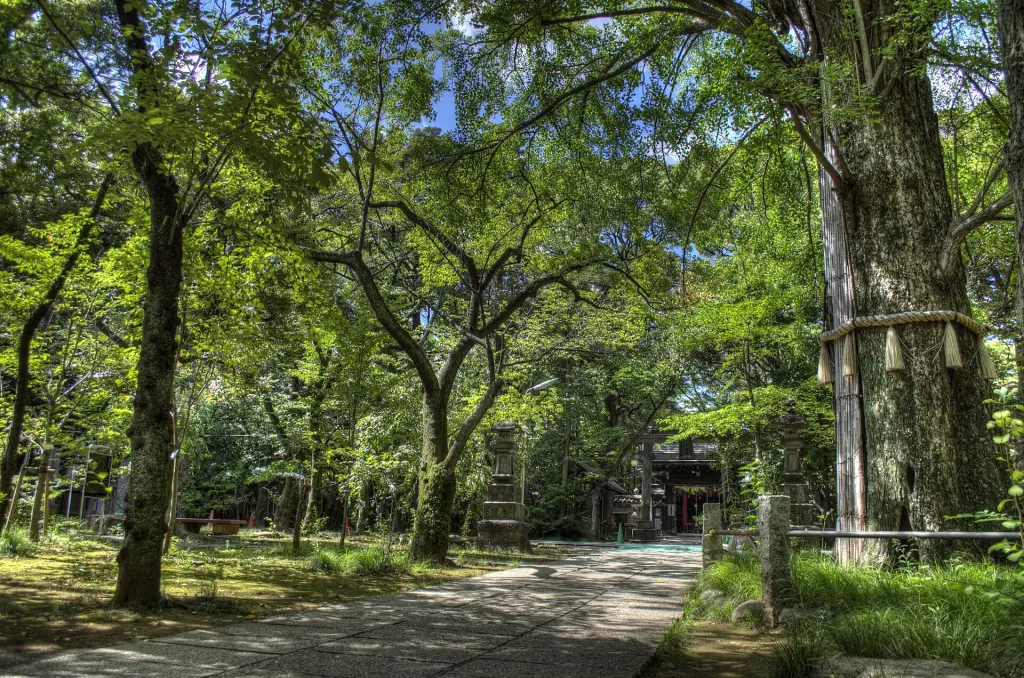
Image: Doricono / Wikimedia Commons · CC BY-SA 4.0
Overview
An Edo-period sanctuary within modern Tokyo.
Akasaka Hikawa Shrine (赤坂氷川神社) is a Shinto shrine in the Akasaka district of Minato, Tokyo. Its wooded precinct offers a setting for worship within a densely built part of the city, while its sanctuary preserves a substantial connection with the eighteenth century. Shrine tradition dates its foundation to 951; the present location is associated with the patronage of the eighth Tokugawa shogun, Yoshimune, and relocation in 1730. The shrine enshrines Susanoo, Kushiinadahime, and Ōnamuchi, also known as Ōkuninushi. Its history can be approached through several kinds of evidence: inherited foundation stories, Edo-period documents, surviving architecture, and the continuing use of its grounds for worship and festivals.
The shrine traces its beginnings to tenth-century Hitotsugi.
Yoshimune’s patronage shaped the present sanctuary.
Worship and festivals keep the precinct in active use.
At a glance
- Japanese name
- 赤坂氷川神社
- Location
- 6-10-12 Akasaka, Minato, Tokyo
- Foundation tradition
- 951; originally at Hitotsugi
- Present-site relocation
- 1730, under Tokugawa Yoshimune
- Enshrined deities
- Susanoo, Kushiinadahime, and Ōnamuchi
- Historic fabric
- Edo-period sanctuary and surviving precinct features
01
Foundation and evidence
According to the shrine’s account, the monk Renrin established the shrine at Hitotsugi after a dream in 951. This is its transmitted foundation history, distinct from the surviving documentation of the later Tokugawa period. Keeping those categories separate helps explain the site without dismissing its religious traditions or treating every early episode as an independently verified event.
02
Tokugawa patronage
Yoshimune commissioned the new shrine buildings in 1729, and the shrine moved to its present site in 1730. Records discussed by the Minato local history museum include regulations issued at the time of relocation. Their practical concerns, including a prohibition on graffiti, reveal the management of a lived public precinct alongside the more familiar story of shogunal patronage.
951
- Development
- Foundation at Hitotsugi
- Type of evidence
- Shrine tradition
1729–1730
- Development
- Construction and relocation under Yoshimune
- Type of evidence
- Shrine history and Edo-period records
1976
- Development
- Recognition of the sanctuary as a Tokyo cultural property
- Type of evidence
- Recorded heritage designation
03
Deities and worship
The principal deities are Susanoo, Kushiinadahime, and Ōnamuchi. The shrine presents worship in relation to protection and enmusubi, the formation of beneficial bonds. These are religious associations and devotional practices, rather than guarantees of a particular outcome. Visitors may encounter individual prayers, offerings, and ceremonies, all of which take place within an active shrine rather than a museum devoted solely to architecture.
04
Sanctuary and survival
The sanctuary’s survival is central to the shrine’s historical significance. The shrine records that its buildings endured the 1855 earthquake, the Great Kantō Earthquake of 1923, and wartime destruction in 1945. The sanctuary received designation as a Tokyo tangible cultural property in 1976. These layers of survival make the present buildings important evidence of Edo-period shrine architecture in central Tokyo.
05
Reading the precinct
Trees, stone guardians, lanterns, and subsidiary shrines give the grounds a history beyond the main building. The shrine identifies a pair of komainu dated 1675 near the main gate and explains that Shiawase Inari was formed in 1898 by combining four Inari shrines, with a name associated with Katsu Kaishū. The large ginkgo shown in the photograph is another prominent feature of the wooded precinct.
06
Festivals and visiting
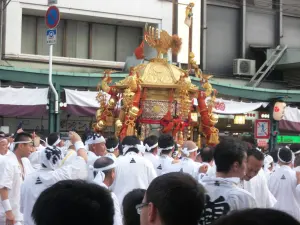
Festival traditions connect the shrine with the surrounding Akasaka neighbourhood. Portable shrines and restored festival-float elements make that relationship visible beyond the sanctuary itself. Programmes and access arrangements can change, so the shrine’s current notices are the appropriate source for a particular visit. On ordinary days, leave space for worshippers, follow posted photography guidance, and distinguish publicly accessible paths from areas reserved for ceremonies. The Japanese shrine etiquette guide explains common visiting conventions.
Sources
Last updated: