Popular Culture
Character Culture in Japan
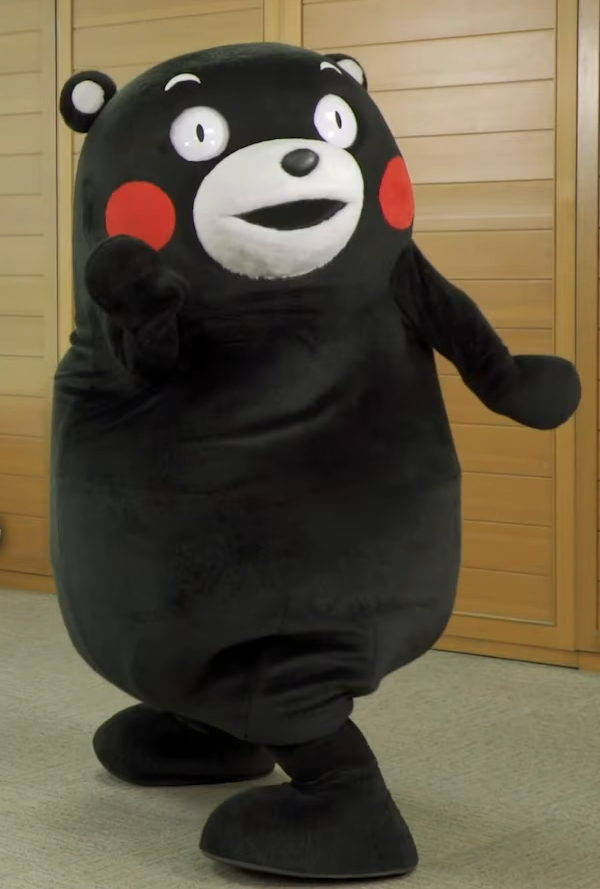
Image: Ministry of Land, Infrastructure, Transport and Tourism / Wikimedia Commons · CC BY 3.0
Overview
One recognisable identity can cross many media.
Character culture in Japan refers to the creation, circulation and everyday use of recognisable fictional figures across entertainment, products, public communication and local identity. Manga and anime characters are part of it, but so are figures developed for stationery, games, brands and regional promotion. A character may remain recognisable while moving between stories, objects, live appearances and digital media. The Japan Foundation’s exhibition JAPAN: Kingdom of Characters treated this wider relationship between characters and society as its central subject. Examples such as Hello Kitty, Pokémon and local mascots follow different histories and business models. Their prominence does not mean that all Japanese people share the same tastes or that every character is designed to be cute.
A distinctive figure can be recognised across settings.
Products, stories and appearances extend its reach.
People relate to characters in different ways.
At a glance
- Japanese terms
- キャラクター · kyarakutā; キャラ · kyara
- Contexts
- Stories, games, products, promotion and everyday objects
- Product-led example
- Hello Kitty, designed in 1974
- Game-led example
- Pokémon, first games released in Japan in 1996
- Regional category
- Yuru-kyara and local mascots
- Key distinction
- A character can circulate beyond one original story
01
A recognisable figure can travel between settings
The Japan Foundation’s travelling exhibition considered characters in a broad social frame, asking how familiar figures become popular and what they reveal about society. This approach includes uses beyond animation and comics. Looking at where a figure appears, who produces it and how people encounter it gives a clearer account than reducing the field to a single drawing style.
02
Characters can begin with products, games or places
Three examples show different starting points. Hello Kitty belongs to Sanrio’s character business; Pokémon grew from games into a larger media system; local mascots can represent a place or organisation. These pathways can later overlap.
Product design
- Example
- Hello Kitty
- How the identity travels
- A character appears across goods and branded experiences.
Game world
- Example
- Pokémon
- How the identity travels
- Games connect with cards, animation and other media.
Local identity
- Example
- Yuru-kyara
- How the identity travels
- A figure represents a locality or organisation in public appearances and communication.
03
Hello Kitty shows the strength of a product-led identity
Sanrio places Hello Kitty within a wider history of gift products, character brands, licensing and fan participation.
Sanrio dates Hello Kitty’s design to 1974 and describes Kitty White through a fictional profile, including family and interests. Such a profile gives a portable visual figure a more developed identity. Hello Kitty is useful here as one documented case, not as a definition of all Japanese characters. The character’s name and appearance also remain associated with a specific rights holder.
04
Pokémon links characters with play and a media network
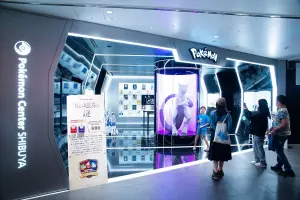
The Pokémon Company’s chronology begins with the Japanese releases of Pokémon Red and Green in 1996, followed by the trading card game and television animation. This history demonstrates a game-led route into multiple media. The characters’ roles are connected with collecting, trading and battling as well as with images on merchandise. The separate Pokémon entry follows that franchise in greater detail.
05
Local mascots connect public identity with performance
The University of Tokyo’s Japanese Media and Popular Culture project describes yuru-kyara as a distinct mascot field associated with places, organisations and public appearances. Costumed performance and media circulation can be as important as a printed design. An official mascot, an unofficial character and a commercial franchise are different relationships; popularity alone does not establish official status.
06
Affection, commerce and identity overlap without becoming identical
A character can carry personal affection, regional association and commercial value at the same time. The useful question is which relationship is documented in a particular case. Anime, Manga and Japanese Video Games explain related media fields, but none alone contains the entire character economy. Individual tastes and uses vary, and examples should not be turned into claims about a uniform national personality.
For specific projects connecting character identities with products, transport and events, see Character Collaborations.
Sources
Last updated: