Seasonal Customs
Shūbun no Hi
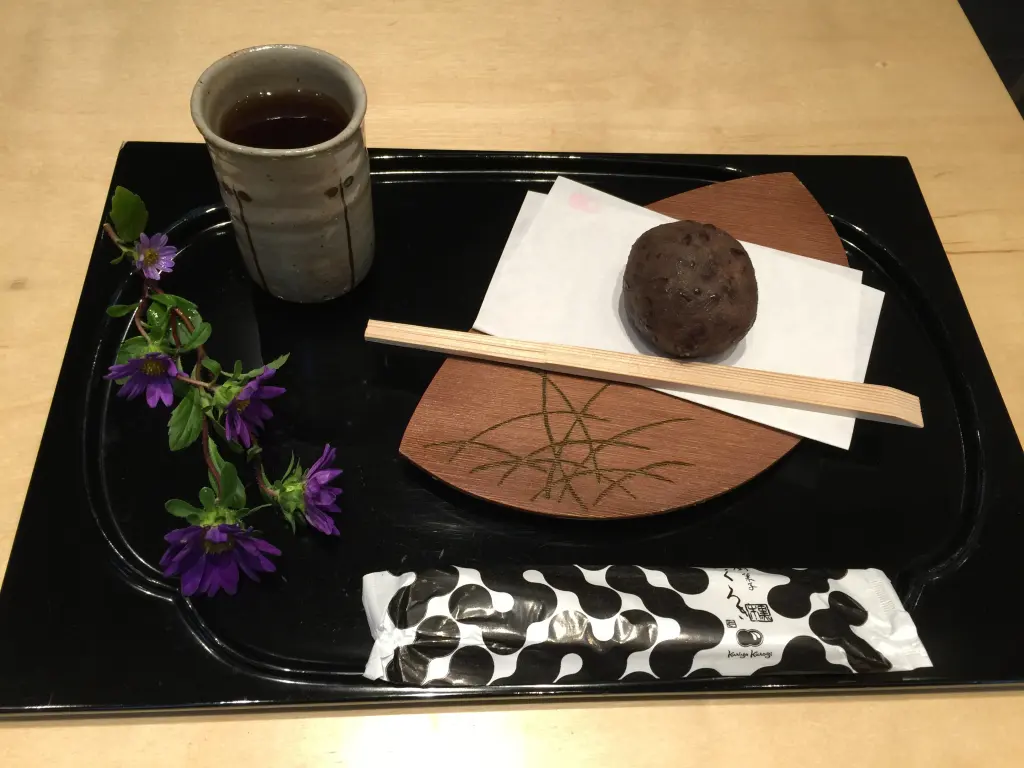
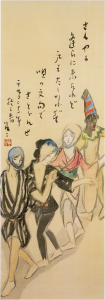
Image: 落ち穂拾いする人 / Wikimedia Commons · CC BY-SA 3.0
Overview
A solar date. A day of remembrance.
Shūbun no Hi (秋分の日), or Autumnal Equinox Day, is a Japanese national holiday on the date of the September equinox. Its civic purpose is to honour ancestors and remember people who have died. The day also falls at the centre of autumn Higan, a seven-day Buddhist observance associated with temple services, family graves and seasonal offerings. These are connected aspects of the calendar, but they have different histories and meanings. The astronomical date varies by year; it is not permanently fixed on 23 September. In 2026, Shūbun no Hi falls on Wednesday 23 September, within the autumn Higan period of 20–26 September.
The astronomical equinox.
The national day of remembrance.
The seven-day Buddhist observance.
At a glance
- Japanese name
- 秋分の日
- Romanisation
- Shūbun no Hi
- English name
- Autumnal Equinox Day
- Status
- Japanese national holiday since 1948
- Date in 2026
- Wednesday 23 September
- Related observance
- Middle day of autumn Higan
01
An equinox, a holiday and a season of remembrance
Shūbun names the autumn equinox; no hi means “day of”. The long ū distinguishes shūbun (秋分, autumn equinox) from shunbun (春分, spring equinox). English-language calendars usually call the holiday Autumnal Equinox Day.
Three labels help keep the subject clear. Shūbun is an astronomical and calendrical term. Shūbun no Hi is the public holiday. Autumn Higan is the surrounding Buddhist period. They meet on the same date without being interchangeable.
02
The date follows the Sun
At the September equinox, the Sun passes through the autumnal equinox point on the celestial sphere. Japan uses the corresponding date in Japan Standard Time. The equinox falls around 22 or 23 September in the present calendar; the exact day should be checked for the year concerned.
The holiday law specifies the equinox day rather than a permanent month-and-day combination. NAOJ calculates the calendar, and the following year’s holiday date is announced through the Calendar and Ephemeris published in the Official Gazette in February. Long-range astronomical predictions are useful, but they are distinct from the officially announced holiday calendar.
“Equal day and night” is an approximation. Sunrise and sunset are defined using the Sun’s upper edge, and atmospheric refraction makes the Sun visible when it is geometrically below the horizon. Consequently, the interval from sunrise to sunset is slightly longer than twelve hours at the equinox in Japan.
03
The modern holiday dates from 1948
Autumnal Equinox Day was one of the nine holidays established when Japan’s National Holidays Act was enacted in 1948. The Cabinet Office describes its purpose as honouring ancestors and remembering the dead. It was adopted as a seasonal counterpart to Vernal Equinox Day.
The modern public holiday should be distinguished from the much older Buddhist history of Higan. The New Jōdo Encyclopedia cites an 806 record of seven-day spring and autumn sutra recitations for Prince Sawara. That record concerns an early religious observance, not the creation of the present national holiday.
04
One holiday at the centre of seven days
Autumn Higan begins three days before the equinox and ends three days after it. The first day is higan no iri; the middle day is chūnichi; the final day is higan ake. The period’s dates therefore move with the equinox.
Higan evokes the “other shore” of Buddhist awakening. In Pure Land interpretations, the Sun setting approximately in the west connects the season with Amida Buddha’s western Pure Land. Temple teachings and household observances vary, so this is an important interpretation rather than a single rule followed by everyone.
- Sun20Higan begins
- Mon21Within Higan
- Tue22Within Higan
- Wed23Middle day
- Thu24Within Higan
- Fri25Within Higan
- Sat26Higan ends
Three days before · equinox · three days after. Holiday status is shown separately below.
05
Graves, temples and seasonal food
During Higan, families may visit ancestral graves, make offerings or attend temple services. Sōtō Zen’s account describes refreshing the household Buddhist altar, replacing flowers, taking offerings to a temple and visiting the family grave to express gratitude. These are customary practices rather than a compulsory programme for the public holiday.
Ohagi are sweet rice portions commonly covered with bean paste and associated with the autumn observance. Sōtō Zen describes ohagi or botamochi among the offerings made on the equinox. They can be shared as food as well as offered in remembrance. The photograph on this page shows ohagi served in Tokyo in 2015; it documents the food, not a holiday ceremony.
Visitors joining a family or temple observance should follow their host’s guidance. A religious service, a private grave visit and buying a seasonal sweet are different kinds of participation.
06
Related dates have different meanings
The equinox belongs to several overlapping calendars. Distinguishing them helps explain why a national holiday, a Buddhist observance and a run of days off may coincide.
Shūbun no Hi
- Calendar
- One September equinox date
- Main distinction
- National holiday associated with remembrance.
Autumn Higan
- Calendar
- Seven days centred on that date
- Main distinction
- Buddhist observance; the whole period is not seven public holidays.
Shunbun no Hi
- Calendar
- March equinox date
- Main distinction
- Spring national holiday with a civic emphasis on nature and living things.
Silver Week
- Calendar
- A variable September holiday grouping
- Main distinction
- An informal calendar label; a long break does not occur in the same form every year.
07
The September 2026 calendar
- Sat19Weekend
- Sun20Weekend
- Mon21Respect for the Aged Day
- Tue22Intervening holiday
- Wed23Shūbun no Hi
21 and 23 are named national holidays; 22 is the holiday between them. Weekend days depend on the working week.
In 2026, Respect for the Aged Day falls on Monday 21 September and Autumnal Equinox Day on Wednesday 23 September. Tuesday 22 September is also a holiday because it lies between two national holidays. NAOJ explicitly identifies this additional day in its 2026 calendar announcement.
Together with the weekend of 19–20 September, these dates form a five-day span for people whose regular days off include Saturday and Sunday. The pattern is often called Silver Week. Work schedules and opening hours still depend on the organisation; the calendar alone does not guarantee that every person has five consecutive days off.
For later years, consult the Cabinet Office holiday list and NAOJ’s published calendar. Avoid carrying the 2026 date or the five-day arrangement forward as a fixed annual rule.
Sources
- Cabinet Office, About each national holiday
- NAOJ, Can future equinox holiday dates be known?
- NAOJ, Are day and night equally long at the equinox?
- NAOJ, Announcement of the 2026 Calendar and Ephemeris
- Jōdo Shū Research Institute, New Jōdo Encyclopedia: Higan-e
- Sōtō Zen, Calendar of events: Equinox Ceremony
- NAOJ, September 2026 sky and calendar
Last updated: