other-martial-arts
Kimarite
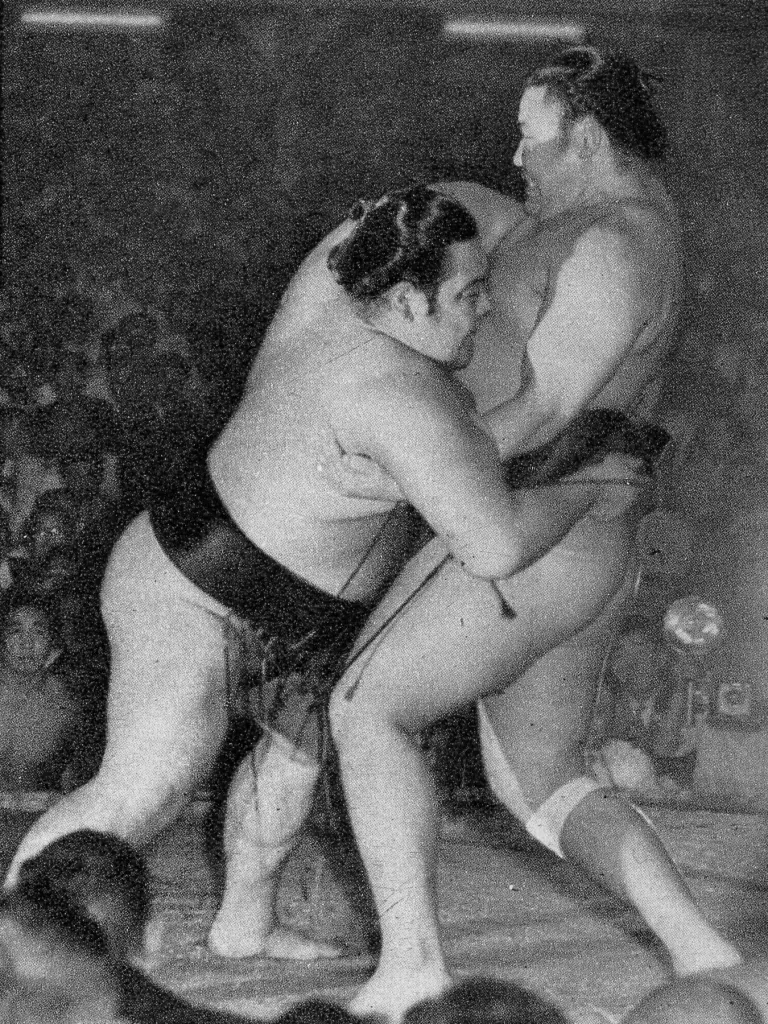
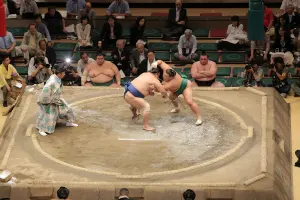
Image: Unknown photographer / Wikimedia Commons; originally published by The Asahi Shimbun Company · Public domain
Overview
One recorded finish. Six technique families.
Kimarite describes the decisive result of a sumo bout. The 82 techniques and five non-technique outcomes are separate categories.
Basic · 基本技 7
Throws · 投げ手 13
Trips · 掛け手 18
Backward body drops · 反り手 6
Twists · 捻り手 19
Special · 特殊技 19
7 + 13 + 18 + 6 + 19 + 19 = 82. The five non-technique outcomes are listed separately below.
This overview
Understand categories, recording and common distinctions.
Technique Directory →
Browse the complete reference and find a name.
Individual technique pages
Follow a representative example above for its specific mechanics and distinctions.
At a glance
- Japanese
- 決まり手
- Romanization
- Kimarite
- Meaning
- Official winning technique
- Recognized techniques
- 82
- Non-technique outcomes
- Five
- Recording authority
- Japan Sumo Association
Context
Kimarite are the official labels used to record how a sumo bout is won. The Japan Sumo Association recognises 82 winning techniques, grouped into families such as pushing and thrusting, throws, trips, twists, rear-body drops, and special techniques, together with five non-technique winning outcomes. Familiar labels such as yorikiri and oshidashi describe broad mechanics, but they are not merely colourful move names: judges select one result for the official record immediately after a bout. The system provides a shared vocabulary for commentary, statistics, and study. It does not prescribe a closed syllabus that every wrestler learns in isolation, and the visible finish may depend on grips, balance, foot placement, pressure, and earlier exchanges.
Definition and recording
A bout ends when a wrestler touches the ground with anything other than the soles of the feet or steps outside the ring, subject to the judges’ decision. Once the winner is determined, the decisive action is announced and entered in the official record as a kimarite. The term identifies the recorded finish, not every technique or tactical action that occurred during the bout.
Official classification
The Japan Sumo Association groups its 82 recognised techniques into six families: basic techniques, throws, trips, backward body drops, twists and special techniques. The classification map above shows their counts and representative examples. Five non-technique outcomes form a separate list; absence and disqualification are not members of that five-item list.
Common techniques
Yorikiri is a frontal force-out while maintaining a grip on the opponent’s belt or body; oshidashi is a frontal push-out without such a grip. Hatakikomi is a slap-down, uwatenage an overarm throw, and shitatenage an underarm throw. These translations are practical approximations. Official identification depends on body position and the decisive action, not simply on where the loser lands.
| Finish | What distinguishes it | Explore |
|---|---|---|
| Yorikiri | Frontal force-out with body or belt control. | Yorikiri |
| Oshidashi | Frontal push-out without that grip. | Oshidashi |
| Uwatenage | Throw using an outside / overarm belt grip. | Uwatenage |
| Hatakikomi | Slap-down classified among special techniques. | Hatakikomi |
Grips, balance, and footwork
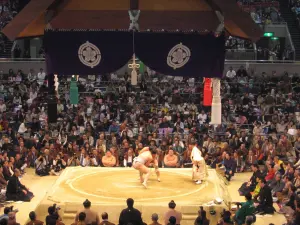
Many finishes arise from control established earlier in the bout. A belt grip can enable force-outs and throws; lateral movement can create a thrust-down or pull-down; and an attempted attack may expose a leg or shift the center of gravity. Studying kimarite therefore works best when paired with the opening charge, changes of grip, and movement across the dohyō.
Judging and ambiguity
Fast finishes can fit more than one everyday description. Ringside judges may confer about the winner, while the official technique is assigned according to established distinctions. Broadcast replays make close decisions easier to examine, but camera angles can still hide a grip or first contact. The recorded label is authoritative for results and statistics even when viewers debate the mechanics.
Standardization
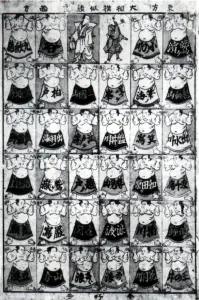
The vocabulary has changed over time as professional sumo formalized its records. A major revision in January 2001 added twelve techniques to the recognized list, bringing the total to 82. Standardization supports comparison across tournaments, but historical sources may use different names, group actions differently, or provide less precise bout data.
Non-technique outcomes
The five non-technique outcomes are isamiashi (forward step-out), koshikudake (inadvertent collapse), tsukite (hand touching down), tsukihiza (knee touching down) and fumidashi (rear step-out). They describe a loss without one of the 82 winning techniques being applied as the decisive action. A default win by absence is a separate result.
How to read kimarite statistics
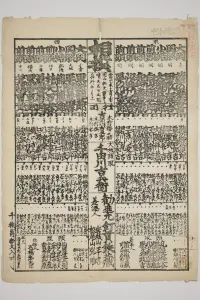
Frequency tables reveal common finishes and stylistic tendencies, but they also reflect body types, injuries, opponents, rank, and historical changes in competition. A rare kimarite is not automatically more difficult or more valuable than a common one. Results should be read alongside the banzuke, tournament context, and the changing sumo ranks of the wrestlers involved.
Sources
Last updated: