Seasonal Customs
Hanabi — Japanese Fireworks
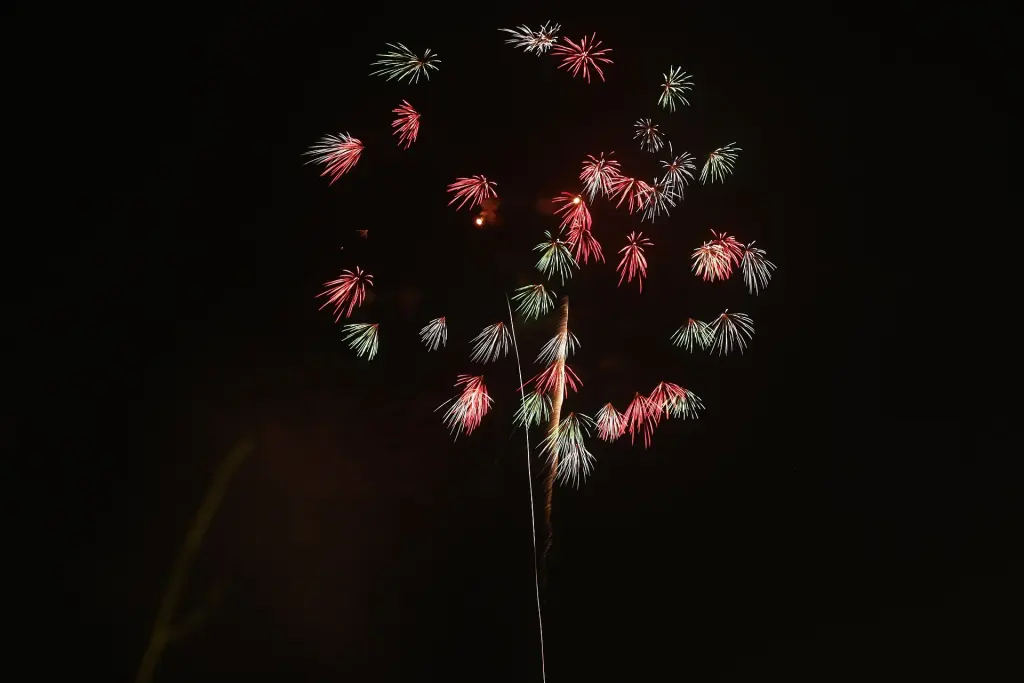
Image: Pcs34560 / Wikimedia Commons · Public domain
Hanabi (花火, literally “flower fire”) is the ordinary Japanese word for fireworks and also evokes a distinctive culture of public displays, local festivals, and small handheld fireworks. Gunpowder technologies arrived from abroad, but fireworks developed particular forms in early modern Japan, especially in the urban entertainment culture of Edo. Riverbank displays, round aerial shells, named pattern types, sponsorship, memorial dedications, and the shouted names of historic pyrotechnic houses all became part of the experience. Hanabi are strongly associated with summer evenings, yukata, food stalls, and matsuri, yet the calendar is broader: major competitions and community displays can take place from spring into autumn. The Katakai festival in Niigata, built around dedicated fireworks, is a prominent September example.
Overview
| Japanese name | 花火 |
|---|---|
| Romanization | Hanabi |
| Literal sense | Flower fire |
| Common settings | Riverbanks, lakesides, parks, shrine festivals, and local competitions |
| Major forms | Aerial shells, rapid-fire starmines, set pieces, handheld fireworks, and senkō-hanabi |
| Strongest seasonal association | Summer, with important displays extending into early autumn |
Name and scope
The characters 花 and 火 mean “flower” and “fire.” The name can refer to fireworks generally, from large public displays to small products used by families. Hanabi taikai (花火大会) means a large fireworks display or festival, while senkō-hanabi names a delicate handheld sparkler with its own visual sequence.
Not every fireworks event is a matsuri in a narrow religious sense. Some are shrine offerings, some are municipal festivals or competitions, and others are commercial or commemorative spectacles. The shared vocabulary should not erase differences in organizer, ritual purpose, scale, or local history.
Arrival and early modern development
Fireworks emerged from imported gunpowder knowledge. Records cited by the Sumida Heritage Museum place early Japanese encounters with fireworks from the late medieval into the early Edo period, including a display seen by Tokugawa Ieyasu. The precise story of a single “first” Japanese firework varies with the kind of device and source being discussed.
During the relative peace of the Edo period, fire techniques used for signals and weapons were also redirected toward entertainment. Artisans developed compositions, cases, fuses, and display methods within the constraints of black powder. This was not a sealed national tradition: imported knowledge, domestic experimentation, regulation, and urban demand interacted continuously.
Ryōgoku, river cooling, and the Sumida
The opening of the Ryōgoku river season in 1733 is a central point in the history of Edo fireworks. Sumida City’s museum links the event to prayers for victims of famine and epidemic and to the expulsion of misfortune. Fireworks on the first night became part of a wider culture of cooling off along the river, boats, food, entertainment, and crowded views from the banks and bridges.
The tradition continued with interruptions into the twentieth century and was revived under the name Sumidagawa Fireworks Festival in 1978. Prints and guidebooks helped make Ryōgoku fireworks a durable image of Edo and Tokyo, but Sumida is one important lineage rather than the origin of every regional Japanese display.
Shells, colour, and pattern
Japanese aerial displays are especially associated with spherical shells designed to open into balanced circles. Warimono shells break so that burning “stars” spread into a planned form; chrysanthemum and peony effects differ in the trails and appearance of those stars. A starmine is a rapid, coordinated sequence rather than a single shell type.
Edo-period fireworks relied mainly on black-powder effects and had a restricted palette. Sumida museum research identifies the late nineteenth-century adoption of chemical colourants as a major change, enabling brighter reds, greens, and whites while established shell construction continued to develop. Size alone is not the only measure of craft: timing, symmetry, colour change, layering, and the relationship between successive bursts are also central.
Festival settings and seasonality
Large hanabi taikai are strongly associated with humid summer evenings and waterside spaces, where open sightlines and reflections intensify the display. Audiences may reserve viewing areas, arrive by rail, eat festival foods, and wear yukata. The sensory field includes crowd movement, announcements, pauses, smoke, echoes, and the delayed arrival of sound after distant light.
Fireworks also accompany Obon, shrine festivals, civic anniversaries, disaster remembrance, and regional competitions. Autumn events such as Katakai show why “summer tradition” is a useful association but an incomplete calendar definition.
Dedication, memorial, and sponsorship
Many displays are financed shell by shell or program by program by households, neighborhood groups, companies, and public organizers. Announcements may identify a sponsor or explain a dedication for a birth, marriage, recovery, memorial, anniversary, or community wish. The firework is therefore both a visual object and a public message.
At Katakai in Ojiya, Niigata Prefecture, the festival is known as hōnō ō-enka—great dedicated fireworks—and is connected with Asahara Shrine. Large shells, including the four-shaku class, have made the event famous, but its cultural structure rests on local dedication and collective participation rather than on diameter alone.
Handheld fireworks and senkō-hanabi
Hanabi culture also exists at a domestic scale. Families and friends use handheld fountains, sparklers, and other small fireworks in permitted outdoor places. The experience is quieter and more participatory than a municipal display and often forms part of childhood and summer memory.
Senkō-hanabi produce a changing cluster of sparks from a small paper or plant-fibre stem. Scientific research has examined the droplet and branching behaviour that creates the familiar stages. Their cultural reputation for delicacy and brevity should not be used to claim that all Japanese aesthetics reduce to transience; it is one form among many, including loud, long, and technically massive displays.
Katakai in September 2026
Ojiya City scheduled the 2026 Katakai Matsuri and its dedicated fireworks for Friday 11 and Saturday 12 September. The timing places a major hanabi tradition at the transition from summer into early autumn and helps explain the day’s renewed search interest.
A dated festival announcement is not a permanent definition of hanabi. What endures is the annual relationship among local organizers, shrine dedication, pyrotechnic craft, sponsors, visitors, and the calendar. Future schedules should always be checked with the municipality or festival organizer.
Viewing, safety, and common boundaries
Public displays depend on controlled launch zones, trained operators, weather decisions, transport planning, and local crowd rules. Spectators should use official viewing guidance rather than treating riverbanks, roads, or private land as unrestricted space. Handheld products likewise require the instructions and legal setting appropriate to the locality.
Hanabi should not be treated as a single unchanged national ritual. Technology, colour, scale, finance, regulation, and event meanings have changed, while regional festivals preserve different combinations of religious offering, civic spectacle, competition, tourism, and personal commemoration.
Sources
- 隅田川と花火 — Sumida Heritage Museum, Sumida City.
- 1739年フランスの花火と隅田川花火 — Sumida Heritage Museum, Sumida City.
- How to Enjoy Summer in Japan: Fire Flowers Light Up Japan’s Summers — Government of Japan.
- Summer Traditions in Japan: Japanese Fireworks — Government of Japan.
- Japanese Fireworks (Hanabi): The Ephemeral Nature and Symbolism — Macquarie University.
- Forefront of Senko-Hanabi Research — Journal of the Combustion Society of Japan.
- 片貝まつり — Ojiya City.
Last updated: