Manga
Manga
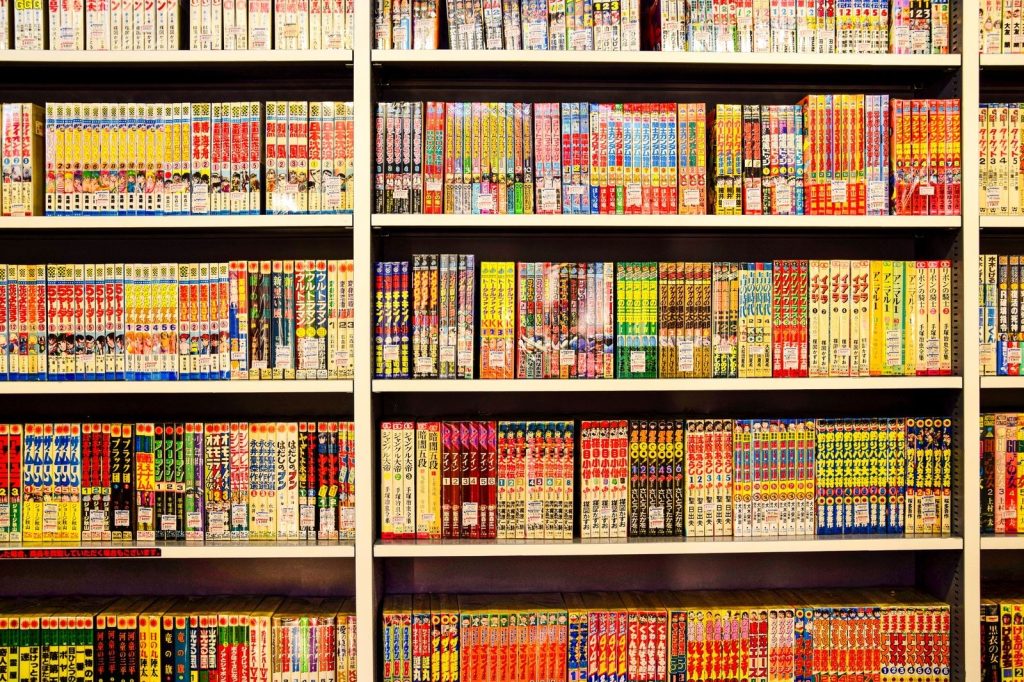
Image: AXP Photography / Pexels · Pexels License
Pages · Publishing · Readers
A medium shaped by its publishing life.
Manga (漫画) encompasses comics and graphic narratives across many styles, subjects and audiences. Read the pages, the publication format and the readership category as different parts of the same work’s context.
Follow the work into publication
- Create the pagesAn author or team develops the story, rough layout (name), drawing and lettering, with editorial input where applicable.
- Publish an instalmentMagazines and digital services present chapters or short works within a publication schedule.
- Collect & issueTankōbon volumes may collect chapters, sometimes with revisions and additional material.
At a glance
- Medium
- Comics and graphic narrative
- Publication
- Magazines, collected volumes and digital editions
- Reading direction
- Usually right to left in Japanese paged editions
- Classification
- Format, readership and genre answer different questions
Separate format, readership and genre
| Question | Examples | What the label tells you |
|---|---|---|
| What is the medium? | Manga / comics | Graphic narrative; it does not determine an audience or a drawing style. |
| Where or how is it published? | Magazine, tankōbon, digital service | Publication venue or format; a digital edition may use pages or scrolling. |
| How is it positioned for readers? | Shōnen, shōjo, seinen, josei | Broad publishing and readership categories. They do not restrict who can read a work. |
| What kind of story is it? | Sports, romance, horror, science fiction | Themes and narrative conventions. These can cross readership categories. |
Publishing categories such as shōnen, shōjo, seinen, and josei originally indicate target readership and magazine market more than strict subject matter. A shōnen magazine can carry romance or comedy; a shōjo work can be science fiction or horror. Genres cross demographic labels, and readers routinely move beyond the category attached to a publication.
Manga also includes specialist and practical works: cooking, business, history, travel, science, and biographies may all use the form. The combination of images and text makes it useful for explaining processes as well as telling stories.
Identify the work and the edition
Title & authorship
Record the credited creator or creative team. A shared franchise title is not enough to identify a particular manga.
Venue & instalment
Record the magazine or service, issue or chapter, and publication date.
Volume & version
Record publisher, imprint, volume, date, language and translator where relevant; use an ISBN when present.
Identify the work and the edition separately. Record the title and creator roles, then note the original serialization and magazine issue when known, the publisher and imprint, volume and edition number, publication date, ISBN, language, and translator for an overseas edition. A magazine instalment, a Japanese collected volume, a revised or deluxe edition, and a translated volume may present related content but are not the same bibliographic object.
This distinction matters when dates, page order, colour pages, chapter boundaries, bonus material, or wording differ. The National Diet Library’s manga research guide explains how to search books, magazines, translations, and magazine tables of contents, while the Media Arts Database ontology treats manga books, magazine issues, series, magazines, and publication histories as separate classes. Cite the exact object examined instead of assigning every feature of one edition to the work as a whole. If the property was adapted, identify the specific anime production independently rather than treating the two media as interchangeable.
The grammar of the page
Lettering contributes to page grammar as well as recording dialogue. Katakana can mark sound effects, emphasis, foreign vocabulary, accents, or nonhuman voices, while hiragana and kanji create different visual and linguistic cues; these choices vary by work and genre.
Manga directs the eye through panels, page turns, framing, lettering, and the empty spaces called gutters. A close-up can slow a moment; a narrow vertical panel can create speed; a silent sequence can make the reader supply time and emotion. Symbols such as motion lines, simplified faces, and patterned backgrounds communicate sensations that are not literally visible.
Most Japanese books are read from right to left, so translated editions often retain the original page order. Speech balloons and sound effects are part of the composition. Japanese onomatopoeia can describe not only loud noises but also atmosphere, texture, silence, and emotional states.
Terminology
- Koma: a panel.
- Fukidashi: a speech balloon.
- Tankōbon: a collected book edition of chapters or works.
- Name: a rough storyboard or page plan used during creation.
- Mangaka: a manga artist or creator.
- Dōjinshi: independently or fan-published work.
Manga is both popular entertainment and a record of how people imagine ordinary life, history, technology, identity, and change. Its strength lies in the collaboration between a fixed page and an active reader: the drawings provide moments, and the reader creates movement and time between them.
Digital manga and new formats
Phones and online platforms have changed distribution, colour use, page dimensions, and the relationship between artists and readers. Some digital works still imitate printed pages; others use vertical scrolling or short episodic releases. Self-published manga, known as dōjinshi, circulates through conventions and online marketplaces, supporting experimentation and fan communities outside the largest publishers.
Name and etymology
The characters 漫画 combine ideas often translated as “whimsical” or “unrestrained” pictures. The word has been used in different ways across time. Today, in Japan, manga can mean comics in general, including works from outside the country. Internationally, it usually refers to comics made in Japan or works strongly connected to Japanese visual conventions.
Definitions remain flexible. A newspaper strip, a phone-first vertical comic, an autobiographical essay, and a multi-volume fantasy series may all be called manga even though their formats and audiences are very different.
Before modern manga
Katsushika Hokusai‘s Hokusai Manga assembled sketches and drawing models in book form. Its title is historically important, but the volumes were not direct ancestors of modern panel-based comics.
Japan has a long history of narrative and humorous images: painted scrolls, illustrated books, popular prints, and caricatures all brought pictures and words together. It is tempting to draw a straight line from every early work to modern comics, but the history is more complex. These forms belong to their own contexts while also showing that visual sequencing, exaggeration, and popular image culture were already familiar.
The Kyoto International Manga Museum highlights Edo-period giga and Toba-e books as important material for studying manga’s foundations. Some examples include devices resembling panels and speech balloons. During the Meiji period, new printing technologies, newspapers, and satirical magazines created different ways for images to comment on public life. Charles Wirgman’s The Japan Punch, launched in Yokohama in 1862, influenced the language used for modern cartoons and comic magazines.
Print culture and the modern industry
The expanding book and image market rested partly on mature Japanese woodblock printing, whose publisher-led production networks could reproduce text and pictures for large urban audiences.
The modern publishing system connects serial manga magazines with collected tankobon editions. These formats shape pacing, chapter length, editorial work, and the way readers encounter a series. Institutions such as the Kyoto International Manga Museum preserve published volumes and historical materials while making the medium available for research and public reading.
In the twentieth century, mass publishing made serialized comics a regular part of magazines for children and adults. After the Second World War, inexpensive entertainment, rental-book networks, and expanding weekly and monthly magazines helped create a large reading public. Artists such as Tezuka Osamu developed influential approaches to pacing, cinematic framing, and long-form narrative, but modern manga was shaped by many artists, editors, publishers, and readerships rather than one person alone.
A successful series may first appear chapter by chapter in a magazine or digital platform. Chapters are later collected into a book called a tankōbon. Editors work closely with artists on story structure, deadlines, and reader response. Assistants may help with backgrounds, tones, reference, or production, although working methods vary greatly.
From manga to anime—and back again
Contemporary media mix also includes VTuber culture in Japan. Virtual performers may expand into manga, animation, music, games, and merchandise, while fan artists and clip editors circulate their characters beyond the original stream.
Tokyo Game Show is one venue where these cross-media relationships become public through game announcements, licensed adaptations, stages, merchandise, and fan participation, while games remain the event’s primary medium.
Cross-media circulation also includes games. A franchise such as The Legend of Zelda originates in interactive software while supporting later print and screen adaptations.
Many anime adapt manga, but the two media are not interchangeable. A manga artist controls the page and the reader’s pace. Animation adds duration, movement, colour, sound, performers, and a large production team. Adaptation requires decisions about what to cut, expand, reorder, or redesign. Anime can also begin as an original project and later produce manga versions.
Original art and preservation
A printed page is the final public form, but the production process generates manuscripts, rough storyboards, notes, tools, and digital files. These materials are fragile and difficult to preserve. The Kyoto International Manga Museum and Kyoto Seika University’s International Manga Research Center collect historical publications and develop high-quality reproductions called Genga’(Dash), allowing original artwork to be studied and exhibited with less risk of fading or damage.
Manga culture in Japan
Manga cafes provide time-based, on-site access to large comic collections and show how reading culture intersects with commercial space, internet access, and urban everyday life.
Bookshops often devote entire floors to manga, arranged by publisher, demographic, genre, or release date. Manga cafés combine large reading libraries with private seats and internet access. Specialty districts such as Nakano Broadway and parts of Akihabara reveal collecting and fan culture, while libraries and museums place works in historical context.
For a first museum visit, the Kyoto International Manga Museum offers a “Wall of Manga,” historical displays, workshops, and research collections. In Tokyo, exhibitions frequently focus on original manuscripts or individual artists; schedules change, so check the venue before visiting.
Related entries
Sources
- National Diet Library’s manga research guide
- Media Arts Database ontology
- Japanese Journal of Human Geography, Manga Publishing and Collected Volumes
- Kyoto International Manga Museum — Permanent exhibition and research collections
- Kyoto International Manga Museum — Edo giga, Meiji magazines, and original-art preservation
- Kyoto International Manga Museum — Manga-making workshops
Last updated: