Buddhism
Higan
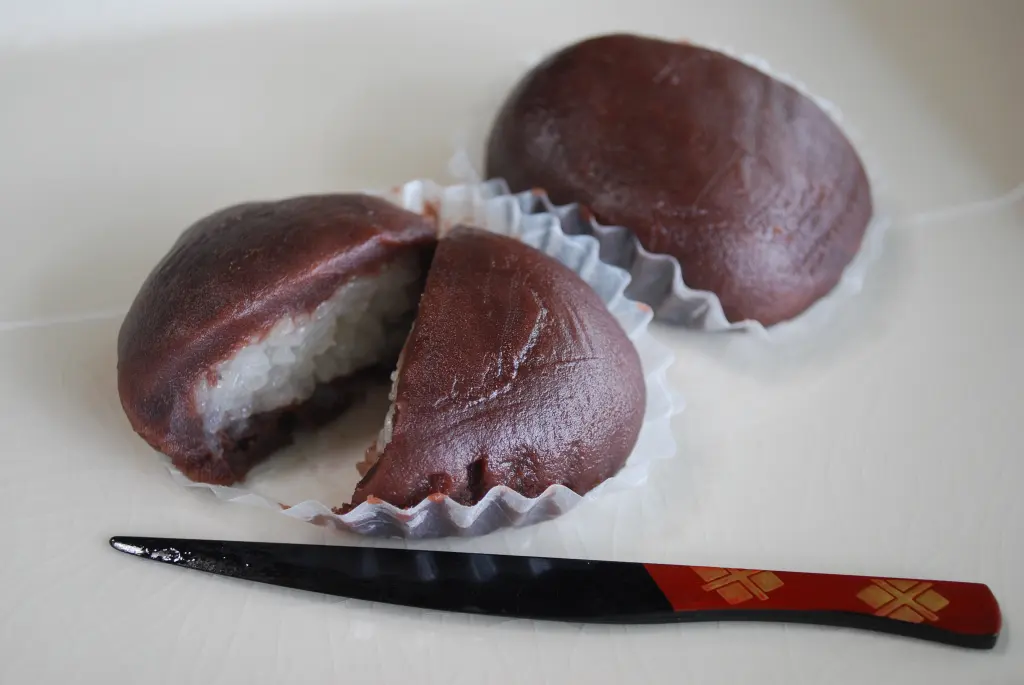
Image: katoisi / Wikimedia Commons · CC BY-SA 3.0
Higan (彼岸), often called o-Higan, is a Japanese Buddhist observance held twice a year around the spring and autumn equinoxes. Each period lasts seven days: the equinox is the middle day, with three days before and three after. The word literally evokes the “other shore,” a Buddhist image for awakening or liberation beyond the deluded “near shore” of ordinary existence. In Japan, this doctrinal language became connected with temple services, remembrance of the dead, family grave visits, and seasonal foods. Practices differ among Buddhist schools, temples, regions, and households, so Higan is not one uniform festival. The equinox dates are national holidays, but the seven-day Higan periods are religious and customary observances rather than seven public holidays.
Overview
| Japanese | 彼岸; commonly お彼岸 |
|---|---|
| Romanization | Higan; o-Higan |
| Classification | Japanese Buddhist equinoctial observance |
| Timing | Seven days centred on each spring and autumn equinox |
| Middle day | Higan no chūnichi, the equinox itself |
| Common practices | Temple services, Buddhist reflection, grave visits, cleaning, flowers, incense, and food offerings |
| 2026 autumn period | September 20–26; Autumnal Equinox Day is September 23 |
Name and religious meaning
Higan means the far or other shore. Buddhist explanation contrasts it with shigan, “this shore,” the world marked by delusion and suffering. The metaphor is associated with crossing toward awakening, nirvana, or a Pure Land. Japanese explanations also connect it with pāramitā, rendered in Sino-Japanese Buddhist vocabulary as haramitsu or “perfection.”
The calendar observance and the doctrinal metaphor overlap but are not identical. Higan can mean the spiritual goal, while Higan-e names services held during the equinoctial period. The polite everyday form o-Higan commonly refers to the period and its household or temple customs.
The seven-day calendar
Spring Higan and autumn Higan each begin three days before an equinox and end three days after it. The first day is higan no iri, the equinox is chūnichi, and the final day is higan ake. Because astronomical equinox dates vary, the corresponding calendar dates must be checked each year.
Japan's Cabinet Office lists Vernal Equinox Day and Autumnal Equinox Day as national holidays, not the whole Higan period. For autumn 2026, the National Astronomical Observatory of Japan records Higan beginning on September 20 and the autumn equinox on September 23, making the seven-day period September 20–26.
Early history in Japan
The New Jōdo Encyclopedia identifies Higan-e as a Japanese development rather than a rite transmitted unchanged from India or China. A record for 806 describes an order for monks at provincial temples to recite the Diamond Perfection of Wisdom Sutra for seven days in spring and autumn on behalf of Prince Sawara, posthumously known as Emperor Sudō.
This record establishes an early court-sponsored observance, not a complete origin story for every later custom. Equinoctial attention to the sun, agricultural seasons, local memorial practices, and Buddhist teaching were combined differently over time. Grave visiting and household observance developed within those later histories.
Pure Land Buddhism and the western sky
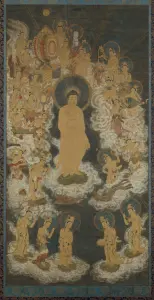
At the equinox, the sun sets approximately due west. Japanese Pure Land traditions associated the western direction with Amida Buddha's Pure Land, giving the seasonal sky a powerful setting for contemplation, prayer, and imagery. The New Jōdo Encyclopedia notes that Higan observance grew as belief in Amida's western Pure Land spread from the Heian period onward.
Higan is nevertheless broader than one Pure Land school. Temples of several Japanese Buddhist traditions hold Higan-e services and explain the period through their own teachings. The western-sunset association should therefore be presented as an important historical interpretation, not a universal ritual rule.
Temples, graves, and households
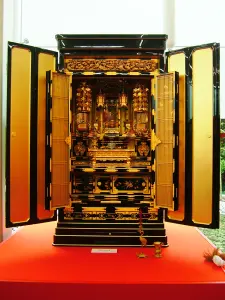
Contemporary observance may include attending a temple service, listening to a sermon, chanting, making offerings, cleaning a family grave, and presenting flowers, incense, water, or food. Some households also refresh a Buddhist altar. Participation ranges from formal religious practice to a seasonal family visit.
These actions are not compulsory or identical across Japan. A family without a nearby grave, a person living far from their home region, or a temple with a different calendar may observe in another way or not at all. Descriptions should distinguish common patterns from requirements claimed by a particular school or locality.
The six perfections
Buddhist explanations often connect the six days surrounding chūnichi with the six perfections: generosity, ethical conduct, patience, effort, meditation, and wisdom. This gives the week an active ethical dimension rather than reducing it to ancestor memorial alone.
The neat assignment of one perfection to each of six days is a modern teaching framework used in some explanations. It is useful for understanding the period's practice-oriented meaning, but it should not be projected backward as the single historical structure of all Higan observance.
Botamochi and ohagi
Sweet rice portions covered with red-bean paste are familiar Higan foods. They are often called botamochi in spring and ohagi in autumn, names associated with peonies and bush clover. Families may eat them or present them as offerings, while shops sell many regional and modern variations.
The naming distinction is customary rather than absolute. Ingredients, texture, shape, bean-paste style, and terminology vary. The food is strongly associated with Higan, but eating it does not by itself define religious participation.
Higan, Obon, and the national holidays
In years when Respect for the Aged Day, a bridge holiday, the equinox, and a weekend align, the calendar creates Silver Week. This informal leisure-period name does not extend Higan’s seven-day religious meaning.
Higan and Obon both involve Buddhist memorial practices and family graves, but their calendars and ritual images differ. Obon is commonly associated with welcoming ancestral spirits and sending them off during a summer observance. Higan is organized around the two equinoxes and the metaphor of crossing to the other shore.
The public holidays also require distinction. Postwar law defines Vernal Equinox Day and Autumnal Equinox Day as national holidays with civic purposes. Those legal days coincide with Higan's middle days, but the state holiday and Buddhist observance are not the same institution.
Sources
- Jōdo Shū Research Institute, New Jōdo Encyclopedia—Higan-e.
- Nichiren Shu, About Ohigan.
- National Diet Library Collaborative Reference Database, The Origin of Higan.
- Cabinet Office, National Holidays in 2026 and 2027.
- National Astronomical Observatory of Japan, September 2026 Sky and Calendar.
- Government of Japan, Autumn in Japan.
Last updated: