Judo
Sutemi-waza
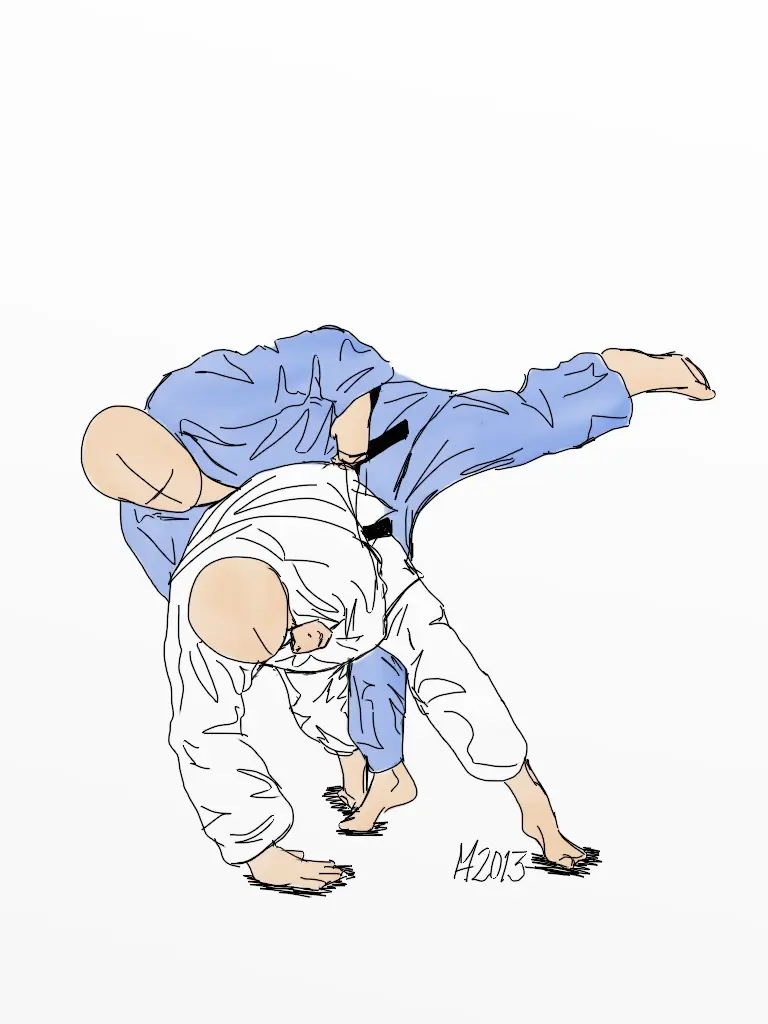
Image: Mhultstrom / Wikimedia Commons · CC BY-SA 3.0
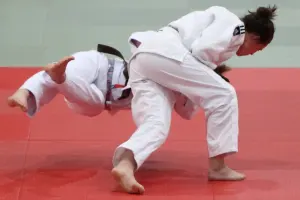
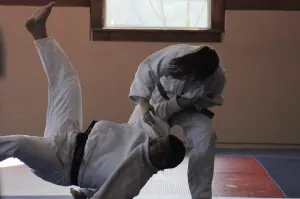
Sutemi-waza (捨身技, sacrifice techniques) are the branch of Nage-waza in which the thrower deliberately gives up standing posture as part of the throwing mechanism. Kodokan classification divides them into five ma-sutemi-waza, performed principally by sacrificing the body to the rear or back, and 16 yoko-sutemi-waza, performed principally to the side. The 21 named techniques include tomoe-nage, ura-nage, tani-otoshi, and several makikomi throws. Sutemi-waza matter because the fall of the thrower is a technical means rather than an accidental collapse. They also show the difference between curriculum and contest: all 21 remain in the Kodokan catalogue, while kani-basami and kawazu-gake are expressly prohibited in current International Judo Federation events.
Overview
| Japanese | 捨身技 |
|---|---|
| Reading | すてみわざ |
| Romanisation | sutemi-waza |
| Meaning | Sacrifice techniques |
| Martial art | Judo |
| Parent category | Nage-waza |
| Kodokan branches | Ma-sutemi-waza and yoko-sutemi-waza |
| Official Kodokan total | 21 techniques (5 + 16) |
Name and classification
Sutemi (捨身) literally combines 'discard' or 'abandon' with 'body'; in Judo terminology it refers to deliberately sacrificing the thrower's upright position. Waza (技) means technique. Sutemi-waza and tachi-waza, or standing throws, are the two major branches of nage-waza.
Tachi-waza are further classified as Te-waza, Koshi-waza, and Ashi-waza. Sutemi-waza instead divide according to the principal direction in which the thrower sacrifices the body: rear or back for ma-sutemi-waza, and side for yoko-sutemi-waza.
Ma-sutemi-waza
Ma-sutemi-waza (真捨身技) are the five rear or supine sacrifice techniques. In representative forms, the thrower drops principally onto the back while directing the receiving partner over, around, or beyond the body.
- Tomoe-nage (巴投): uses the deliberate rear sacrifice and a foot placed against the receiving partner's lower trunk to project forward.
- Sumi-gaeshi (隅返): combines a rear sacrifice with lifting action against the inner thigh.
- Hikikomi-gaeshi (引込返): draws the partner forward, commonly using a belt or back grip in its representative form.
- Tawara-gaeshi (俵返): lifts and turns a bent-over partner while sacrificing to the rear.
- Ura-nage (裏投): lifts in response to close contact or an attack and throws over the rear shoulder line.
Yoko-sutemi-waza
Yoko-sutemi-waza (横捨身技) are the 16 side sacrifice techniques. Some draw or rotate the receiving partner across the thrower's falling body; others are makikomi, or winding throws, in which the thrower wraps an arm and turns the body into the fall.
| Technique | Japanese |
|---|---|
| Yoko-otoshi | 横落 |
| Tani-otoshi | 谷落 |
| Hane-makikomi | 跳巻込 |
| Soto-makikomi | 外巻込 |
| Uchi-makikomi | 内巻込 |
| Uki-waza | 浮技 |
| Yoko-wakare | 横分 |
| Yoko-guruma | 横車 |
| Yoko-gake | 横掛 |
| Daki-wakare | 抱分 |
| O-soto-makikomi | 大外巻込 |
| Uchi-mata-makikomi | 内股巻込 |
| Harai-makikomi | 払巻込 |
| Ko-uchi-makikomi | 小内巻込 |
| Kani-basami | 蟹挟 |
| Kawazu-gake | 河津掛 |
Technical principle
The defining feature is purposeful sacrifice of standing posture as part of the throw. Simply falling after an unsuccessful standing technique does not automatically make the action sutemi-waza. The receiving partner must be directed through a recognised throwing mechanism linked to the thrower's descent.
Direction distinguishes the two official branches, but it does not make all rear or side sacrifice throws mechanically identical. Tomoe-nage uses the falling body and a foot placement differently from ura-nage; yoko-otoshi, tani-otoshi, and soto-makikomi create different barriers, rotations, and body relationships.
Kuzushi, tsukuri and kake
Kuzushi must place the receiving partner where the sacrifice can continue the throw rather than merely pull both practitioners to the mat. Tsukuri establishes grip, distance, body alignment, and the line of descent; kake completes the rotation, projection, or winding action.
Because the thrower gives up the ability to remain standing, timing and commitment are especially consequential. A poorly fitted sacrifice throw may leave the thrower underneath or create an unsafe fall. For analysis, kuzushi, tsukuri, and kake remain connected phases rather than rigid beats.
Place in kata and the Kodokan syllabus
The ma-sutemi-waza set of Nage-no-kata consists of tomoe-nage, ura-nage, and sumi-gaeshi. The yoko-sutemi-waza set consists of yoko-gake, yoko-guruma, and uki-waza. The Kodokan selects three representatives from each of the five throwing categories for the 15-technique kata.
Sacrifice throws also appear across the Gokyō no Waza, but the present 21-name catalogue is broader than the 40-throw Gokyo. The current list records both long-established syllabus techniques and recognised names outside that teaching sequence.
Variation and category boundaries
Kodokan definitions describe representative right-sided forms rather than the only valid performance. Grip, direction, stance, and entry may change while the principal sacrifice mechanism remains recognisable. Some makikomi throws begin from actions resembling a standing hip or leg technique and become classified by the winding sacrifice that completes them.
A movement-structure study by Mito and Kamiya argued that traditional body-part and sacrifice categories do not capture every similarity among nage-waza. This does not replace the official Kodokan names; it clarifies that official classification and biomechanical analysis answer different questions.
Training and safety
Sutemi-waza are studied in kata, controlled throwing practice, and randori after practitioners have appropriate Ukemi and partner awareness. Agreed practice allows the direction and landing relationship to be established before greater movement or resistance is introduced.
Because both practitioners may descend together, the thrower must preserve control and avoid falling onto the receiving partner's head, neck, or trunk. Restricted techniques should not be inserted into ordinary randori merely because they remain in the historical or technical catalogue.
Competition rules and restrictions
The rules reviewed here are the IJF Sport and Organisation Rules, version 14 August 2026. They expressly identify kani-basami and kawazu-gake as Kodokan-classified techniques that are not allowed in IJF events. Both remain among the 16 official yoko-sutemi-waza, so catalogue status and competition legality must be stated separately.
Kawazu-gake is penalised even if the thrower twists during the action; the rules distinguish it from permitted o-soto-gari, o-uchi-gari, and uchi-mata leg relationships. Kani-basami is also expressly prohibited. These are direct hansoku-make offences under the current IJF rules.
Other sutemi-waza are not automatically legal in every form. Standing leg grabs, dangerous neck or spinal pressure, uncontrolled joint or strangling actions, and other grave infringements remain prohibited. National, youth, kata, and dojo rules may differ from IJF World Judo Tour rules.
Sources
- Kodokan Judo Institute, Judo Technique Names.
- Kodokan Judo Institute, Names of Judo Techniques, 1 April 2017.
- Kodokan Judo Institute, Definitions of Judo Techniques.
- Kodokan Judo Institute, Promotion Examination Text: Kodokan Judo, 2026.
- Kodokan Judo Institute, Kata.
- All Japan Judo Federation, Number of Judo Techniques.
- International Judo Federation, Judo Techniques.
- International Judo Federation, Sport and Organisation Rules, 14 August 2026.
- Mito Noriyuki and Kamiya Tadaaki, A Study on the Classification of Judo Throwing Techniques Based on Movement Structure.
Last updated: