
other-martial-arts
Hōnō-zumō

Image: phosphor / Wikimedia Commons · CC BY 3.0
Hōnō-zumō
Sumo performed as an offering.
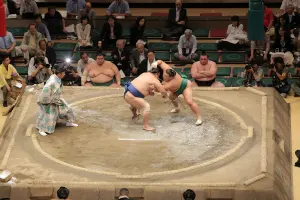
Hōnō-zumō is sumo performed as a religious offering, commonly within the grounds or festival setting of a shrine or temple. The word describes the purpose and setting of the performance, not one national competition or a rank in professional sumo. Local examples may involve actual bouts, while distinctive rites can use the form of wrestling in a different way. At Ōyamazumi Shrine, hitori-zumō presents a wrestler facing an unseen spirit; at Setagaya Hachiman Shrine, student wrestlers take part in dedicatory bouts. These examples show why the participants, recipient of the offering and local ritual sequence must be identified before drawing general conclusions.
Purpose
An offering to deities or Buddhas.
Place
A named shrine or temple setting.
Performance
Bouts and particular ritual forms differ.
At a glance
- Japanese name
- 奉納相撲 (hōnō-zumō)
- Core meaning
- Sumo performed as a religious offering
- Usual setting
- Shrine or temple grounds and festival observances
- Tokyo example
- Setagaya Hachiman Shrine
- Distinctive ritual example
- Hitori-zumō at Ōyamazumi Shrine, Ehime
01
Hōnō describes dedication rather than a rule set
Japanese dictionaries define hōnō-zumō through its offering to deities or Buddhas and its shrine or temple setting. The term consequently describes a relationship between performance and religious observance. It does not by itself specify whether the wrestlers are professionals, students or local participants, nor how victory is decided.
02
Different occasions require different descriptions
The word can encompass practices that share a dedicatory purpose without sharing one format.
- Dedicatory bouts
- Wrestlers meet in a contest offered within a local religious observance.
- Hitori-zumō
- A particular ritual performance involving an unseen opponent.
- Professional honbasho
- An official professional tournament; this is a different organising category.
03
Setagaya preserves a place for student bouts
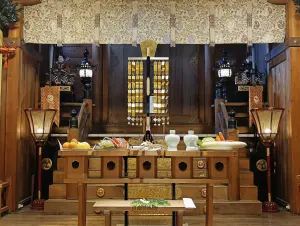
Setagaya City describes the shrine’s dedicatory sumo as one of the traditions remembered as the Edo three sumo gatherings. Its account identifies wrestlers from Tokyo University of Agriculture taking part at the September festival. The surviving ring and spectator space make the sporting and religious setting legible together. The photographed arena is evidence of a place, not of a specific bout taking place on the day it was photographed.
04
Hitori-zumō stages a meeting with an unseen spirit
Ehime Prefecture records the Ōyamazumi Shrine rite in connection with rice planting and harvesting observances. A gyōji calls the contestants, and a wrestler responds to an invisible spirit. The record distinguishes the older single-bout form from a three-bout form used since the Meiji period. This is a named local folk performance, not a description of ordinary competitive sumo.
05
Local records distinguish continuity from change
The Ehime cultural-property account cites early-eighteenth-century records of the rite. Research by the Tokyo National Research Institute for Cultural Properties places dedicatory performance alongside ceremonies in a shrine’s sacred rice field. These sources explain the local agricultural and ritual setting. They do not justify assigning the same chronology or function to every shrine’s sumo.
06
Related sumo ceremonies are not interchangeable
A dedicatory context differs from a tournament championship, while a ring-entering ceremony differs from a wrestling bout. Likewise, Dohyō-matsuri names a ring-consecration ceremony rather than all shrine sumo. When identifying an event, record its formal name, shrine or temple, participants and stated purpose. These details preserve the distinction between a general term and a particular inherited performance.
Sources
Last updated:



_in_Setagaya_Hachiman_Shrine_(世田谷八幡宮)_-_panoramio.jpg)