Seasonal Customs
Awa Odori

Image: Rosino / Wikimedia Commons · CC BY-SA 2.0
Awa Odori
A place, a rhythm and a performing community.
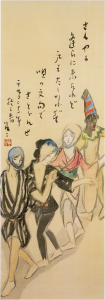
Awa Odori is a dance tradition associated with Tokushima, the former province of Awa, and the festivals at which it is performed. Groups called ren bring dancers and musicians together in coordinated movement, costume and rhythm. The tradition is related to Bon dancing, but its present public forms also reflect urban celebration, tourism and organised performance. Tokushima’s summer festival is its most prominent setting, while year-round demonstrations and performances elsewhere extend its reach. Stories about a castle celebration are part of its remembered origins, not a complete explanation of its development. Music, group organisation and changes in performance style are equally important to understanding it.
Ren
A group gives the performance its identity.
Movement
Styles and formations coordinate the dancers.
Music
The ensemble supplies a shared rhythmic framework.
At a glance
- Japanese name
- 阿波踊り / 阿波おどり
- Place association
- Tokushima; historical Awa Province
- Performing group
- Ren (連)
- Broader context
- Bon dance and regional festival culture
- Cultural facility
- Awa Odori Kaikan, opened in 1999
01
Awa names a place as well as a tradition
Awa is the historical provincial name associated with present-day Tokushima. Odori means dance, and Awa Odori can refer both to the dancing and to a festival. This distinction matters when comparing a street procession, a theatre presentation and a museum demonstration. Each presents the same tradition under different conditions.
02
Origin stories need historical context
The Japan Tourism Agency describes connections with Bon dancing and the familiar story of celebrations following Tokushima Castle’s completion. Such narratives should be identified as traditions, rather than treated as proof of one founding moment. Kokugakuin University’s account of fūryū explains the broader world of decorated festival performance from which regional dance customs developed.
03
Dancers and musicians work as a ren
A ren is the group through which a performance is organised. Its identity can be expressed in dress, lanterns and coordinated movement. Musicians provide the rhythmic framework rather than merely decorating the dance.
- Ren
- The performing group and its shared identity.
- Dancers
- Coordinated movement, formation and distinctive dress.
- Narimono
- An ensemble including drums, flute, shamisen and gong.
04
Named dance styles are not rigid limits on participants
The conventionally named men’s style uses a lower, more open stance; the women’s style is associated with raised hands, aligned formations, geta and folded amigasa hats. These are descriptions of performance styles. The Tourism Agency also notes women performing the conventionally male style. Avoid using costume alone to infer every dancer’s identity or eligibility.
05
Modern organisation helped the dance travel
Tourism promotion, recorded song and post-war revival helped reshape Awa Odori’s public presence. The Tourism Agency identifies the 1931 success of Awa Yoshikono and the 1946 resumption of festivities as milestones, followed by wider exposure at the 1970 Osaka Expo. These developments show a living performance tradition adapting to new audiences, rather than a choreography frozen at its supposed origin.
06
The Kaikan joins performance with preservation
Tokushima City records the Awa Odori Kaikan’s opening in 1999. Its museum and performance hall allow the tradition to be encountered outside the main festival period. An organised demonstration is an introduction to the dance, while the summer event involves a different scale and setting. Bon Odori provides the wider seasonal context; participation arrangements remain specific to each organiser.
Sources
Last updated: