other-martial-arts
Mawashi

Image: Materialscientist at English Wikipedia / Wikimedia Commons · CC BY-SA 3.0
Mawashi
A wrestling garment with distinct forms.
A mawashi is the long garment wrapped around a sumo wrestler’s waist and between the legs for practice or competition. It is part of the contest itself, providing a surface that wrestlers can grip, as well as a highly visible element of sumo’s appearance. Materials and forms vary with use and professional rank. The silk competitive garment worn by sekitori in official tournaments is called a shimekomi, while the elaborate keshō-mawashi belongs to ceremonial presentation. These distinctions matter when interpreting a photograph, museum object or bout. A richly decorated apron and the garment used while wrestling perform different roles within the same sporting culture.
Wrap
A garment secured around the wrestler.
Grip
A central part of many techniques.
Ceremony
An embroidered apron for ring-entering.
At a glance
- Japanese forms
- 廻し・回し・まわし
- Basic use
- Wrapped garment for sumo practice and competition
- Shimekomi
- Sekitori’s silk tournament mawashi
- Keshō-mawashi
- Decorative ceremonial garment
- Related element
- Sagari: hanging cords at the front
01
Wrapping gives the garment its working form
The Japan Sumo Association publishes an illustrated guide to wrapping a mawashi. The garment’s structure comes from folding, winding and securing a long strip rather than putting on an ordinary pair of shorts. Correct fitting is part of practical sumo instruction; a museum photograph alone cannot establish how a particular garment was secured.
02
Practice, competition and ceremony require distinctions
The same broad word can obscure important differences. The Association identifies silk as the material of a sekitori’s shimekomi and cotton for the mawashi of wrestlers below that status.
- Mawashi
- The broad term for the wrapped sumo garment.
- Shimekomi
- The silk competitive garment used by sekitori in official tournaments.
- Keshō-mawashi
- The decorative apron-like garment used for ceremonial display.
03
The garment is also part of wrestling technique
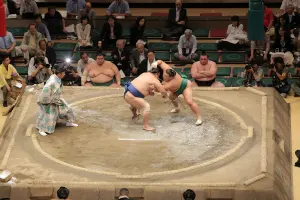
A mawashi offers a grip during a bout, making it equipment as well as dress. Images of a contest can show how the wrestlers use it, but a visible hand position is only one instant in a changing exchange. The competitive garment must remain distinct from the decorative form seen in a ring-entering ceremony.
04
Hanging cords are separate from the main wrap
Sagari hang at the front of the competitive garment. The Association explains that these cords were once integrated with the shimekomi and later separated. They should not be confused with the much larger decorated front of a keshō-mawashi, nor read as an independent ranking belt system like those used in some martial arts.
05
Ceremonial garments preserve personal and public identities
The Sumo Museum’s keshō-mawashi collection associates individual objects with named wrestlers. Decoration can connect a garment with a particular career or presentation. A catalogue entry, inscription and provenance are stronger guides to that relationship than guessing from the design alone.
06
Read rank, occasion and object together
When interpreting sumo dress, first establish whether the scene is practice, a bout or a ceremony. Then identify the garment and the wrestler’s status at that time. Its main colour is not a universal ranking chart. Historical sources also describe changes in form, so modern distinctions should not be projected unchanged across the entire history of sumo.
Sources
Last updated: