other-martial-arts
Sumo Championship System

Image: FourTildes; image edited by Artanisen / Wikimedia Commons · CC BY-SA 3.0
Sumo Championship System
Most wins. A playoff when tied. One champion.
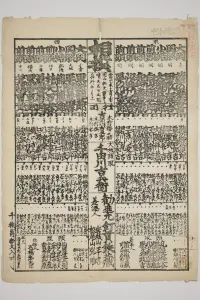
A professional sumo championship, or yūshō (優勝), recognises the best performance in a division during an official tournament. In the top makuuchi division, the wrestler with the most wins receives the championship; a tie at the end requires a playoff. This is different from the banzuke, which records rank, and from prizes for outstanding individual performance. The familiar Emperor’s Cup belongs to the top-division championship. Modern championship customs took shape in stages, including newspaper-sponsored portraits, the imperial trophy and post-war playoffs. Understanding those separate developments helps explain why a wrestler can win a tournament without being the highest-ranked competitor or automatically becoming a yokozuna.
Record
Count wins within the division.
Decision
Resolve a tied lead through a playoff.
Recognition
The makuuchi champion receives the Emperor’s Cup.
At a glance
- Japanese term
- 優勝, yūshō
- Competition
- Official professional sumo tournaments, or honbasho
- Top-division criterion
- Most wins; a playoff if tied
- Main trophy
- Emperor’s Cup for the makuuchi champion
- Playoff introduction
- 1947
01
The tournament record comes first
An official tournament lasts fifteen days. Makuuchi and jūryō wrestlers normally have fifteen scheduled bouts; wrestlers in the lower divisions normally have seven. The championship race concerns results within a division. It is not a season-long league table, and the normal tournament is not an elimination bracket in which one defeat ends participation.
02
How the champion is decided
After the scheduled bouts, a sole leader in wins takes the title. If wrestlers share the leading record, additional bouts decide the championship. For example, two wrestlers finishing 13–2 would require a playoff; one wrestler finishing 13–2 ahead of everyone else would already have the best record. These numbers are an illustration, not a required winning score.
- One wrestler has the most wins
- That wrestler wins the championship.
- Two or more share the most wins
- A championship playoff decides the winner.
- A strong record below the leader
- It can matter for rank or prizes, but is not the title.
03
Why a playoff is historically significant
The Japan Sumo Association dates championship playoffs to 1947. Earlier practice could give precedence to the higher-ranked wrestler when records were tied. A modern playoff changes that relationship: the tied competitors must settle the title through further competition. It also has a distinct statistical status; the Association notes that defeating a yokozuna in a playoff does not count as a kinboshi, the gold-star award.
04
Portraits, the imperial trophy and modern recognition
The custom of awarding a large portrait to the makuuchi winner began in June 1909 through Jiji Shinpō. A donation from the prince regent in 1925 financed the imperial trophy, which was displayed in January 1926. These are different milestones. Describing the whole championship system as invented in a single year conceals the gradual combination of competitive records, public recognition and ceremonial awards.
- 1909
- Newspaper-sponsored portraits recognise makuuchi winners.
- 1925–1926
- The prince regent’s donation funds the trophy; it is displayed the following January.
- 1947
- Playoffs replace rank precedence for tied championship records.
05
A title is different from a rank
The promotion bid is discussed separately in Tsunatori, which explains the benchmark, recommendation and decision.
The banzuke is revised after tournaments in response to performance. A yūshō is a tournament result; yokozuna and ōzeki are ranks. A winning majority, or kachi-koshi, is also different from winning the championship. Eight wins in a fifteen-bout record establish a majority, but the championship normally requires surpassing the other contenders. Promotion decisions should therefore not be read as the automatic distribution of titles to tournament winners.
06
The Emperor’s Cup and other awards
Who can receive the three special prizes? The Japan Sumo Association describes sanshō as awards for makuuchi wrestlers ranked sekiwake or below. Yokozuna and ōzeki are outside that eligible group. A selection committee chooses the recipients; the awards are separate from the championship decided by the tournament record.
- Shukun-shō (Outstanding Performance Prize): recognises notable results against the leading wrestlers; the Association’s explanation points to victories over yokozuna, ōzeki or the tournament champion.
- Kantō-shō (Fighting Spirit Prize): recognises a spirited performance that contributes to the tournament.
- Ginō-shō (Technique Prize): recognises particularly skilful sumo.
The award names describe different grounds for recognition, not three positions on a podium. See the Japan Sumo Association’s explanation of sanshō and its official championship and special-prize results. Eligibility here concerns professional Grand Sumo, not amateur sumo tournaments.
The Emperor’s Cup is presented to the makuuchi champion. The sanshō recognise outstanding performance, fighting spirit and technique under their own eligibility and selection conditions. A wrestler may be discussed as a prize winner without being the tournament champion. When reading results, separate the division, final record, championship decision, special prizes and subsequent ranking; each answers a different question about the same tournament.
Sources
Last updated: