Food Culture
Nagoya Meshi
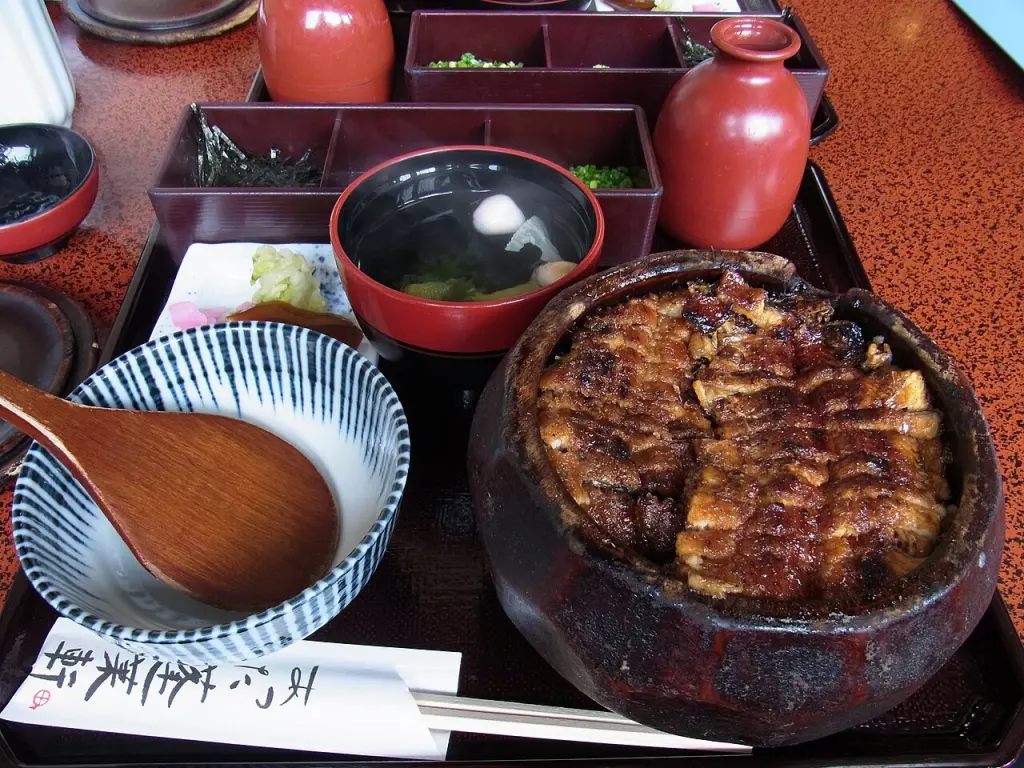
Image: Bariston / Wikimedia Commons · CC BY-SA 3.0
Overview
A region’s food culture, built from many dishes.
Nagoya meshi (なごやめし) is a collective name for the regional food culture associated with Nagoya and the wider Aichi and Tōkai area. It includes miso-katsu, miso-nikomi udon, hitsumabushi, tebasaki chicken wings and other dishes that developed in different settings and periods. Soybean miso and tamari are important foundations, but not every speciality uses them. The category combines established household and local foodways with restaurant dishes, café habits and more recent forms of regional promotion. It is consequently better understood as a changing culinary repertoire than as a fixed traditional menu. Its boundaries extend beyond Nagoya’s municipal limits, and an individual dish may have a history that reaches into neighbouring places.
Soybean miso and tamari help shape local flavour.
Rice, noodles and fried foods have different histories.
Homes, restaurants and cafés keep the repertoire changing.
At a glance
- Japanese name
- なごやめし · 名古屋めし
- Core area
- Nagoya and Aichi, within the wider Tōkai region
- Important fermented foods
- Soybean miso and tamari
- Examples
- Miso-katsu, hitsumabushi, tebasaki and miso-nikomi udon
- Settings
- Homes, restaurants, cafés and souvenir trade
- Scope
- A changing regional food category
01
A regional label gathers different histories
The Nagoya Meshi Promotion Council presents the category as food enjoyed locally in homes and eateries and notes its widening repertoire. Its guide includes the Greater Nagoya region, rather than only the city. The label organises recognition and promotion; it does not prove that every included dish was invented within the same boundaries or during the same period.
02
Soybean miso gives several dishes a shared foundation
The official Nagoya-meshi account emphasises soybean-based red miso. Nagoya City Museum places red miso and tamari within the area’s inherited food culture. Miso-katsu uses a miso-based sauce on a breaded cutlet, while miso-nikomi udon cooks noodles in a miso-based broth. These dishes share an ingredient tradition without being variations of one recipe.
03
Different dishes express different parts of the repertoire
The following examples are orientation points, not an exhaustive ranking. Rice, noodles, fried foods and café dishes occupy different roles in local eating.
Miso-katsu
- Basic form
- Breaded pork cutlet with miso sauce
- Useful distinction
- A sauce-based use of regional miso.
Miso-nikomi udon
- Basic form
- Udon simmered in miso broth
- Useful distinction
- A noodle dish cooked in a rich broth.
Hitsumabushi
- Basic form
- Chopped grilled eel over rice
- Useful distinction
- Served with condiments and liquid for changing the way it is eaten.
Tebasaki
- Basic form
- Seasoned fried chicken wings
- Useful distinction
- A restaurant and drinking-food speciality.
04
One serving can be eaten in several ways
Hitsumabushi is commonly introduced through successive portions: first eel and rice, then added condiments, and then tea or stock. The official guide describes this changing flavour experience as characteristic of the dish. Exact accompaniments and instructions vary by restaurant. The familiar serving explanation should not be confused with evidence settling every competing origin claim.
05
Inherited foodways coexist with newer urban dining
Nagoya City Museum’s exhibition on regional and new food cultures describes the coexistence of older miso, tamari and brewing traditions with Western-style food and everyday eating out. This is a useful correction to the idea of an unchanged regional cuisine. Local taste develops through domestic practices, commerce and the adoption of unfamiliar dishes as well as through continuity.
06
Food links the city with a wider region
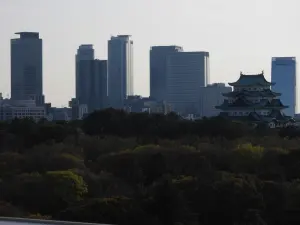
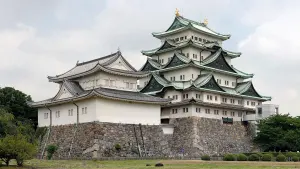
The official promotion site associates growing national recognition of the term with the period around Expo 2005 in Aichi. That visibility is part of the history of the label, not the invention date of every dish. Nagoya and Nagoya Castle provide the urban context; Washoku offers a broader account of food and social practice.
Sources
Last updated: