Performing Arts
Boke
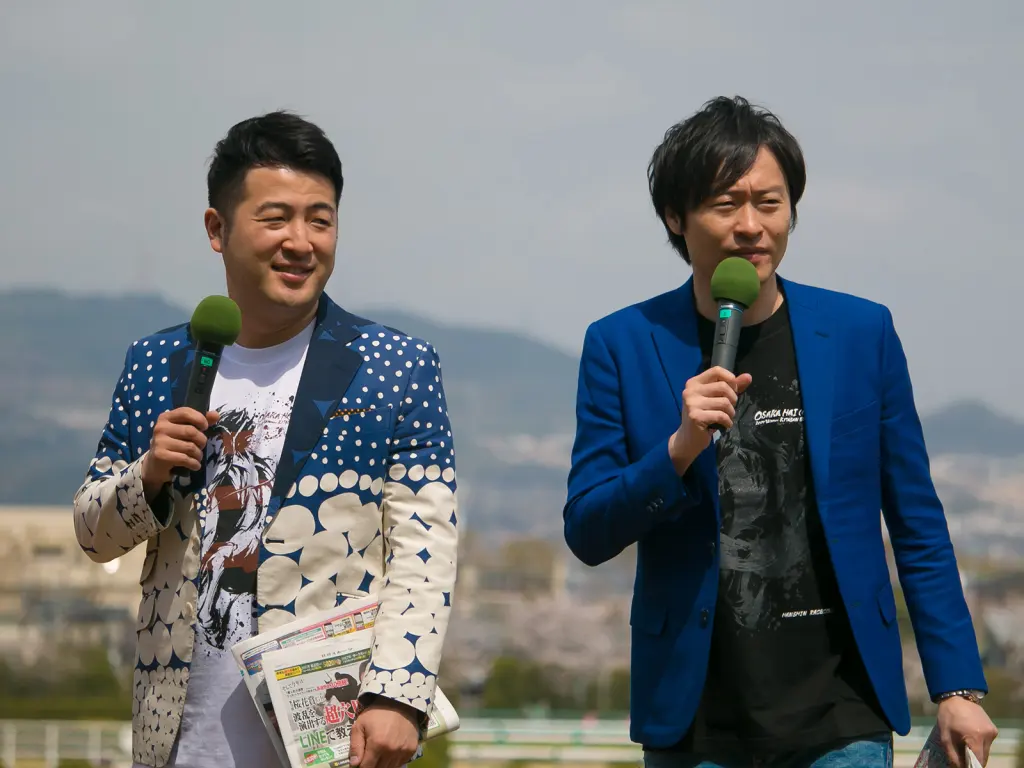
Image: Ogiyoshisan / Wikimedia Commons · Creative Commons Attribution-ShareAlike 4.0 International
Overview
The turn that changes the expected meaning.
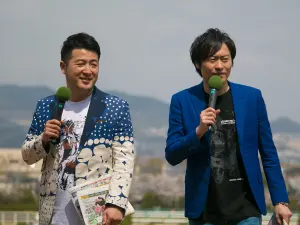
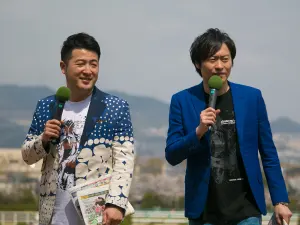
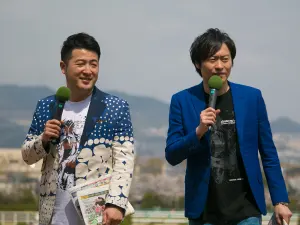
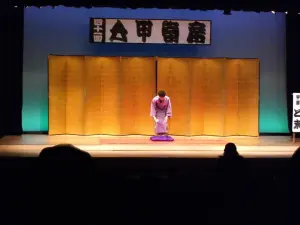
Boke (ボケ) is a term for a comic role and for the contribution made in that role, especially in Japanese manzai. A boke introduces something that does not fit the conversation’s apparent assumptions: a mistaken interpretation, an unlikely claim or another comic departure. The partner’s tsukkomi helps the audience recognise and enjoy what has happened. This is a relationship within performance, not a judgement about the entertainer’s intelligence or everyday personality. The term is useful when watching Kamigata manzai, but is not restricted to that regional tradition. Its meaning is clearest when considered alongside the surrounding setup, response and audience expectations.
A context makes one reading plausible.
A contribution introduces an incongruity.
The partner gives the departure a comic frame.
At a glance
- Japanese
- ボケ · boke
- Type
- Comic role and comic contribution
- Partner role
- Tsukkomi
- Core relationship
- A departure from the expected meaning
- Main context here
- Manzai performance
01
A performer’s role and a moment in the dialogue
A description of a duo may identify one person as the boke. An analysis of a routine may instead identify a particular contribution as a boke. Keeping those uses separate helps when performers temporarily exchange roles.
Neither use identifies the scriptwriter. A stage relationship is something the performers present together; it does not by itself reveal how the material was composed.
02
The audience needs something to compare
A strange sentence becomes a comic departure when the listener can connect it to an expected meaning. Masuya’s linguistic study examines this relation through setup, boke and tsukkomi. Its analysis is useful for close reading, rather than a universal recipe for every performance.
03
One invented exchange makes the distinction visible
The following English example was written for this page. It is an illustration, not a quotation or a translated professional routine.
Setup
- Invented dialogue
- I want to open a restaurant.
- Function
- Introduces an ordinary plan.
Boke
- Invented dialogue
- Good. Will you serve the customers on plates?
- Function
- Treats serving people as plating people.
Tsukkomi
- Invented dialogue
- The food goes on plates. The customers get chairs.
- Function
- Names and develops the misunderstanding.
04
The response changes how the boke is heard
A Tsukkomi may name what is odd, challenge the claim or follow it briefly before responding. The same boke can therefore be framed differently by different reactions. Xiong’s study of tsukkomi describes several response styles; the simple contrast between “funny person” and “serious person” leaves out that variety.
05
Roles can be rearranged
The Japan Arts Council explicitly notes that boke and tsukkomi may switch during a performance. A viewer should follow the function of each contribution rather than insist that one person must always make every absurd statement. The terms organise observation; they do not prohibit variation.
06
A comic role is not a personality category
Research indexed by Gakushuin University examines comparable exchanges in recorded conversations between two close friends. That is evidence of a conversational practice in a particular relationship, not a basis for classifying all Japanese speakers.
The role can be explored in other languages too: Kanazawa University’s 2025 English manzai workshop invited participants to work with boke and tsukkomi. For cultural and historical orientation, read Manzai and Kamigata Manzai.
Sources
- Japan Arts Council, Boke and tsukkomi: the interplay of dialogue.
- Tomoyuki Masuya, Remarks on tsukkomi in Manzai (2006), pp. 150–157.
- Zesheng Xiong, The Art of Tsukkomi (2015), undergraduate thesis, Tufts University.
- Halina Zawiszová, Manzai-like humor sequences: Exploring a particular form of highly collaborative conversational humor in Japanese interactions (2021).
- Kanazawa University, Learn English through Manzai (29 January 2025).
Last updated: