Performing Arts
Kamigata Manzai
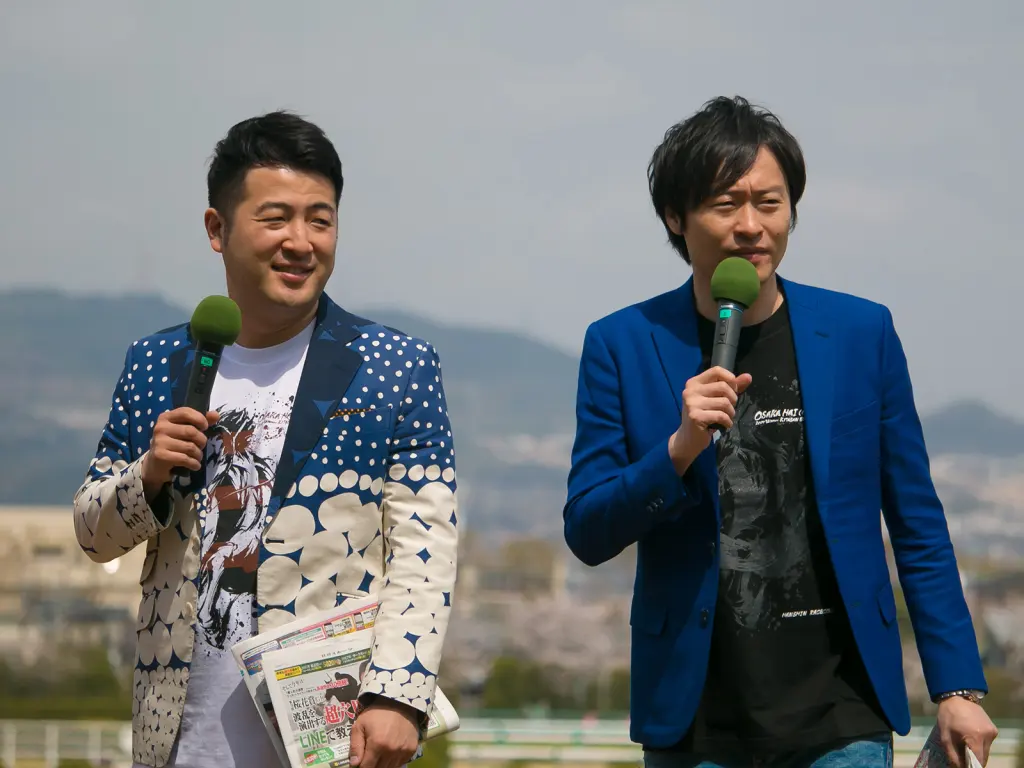
Image: Ogiyoshisan / Wikimedia Commons · Creative Commons Attribution-ShareAlike 4.0 International
Overview
Osaka’s tradition. A national reach.
Kamigata manzai (上方漫才) is the regional tradition of manzai associated especially with Osaka and the wider Kamigata cultural setting of western Japan. It is a way of locating a performance tradition within cultural and entertainment history, rather than the name of one uniform technique. The work of Yokoyama Entatsu and Hanabishi Achako is central to accounts of the emergence of modern conversational manzai in the early Shōwa period. Writers, theatres, recordings and broadcasting also shaped that development. The familiar boke and tsukkomi roles belong in this story, but their use extends beyond Kamigata performers and cannot by itself establish a regional identity.
Entatsu and Achako begin their partnership.
Yoshimoto adopts the spelling 漫才.
The name appears in a Shinbashi Enbujō event.
At a glance
- Japanese
- 上方漫才 · Kamigata manzai
- Main association
- Osaka and the Kamigata cultural region
- Broader form
- Manzai
- Key duo
- Yokoyama Entatsu and Hanabishi Achako
- Archival institution
- Wahha Kamigata, Osaka
01
A regional tradition within manzai
Manzai names the wider performance form; Kamigata identifies a regional cultural context. Osaka is the principal reference point for this article. The label should be understood through performers, professional networks and historical settings, rather than a checklist that every act must satisfy.
02
Entatsu and Achako reshape the spoken act
Wahha Kamigata records that the duo formed in 1930 and initially faced resistance to its concentration on talk. Their subsequent success helped establish a new model of comic entertainment. Their partnership ended in 1934 following Achako’s hospitalisation, although they later appeared together in films.
The museum’s account is valuable because it describes change as a professional process with difficulties and later recognition, rather than an instant invention that everyone immediately accepted.
03
A short chronology of the conversational turn
The dates below concern one influential development within a longer tradition. They should not be read as dates when all manzai began or when older performance styles vanished.
1930
- Development
- Entatsu and Achako form a duo
- What it establishes
- A documented partnership
1933
- Development
- Yoshimoto uses 漫才
- What it establishes
- A milestone in modern naming
1934
- Development
- Shinbashi Enbujō programme uses 漫才
- What it establishes
- Public presentation beyond Osaka
04
Writing and media shape the tradition
The Japan Arts Council identifies Akita Minoru as a writer who contributed scripts to Entatsu and Achako and other duos. Their well-known baseball routine Sōkeisen used contrasting knowledge of the game. Recordings and radio helped carry this form of entertainment to national audiences.
A regional origin and a nationwide audience can coexist. The circulation of a performance through media does not erase the professional setting in which it developed.
05
The roles extend beyond the region
Boke and Tsukkomi describe contributions to comic interaction. They are not geographical labels. The Japan Arts Council illustrates the roles with acts such as Bakushō Mondai and Knights, making it inappropriate to treat the pairing as exclusive to Kamigata.
Kamigata rakugo is another regional performance tradition. It shares cultural geography with Kamigata manzai, while retaining the distinct solo storytelling format explained in Rakugo.
06
Records preserve different parts of the performance
The Osaka Prefectural Library’s guide describes Wahha Kamigata holdings covering manzai and other Kamigata entertainment. Such collections make it possible to investigate performers and their professional settings.
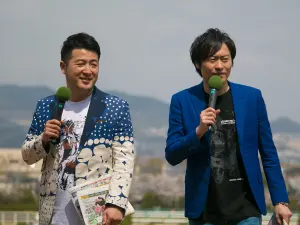
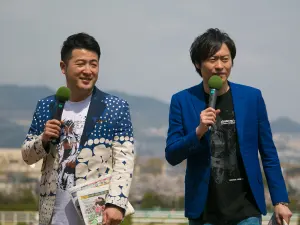
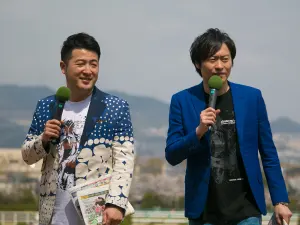
A script records words, a photograph records a moment, and a recording preserves an unfolding performance. These sources answer different questions. The photograph on this page documents a performance by Wagyu in 2018; it is not an image of the 1930s development described above.
Sources
Last updated: