Performing Arts
Manzai
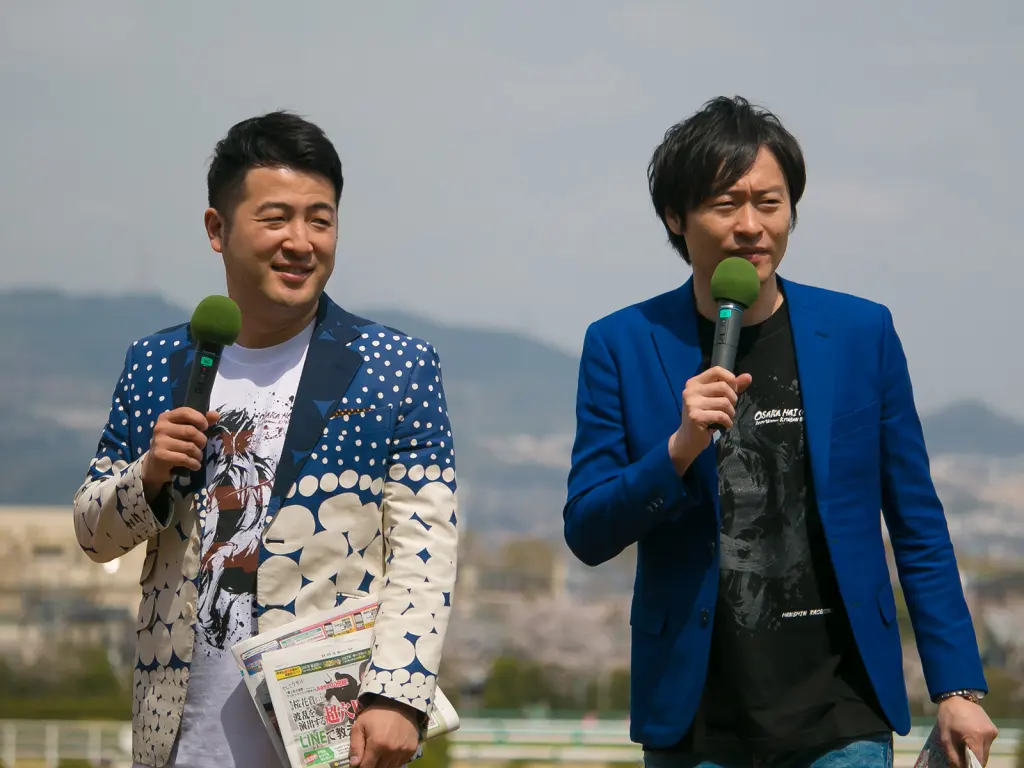
Image: Ogiyoshisan / Wikimedia Commons · Creative Commons Attribution-ShareAlike 4.0 International
Overview
A conversation becomes a performance.
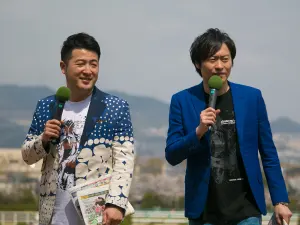
Manzai (漫才) is a Japanese performing art built around comic interaction, most often between two entertainers. A familiar pattern pairs a boke, who introduces an absurd idea or misunderstanding, with a tsukkomi, who responds to it. These roles help explain many routines, but do not define every possible performance. Modern manzai developed through changes in older entertainment practices and became closely associated with Osaka and the Kamigata tradition. Its history also includes music, movement and other speciality acts alongside spoken dialogue. Understanding manzai therefore means looking at both the exchange on stage and the changing settings in which audiences encounter it.
Comic interaction between performers.
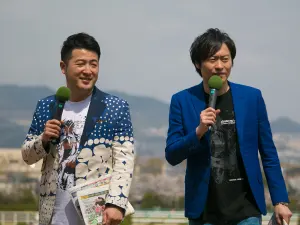
The Osaka-centred regional history.
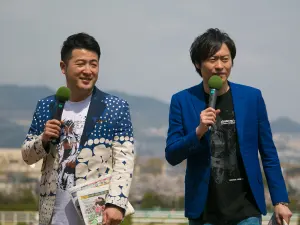
Different contributions to one exchange.
At a glance
- Japanese
- 漫才 · manzai
- Form
- Comic dialogue, usually a duo
- Related tradition
- Kamigata manzai
- Common roles
- Boke and tsukkomi
- Spoken form
- Shabekuri manzai
01
Comedy built between performers
The unit of performance is the exchange: one contribution changes the meaning of another. Watching only the speaker of an unusual line misses the work done by listening, response and the relationship between the partners. The familiar two-person format is especially useful for seeing that relationship.
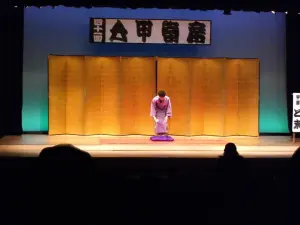
The Japan Arts Council describes manzai as adaptable entertainment whose earlier forms could include instruments, dancing or magic. Spoken manzai is a prominent form within this broader history.
02
Two roles, a shared comic task
Boke and Tsukkomi are complementary terms. A simple first reading is a departure from an expected meaning followed by a response that makes the departure noticeable. Neither label tells us who wrote the material or which performer is more skilled.
03
From celebratory performance to stage dialogue
The Japan Arts Council distinguishes New Year blessing performances written 万歳 from later comic entertainment written 万才 and modern 漫才. During the Meiji and Taishō periods, comic exchanges developed alongside performers’ speciality skills. This is a history of transformation, rather than one unchanged routine travelling through the centuries.
04
Conversation becomes the centre
Yokoyama Entatsu and Hanabishi Achako became influential exponents of conversational manzai in the early Shōwa period. Their material used familiar contemporary subjects; radio and recordings helped it reach listeners beyond the theatre. The spoken form is often called shabekuri manzai. See Kamigata Manzai for the regional context.
05
Manzai and rakugo organise dialogue differently
In Rakugo, a solo storyteller can represent several characters. Manzai makes the relationship between separate performers visible. The distinction concerns performance organisation; calling both “Japanese comedy” does not make the forms interchangeable.
Likewise, a comic misunderstanding in everyday conversation may resemble a manzai exchange without becoming a professional stage routine.
06
The exchange can travel between languages
Kanazawa University reported a January 2025 workshop in which participants created short English manzai after working with the duo Franponais. The event offers a concrete example of the format being used across languages. It does not imply that every Japanese joke can be translated word for word.
When reading a translation, distinguish the literal wording from what the other performer treats as strange. That distinction is a useful way to follow the exchange without reducing it to a sequence of isolated punchlines.
Sources
Last updated: