Seasonal Customs
Festival Floats in Japan
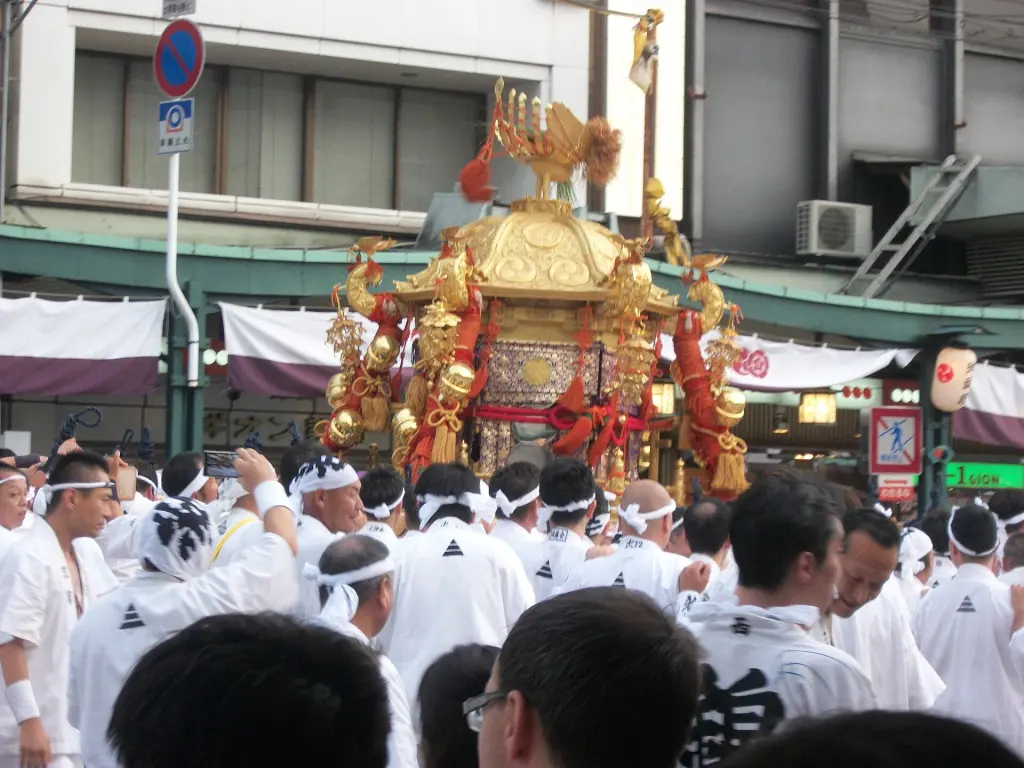
Image: Immanuelle / Wikimedia Commons · CC BY-SA 4.0
Festival floats in Japan are locally built and maintained structures carried, pulled, or wheeled through streets during matsuri. Names and forms vary—yama, hoko, yatai, danjiri, dashi, and others—and the English word “float” can conceal important distinctions in construction, ritual role, and regional history. Some bear divine emblems or serve as temporary seats for deities; others function as mobile stages, musical platforms, or displays of textiles, carving, metalwork, and mechanical figures. They should also be distinguished from an omikoshi, a portable shrine carried by participants. The traditions endure through neighborhood organizations, craftspeople, musicians, performers, and the repeated work of assembling, moving, repairing, and interpreting the structures.
Overview
| Common terms | Yama, hoko, yatai, danjiri, dashi |
|---|---|
| Context | Local festivals and processions |
| Movement | Carried, pulled, or wheeled |
| Typical arts | Carving, textiles, lacquer, metalwork, music, mechanical figures |
| Community basis | Neighborhood associations and specialist craftspeople |
| UNESCO element | Yama, Hoko, Yatai, float festivals in Japan |
Terms and regional variety
There is no single nationwide float type. Yama and hoko are prominent in Kyoto’s Gion Matsuri; yatai can denote elaborate wheeled platforms in Takayama and other regions; danjiri often refers to strongly built wheeled floats, as at the Kishiwada Danjiri Festival; and dashi has several local meanings. The same word may describe different structures in different places.
Ritual functions
Float processions may welcome, accompany, entertain, or display the presence of kami, and many are linked to prayers for protection from epidemic, disaster, or misfortune. Their roles depend on the festival’s history and associated shrines or communities. Not every float is itself a shrine, and not every Japanese parade with a decorated vehicle has the same religious meaning.
Construction and decoration
Large floats combine structural carpentry with ropes, wheels, roofs, platforms, and removable decorative programs. They may display imported and domestic textiles, carved wooden panels, lacquer, metal fittings, lanterns, or tapestries. Some are assembled without permanent nails in key joints and dismantled after the festival, making construction itself a recurring act of technical knowledge and community coordination.
Music, performance, and karakuri
Musicians riding or walking with a float perform festival repertories that mark movement and neighborhood identity. Other floats become stages for dance, children’s performance, or puppet theater. Karakuri ningyō—mechanical dolls driven by concealed mechanisms and skilled operators—appear in several float traditions, joining engineering, spectacle, and ritual presentation.
Movement and street space
Moving a tall or heavy float requires coordinated crews, route knowledge, signals, and negotiation with the built environment. Turning methods can become celebrated features of a procession, from controlled pivots to high-speed cornering. Spectacle should not obscure risk: organizers manage crowds, overhead obstacles, weather, wheel loads, and the safety of pullers, performers, residents, and visitors.
Neighborhood organization and transmission
Floats are often associated with particular neighborhoods that raise funds, store components, allocate roles, teach music and handling, and maintain archives. Participation transmits knowledge across generations, but access may be shaped by gender, residency, occupation, or local custom. Contemporary communities continually negotiate continuity, demographic change, tourism, and the practical burden of conservation.
Gion, Takayama, and other major traditions
The Gion Matsuri in Kyoto is known for its yamaboko processions and richly decorated neighborhood floats. Takayama’s spring and autumn festivals feature yatai, music, and mechanical dolls, while Chichibu, Hitachi, Hakata, and many smaller communities preserve distinct forms. Famous examples are useful points of entry, not templates for every local tradition.
Heritage and conservation
UNESCO’s Representative List groups 37 community-based traditions as “Yama, Hoko, Yatai, float festivals in Japan.” The grouping highlights shared practices of collaboration, craftsmanship, and annual renewal while retaining local names and histories. Heritage recognition can support conservation and visibility, but it also brings responsibilities for documentation, repair, visitor management, and meaningful community control.
Sources
Last updated: