Other Martial Arts
Great Sumo Tournaments (Honbasho)
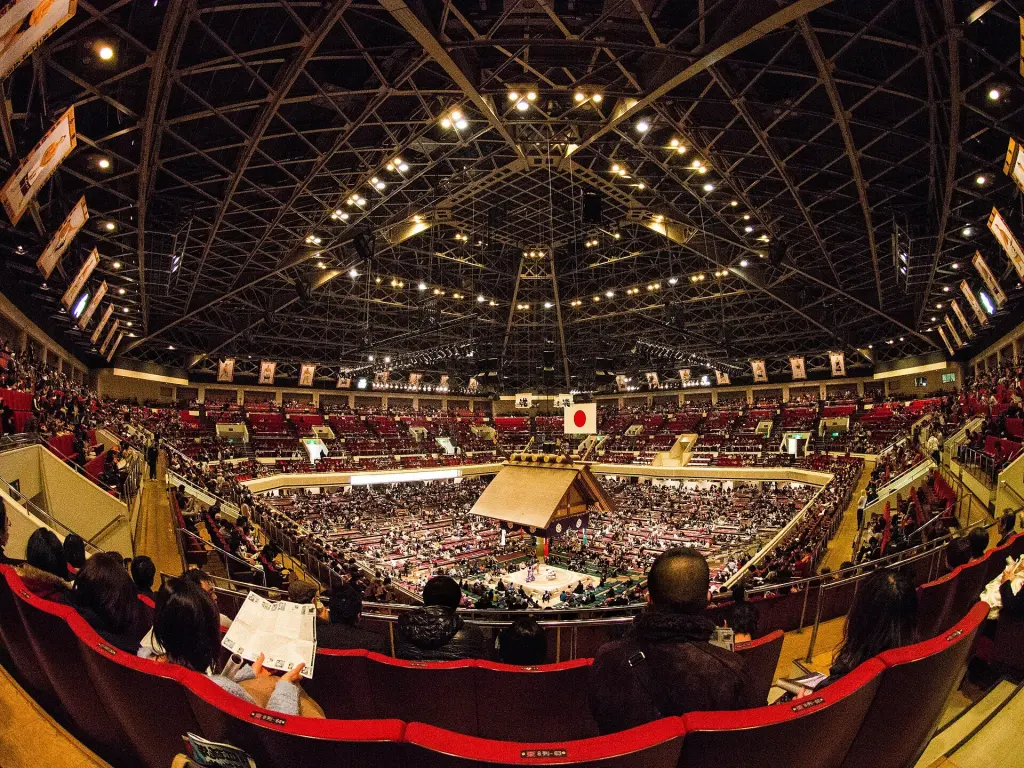
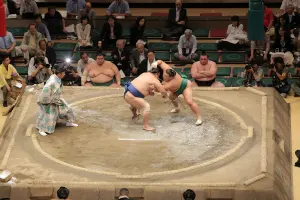
Image: Gregg Tavares / Wikimedia Commons · Creative Commons Attribution 2.0 Generic
Great Sumo tournaments, officially called honbasho, are the championship events through which professional sumo records wins and losses, awards divisional titles, and reshapes the ranking sheet known as the banzuke. The Japan Sumo Association stages six honbasho each year: three in Tokyo and one each in Osaka, Nagoya, and Fukuoka. Each runs for fifteen days, although wrestlers below the top two divisions compete on seven scheduled days rather than every day. A honbasho is therefore more than a festival or a collection of bouts. It is the recurring institutional cycle that connects ranking, stable life, officiating, ceremony, broadcasting, ticketed spectatorship, and career advancement. This page serves as the overview for future articles on the January, March, May, July, September, and November tournaments, while distinguishing official honbasho from regional tours and special events.
Overview
| Japanese name | 本場所 |
|---|---|
| Romanization | Honbasho |
| English name | Grand Sumo Tournament |
| Organizer | Japan Sumo Association |
| Annual cycle | Six tournaments |
| Duration | Fifteen days each |
| Host cities | Tokyo, Osaka, Nagoya, and Fukuoka |
| Institutional role | Championships, records, promotion, and demotion |
Meaning and institutional scope
The term honbasho literally identifies an official or principal tournament. In English, the Japan Sumo Association uses “Grand Sumo Tournament.” Results enter the official competitive record and influence the next banzuke. This makes the honbasho distinct from an exhibition even when both include recognizable wrestlers, ring rituals, and public performance.
Professional sumo is organized around the interval from one banzuke announcement to the tournament, through fifteen days of competition, and on to the deliberations that shape the following ranking. The tournament is thus one phase of a continuous institutional calendar.
The six annual honbasho
The modern annual cycle consists of the January, March, May, July, September, and November tournaments. January, May, and September are held at Ryōgoku Kokugikan in Tokyo. March is held in Osaka, July in Nagoya, and November in Fukuoka. Venue names can change even when the city and seasonal position remain familiar.
A future TokyoWaltz article can treat each tournament as a child topic with its own venue history, regional fan culture, notable championships, and calendar. This overview remains the parent concept: it explains what all six share and why their results belong to one national ranking system.
- January Tournament — Tokyo
- March Tournament — Osaka
- May Tournament — Tokyo
- July Tournament — Nagoya
- September Tournament — Tokyo
- November Tournament — Fukuoka
Banzuke and tournament entry
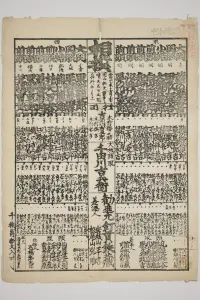
Before a honbasho, the Association publishes a banzuke that orders wrestlers by division, rank, and East or West side. Placement reflects earlier performance but is not generated by a public mechanical formula. The ranking committee evaluates records in the context of available positions and other wrestlers’ results.
A wrestler’s name may remain on the banzuke even if injury or another absence prevents participation. Withdrawal affects the competitive record and can influence later ranking, but the consequences depend on rank, record, and institutional rules rather than a single universal penalty.
Fifteen days, divisions, and records
Wrestlers in the top makuuchi and second jūryō divisions normally have one bout on each of the fifteen days. Wrestlers in the four lower divisions normally have seven bouts distributed across the tournament. A majority of wins is called kachi-koshi and a majority of losses make-koshi.
The basic arithmetic does not produce identical ranking changes. At elite ranks, promotion and demotion can involve additional expectations; at lower levels, the size of a winning or losing record and the available places on the next banzuke both matter.
How a tournament day unfolds
Every stage of the day is organized around the same prepared dohyō, whose surface is maintained between bouts and whose boundary supplies the evidence for many close decisions.
Competition begins with the lower divisions and proceeds upward, so an arena changes in density and ceremony through the day. The yobidashi calls wrestlers and tends the ring, the gyōji officiates, and ringside judges can convene to review a decision. Divisional ring-entering ceremonies precede the top bouts, with a separate entrance for yokozuna when one is competing.
Bouts are brief, but preparation and ritual create a longer sequence. Salt purification, repeated approaches to the starting lines, and the synchronization of the tachiai belong to the visible grammar of elite sumo. Their timing is regulated within the tournament schedule.
Championships and special prizes
The wrestler with the best record in a division receives its championship, or yūshō. If two or more wrestlers finish level, a playoff determines the champion. The top-division Emperor’s Cup ceremony is the most visible conclusion, but every division has a championship.
Eligible top-division wrestlers may also receive special prizes for outstanding performance, technique, or fighting spirit. These are separate from the championship and are subject to institutional criteria, including conditions attached to the final day.
Tokyo and the regional tournaments
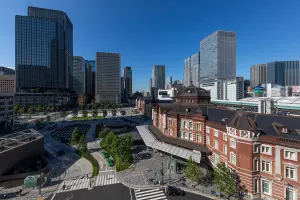
Ryōgoku is professional sumo’s principal institutional center: Kokugikan houses Association functions and the Sumo Museum as well as three tournaments. Osaka, Nagoya, and Fukuoka extend the honbasho calendar through regional venues and fan communities.
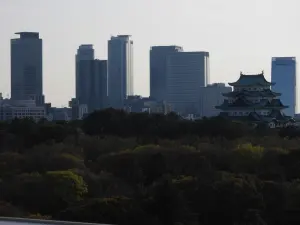
The non-Tokyo tournaments are not secondary championships. Their results carry the same ranking force within the annual cycle. Local foods, supporter networks, accommodation arrangements, and venue histories give each basho a regional setting without changing its official status.
Ceremony, continuity, and change
A honbasho joins a regulated sport to ceremonial forms with long histories. Ring purification, formal clothing, the suspended roof over the dohyō, and rank-specific entrances present continuity, but tournament organization has repeatedly changed through new venues, broadcast media, schedules, and Association policy.
It is therefore misleading either to call the event an unchanged survival from antiquity or to treat ceremony as decoration unrelated to competition. The modern tournament is an institution built from historical layers that are actively maintained and revised.
Honbasho, jungyō, and special tournaments
Regional tours called jungyō bring demonstrations, practice, ceremonies, and bouts to communities outside the six official championships. They support public relations and regional engagement, but their results do not determine the banzuke. Retirement ceremonies, overseas performances, and one-day knockout competitions are also separate formats.
The distinction matters because English words such as “tournament,” “tour,” and “event” can blur different Japanese institutions. A honbasho is defined by official competitive consequence, not simply by the presence of professional wrestlers or a dohyō.
Sources
- Japan Sumo Association, Grand Tournament Schedule.
- Japan Sumo Association, Introduction to Sumo.
- Japan Sumo Association, Banzuke Information.
- Japan Sumo Association, Sumo Museum.
- Web Japan, Sumo: Traditional Ceremonial Beauty and Strength.
- British Museum, Perspective Picture of a Grand Fundraising Sumo Tournament in Edo.
Last updated: