Japanese New Year
Kadomatsu
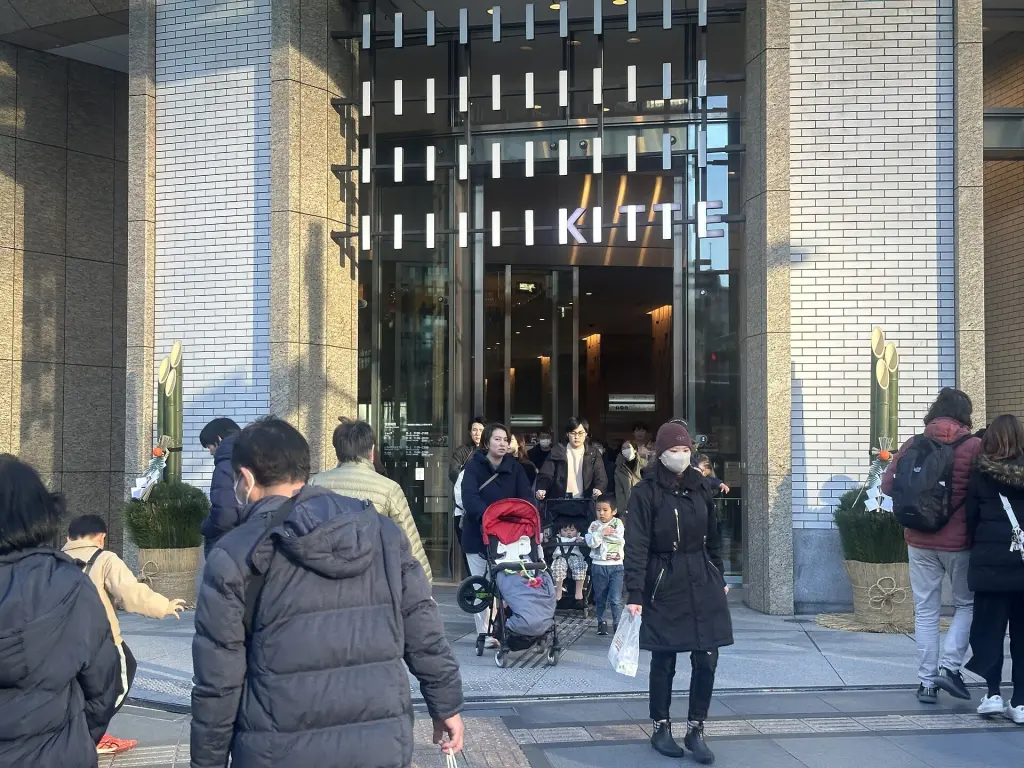
Image: Nesnad / Wikimedia Commons · CC0 1.0
Kadomatsu are New Year decorations placed at entrances to homes, shops, institutions, and other buildings in Japan. Their name means “gate pine,” and pine remains the defining material even though the tall bamboo stems of many modern designs are often more visually prominent. Typically displayed in pairs, kadomatsu announce that a place has been prepared for Shōgatsu and are widely explained as temporary markers or welcoming places for Toshigami, the New Year deity. Materials and shapes differ by region, maker, setting, and period: some are elaborate arrangements of cut bamboo, pine, plum, rope, and straw, while others consist mainly of pine branches or simplified commercial forms. They belong to a larger sequence of cleaning, decorating, offering, removal, and communal disposal.
Overview
| Japanese name | 門松 |
|---|---|
| Romanization | Kadomatsu |
| Literal meaning | Gate pine |
| Primary materials | Pine, often with bamboo, straw, rope, and other plants |
| Usual placement | At an entrance, commonly as a pair |
| Ritual association | Welcoming Toshigami for the New Year |
Name and function
Kado means gate or entrance and matsu means pine. The name points to both location and material: kadomatsu stand where the household or institution meets the outside world. They mark the season visibly and distinguish an entrance as prepared for the New Year.
In common ritual explanations, kadomatsu serve as yorishiro, objects or places through which a kami may approach or temporarily be present. The visiting figure is Toshigami. Some people now display them primarily as seasonal custom, but this religious history explains their placement and timing.
Historical development
New Year use of evergreen branches drew on the durability and auspicious associations of pine. Historical pictures and records show that gate-pine arrangements changed considerably; the standardized combination of three tall bamboo stems and dense pine should not be projected unchanged into every earlier period.
As warrior, urban, and commercial cultures developed, increasingly formal entrance displays appeared in different local styles. Modern nurseries, florists, municipal spaces, and retailers continue to adapt those patterns to the size and architecture of contemporary entrances.
Pine, bamboo, and regional forms
Pine is evergreen and has long carried associations of endurance and longevity. Bamboo grows straight and rapidly and is valued for resilience; plum, which flowers in winter, may add an association with renewal. Straw bindings, braided rope, and decorative paper can complete the arrangement.
Not every kadomatsu uses all of these materials. Bamboo tips may be cut diagonally or straight, pine may dominate, and locally available plants can change the silhouette. Small household versions and printed representations preserve the category without reproducing monumental gate displays.
Placement and timing
Kadomatsu are positioned at or beside an entrance, often symmetrically as a pair. They are usually installed after the year's regular business and cleaning are drawing to a close but before December 31. Customs discouraging one-night decoration encourage earlier preparation.
Removal follows the end of matsu no uchi, the period literally named for the pine display. January 7 is common in many areas, while January 15 or other dates appear elsewhere. Local calendars and disposal arrangements matter more than a single supposedly universal rule.
Toshigami and sacred boundaries
Kadomatsu are widely described as inviting or guiding Toshigami to the household. At the same time, shimenawa and shide can mark a purified boundary, and kagami mochi provides an offering within the prepared space.
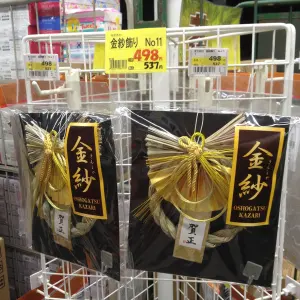
These objects have related but not interchangeable roles. A kadomatsu is not simply another name for shimekazari, and arrangements vary in how they combine pine, sacred rope, straw, and paper. Identifying each component helps make the larger New Year setting legible.
Making, display, and disposal
Large kadomatsu require plant selection, cutting, bundling, transport, and secure installation. Professional makers often build them for shops, offices, hotels, shrines, and public facilities, while households may buy compact versions or make simpler pine arrangements.
After display, New Year decorations may be collected for dondoyaki or a related community fire observance, where local practice and safety rules permit. Elsewhere they enter ordinary or specially designated waste systems. Burning should not be assumed appropriate without checking local arrangements.
Modern forms and sustainability
Space, cost, fire regulations, building management, and changing household composition have encouraged smaller and reusable forms. Printed signs, artificial materials, wall-mounted pieces, and miniature kadomatsu can perform the public signal of the season in places where a full plant arrangement is impractical.
Sustainability questions concern the sourcing of bamboo and pine, transport, single-use plastics, and end-of-season handling. Makers increasingly balance recognizable form with local materials and reuse, showing that kadomatsu remain a living craft rather than a frozen design.
Sources
- Government of Japan, The Origins and Significance of Japan's New Year's Culture.
- Government of Japan, Traditional Winter Events in Japan.
- Kokugakuin University Digital Museum, Shogatsu.
- Government of Japan, The Significance and Spirit of Shitsurai in Japan's New Year.
- Kokugakuin University Digital Museum, Toshigami, Toshitokujin.
Last updated: