Martial Arts
Japanese Martial Arts Lineage Map
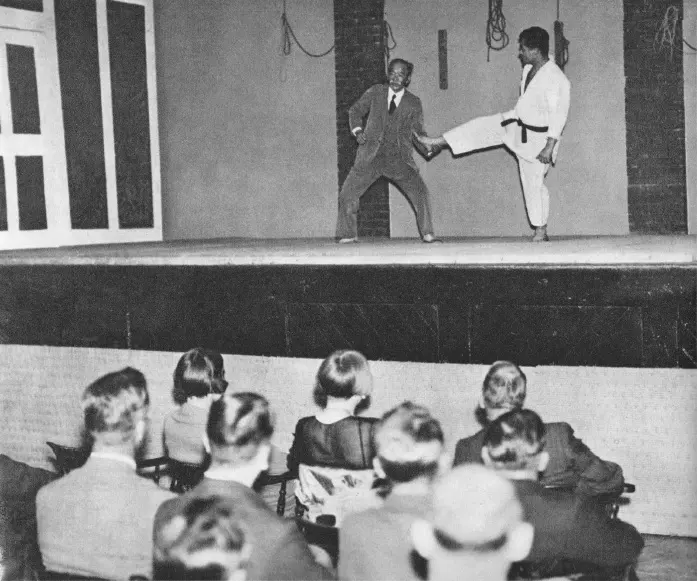
Image: Kodansha Ltd. / Wikimedia Commons / Jūdō hyakunen no rekishi · Public domain
柔術・徒手格闘の系譜
From classical schools to modern pathways
A compact guide to transmission, reorganisation, competitive contact, and international reinvention.
Late medieval to Edo foundations
Takenouchi-ryū
An early composite ryūha preserving grappling, restraint, and short-weapon methods.
Sekiguchi Shinshin-ryū
A major jūjutsu tradition with distinctive methods of grappling, control, and ukemi.
Shibukawa-ryū
A related early-modern lineage that developed its own syllabus and transmission.
These schools provide historical context; the diagram does not claim that every later art descends from one founder or one uninterrupted line.
Aiki transmission
Daitō-ryū Aiki-jūjutsu
Takeda Sōkaku was a central technical source for Morihei Ueshiba.
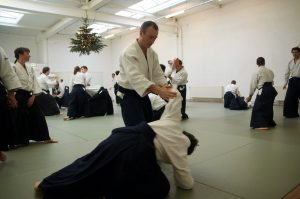
Aikido
Morihei Ueshiba reshaped his training through a distinct spiritual and pedagogical vision.
Selected later organisations
Aikikai
Hombu Dōjō · Morihei Ueshiba
Yoshinkan
Founded by Gozo Shioda
Shodokan / JAA
Competitive form · Kenji Tomiki
Yoseikan Budō
Cross-tradition branch · Minoru Mochizuki
Jūjutsu convergence
Tenjin Shin’yō-ryū
Striking, restraint, joint control, and choking methods.
Kitō-ryū
Throwing, balance, and formal methods.
Fusen-ryū
Mataemon Tanabe highlighted newaza in early Kodokan encounters.
Saigō Shirō · early Kodokan · Daitō-ryū study disputed
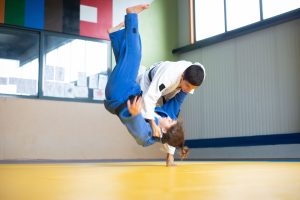
Kodokan Judo
Jigoro Kano reorganised selected jūjutsu methods around kata, randori, and education.
Parallel grappling pathways
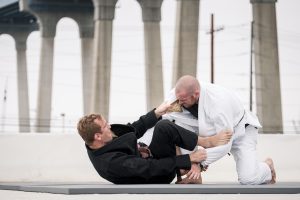
Brazilian Jiu-Jitsu
International transmission via Mitsuyo Maeda
Shichitei Judo
University rulesets with a strong newaza emphasis
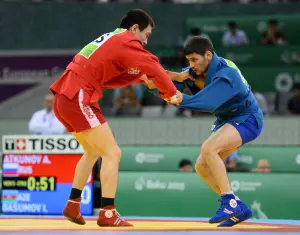
Sambo
Kodokan contribution via Vasily Oshchepkov · multi-source Soviet system
Okinawan pathways
Ryukyuan and Okinawan fighting traditions
Distinct regional labels with overlapping teachers and later classifications.
Karate
Okinawan traditions were reorganised into named schools and modern budō institutions.
For broader historical context, see Japanese Martial Arts. Select any card or person in the map to open its detailed TokyoWaltz entry.
Sources
- Nippon Budokan, Japanese Budō (Martial Ways).
- Takenouchi-ryū, Introduction.
- University of Tsukuba, Dr. Kano Jigoro, the Pioneer of Judo.
- Research Journal of Budo, Historical Changes from Jujutsu to Kodokan Judo.
- Aikikai Foundation, History of Aikido.
- Japan Aikido Association, History.
- Fumiaki Shishida, Tomiki's theory on the unity of Judo and Aikido.
- Nippon Budokan, Karate: Its History and Practice.
- International Judo Federation, Maeda Mitsuyo and Judo abroad.
- International SAMBO Federation, History of SAMBO.
Last updated: