Other Martial Arts
Yokozuna Dohyō-iri
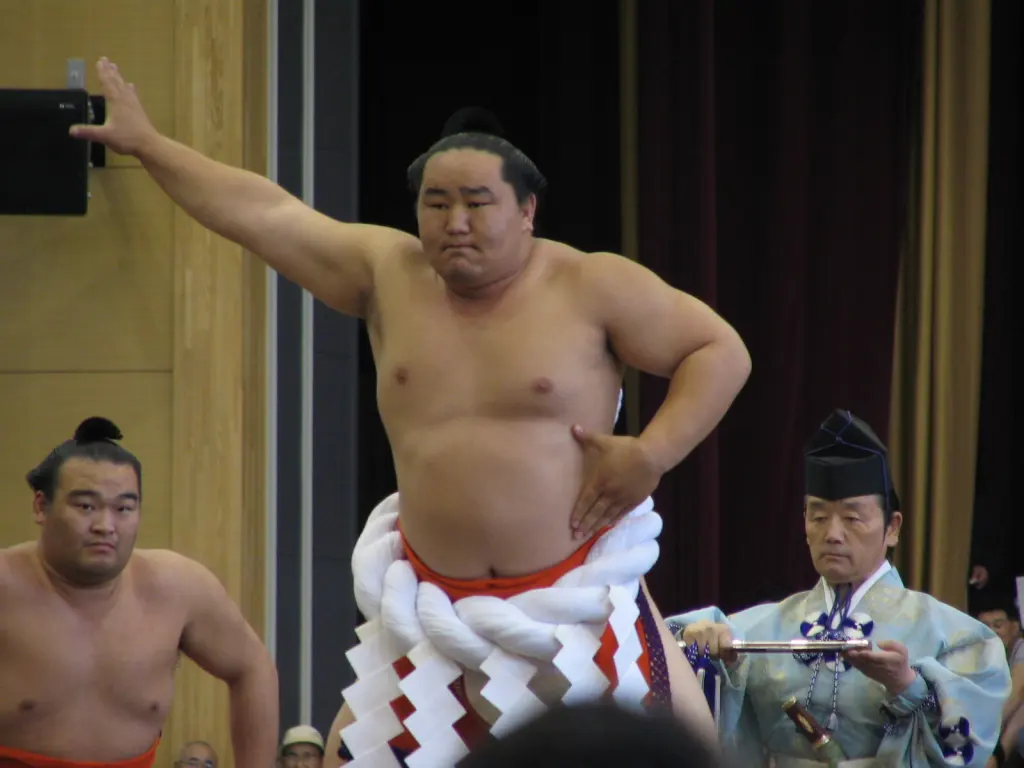
Image: Oba / Wikimedia Commons · CC BY-SA 2.5
Overview
Rank made visible through ritual.
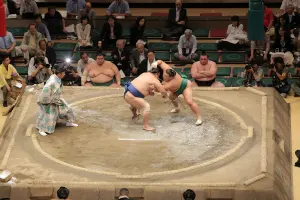
Yokozuna dohyō-iri (横綱土俵入り) is the individual ring-entering ceremony performed by a grand champion in professional sumo. Wearing an ornamental apron and the heavy white rope associated with the rank, the yokozuna enters with a sword-bearer and a dew-sweeper. Formal gestures, stamping and a controlled rising movement make rank visible through ceremonial performance. The two recognised forms are Unryū and Shiranui, distinguished especially by the rope’s knot and the position of the arms during the rise. The ceremony belongs to tournament presentation and to dedicated performances at shrines. It is distinct from both a competitive bout and the collective entrance of other top-division wrestlers.
The grand champion occupies the centre.
Sword-bearer and dew-sweeper accompany him.
Rope and arm positions distinguish the two forms.
At a glance
- Japanese name
- 横綱土俵入り
- Setting
- Professional sumo and ceremonial dedications
- Principal performer
- Yokozuna · grand champion
- Attendants
- Tachimochi and tsuyuharai
- Styles
- Unryū and Shiranui
- Distinctive equipment
- White rope and keshō-mawashi
01
The rank is expressed through a separate ceremony
The yokozuna entrance gives the highest rank a ceremonial form beyond the competitive Sumo Ranks hierarchy. The rope is a defining visual feature, worn over the ornamental keshō-mawashi. Museum collections preserve ropes, aprons and prints, allowing the ceremony to be studied through objects as well as present-day performances.
02
Three wrestlers have different roles
The yokozuna is accompanied by the tachimochi, or sword-bearer, and tsuyuharai, conventionally translated as dew-sweeper. Their roles organise the entrance and frame the central performer. These are ceremonial positions rather than opponents in a bout. The Sumo Museum’s exhibition includes a coordinated set of three ornamental aprons once used by Akebono and his attendants.
Yokozuna
- Role
- Performs the central ceremonial movements.
Tachimochi
- Role
- Carries the ceremonial sword.
Tsuyuharai
- Role
- Accompanies and leads the ceremonial entrance.
03
Stamping and the rise give the display its rhythm
Clapping, leg-lifting stamps known as shiko, and the low-to-high seriagari are conspicuous parts of the performance. The Japan Sumo Association places these gestures within sumo’s ritual presentation. They are deliberate ceremonial movements, not a demonstration of a winning technique. Observing the arms during the rise is more useful for identifying the style than relying on a single photograph of a stamp.
04
Unryū and Shiranui can be distinguished visually
The Sumo Museum identifies a one-loop knot with Unryū and a two-loop knot with Shiranui. During Unryū’s rise the right arm opens while the left hand remains near the side; Shiranui opens both arms. The museum describes the former as conventionally associated with attack and defence, and the latter with attack. These are explanations of ceremonial symbolism, not predictions of a wrestler’s competitive tactics.
Unryū · 雲龍型
- Rope knot
- One loop
- Arms during the rise
- Right arm extended; left hand near the side.
Shiranui · 不知火型
- Rope knot
- Two loops
- Arms during the rise
- Both arms extended.
05
Prints preserve earlier forms of the ceremony
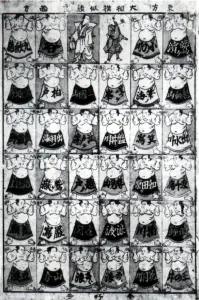
The museum’s 2024 exhibition displayed an illustrated publication from 1792 depicting Tanikaze and Onogawa, together with later prints and ropes. Its collection also includes an 1864 print of Shiranui Kōemon by Utagawa Kunisada II. These dated records show why the modern ceremony should be approached as a developed tradition. A style’s name alone does not establish that every modern movement was performed identically by its namesake.
06
The occasion changes the setting
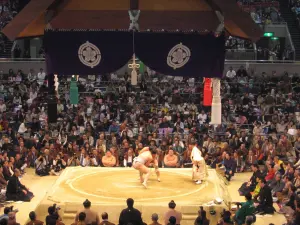
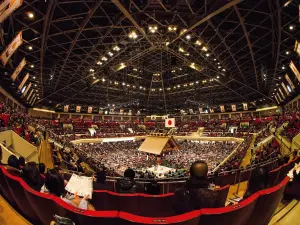
At Great Sumo Tournaments, the entrance forms part of the day’s presentation. Shrine dedications place the performance in another ceremonial setting. Meiji Jingū records Ōnishiki’s dedication in 1922 as its first such performance and explains the alternative term dezuiri. This local history should not be mistaken for the origin of yokozuna dohyō-iri itself. The wider Dohyō entry explains the ring and its setting.
Sources
Last updated: