Shinto
Karasu-zumo
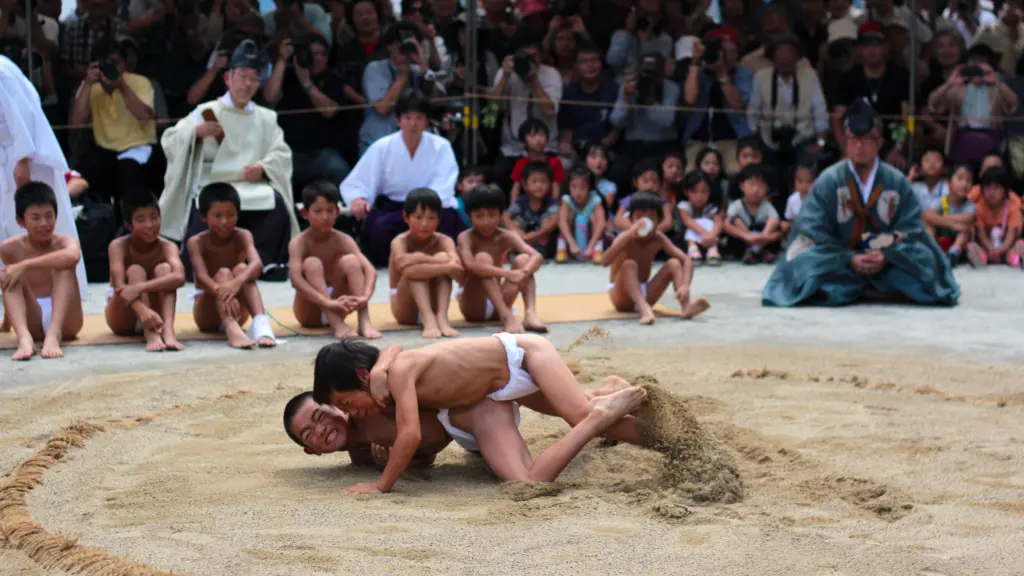
Image: Japanexperterna.se / Wikimedia Commons · CC BY-SA 3.0
Karasu-zumo (烏相撲), or “crow sumo,” is a September 9 observance at Kamigamo Jinja in Kyoto. It follows the shrine’s Chōyō ritual for the Double Ninth Festival. On a ring before the Hosodono hall, ritual officers called tone perform stylised crow calls and movements; children then divide into the Negi and Hōri sides and dedicate a series of sumo bouts. The shrine explains the crow symbolism through its tradition that Kamo Taketsunumi no Mikoto became the three-legged Yatagarasu and guided the legendary Emperor Jinmu. That account belongs to shrine mythology and should not be presented as documented political history. Kyoto City also records Karasu-zumo as intangible folk heritage and notes traditions connecting it with court sumo and medieval local service groups.
Overview
| Japanese | 烏相撲 |
|---|---|
| Romanization | Karasu-zumo |
| Venue | Kamigamo Jinja, Kyoto |
| Date | September 9, following the Chōyō ritual |
| Principal actions | Crow-call movements by tone and children’s ceremonial sumo |
| Children’s divisions | Negi side on the left and Hōri side on the right |
| Heritage context | Listed by Kyoto City among designated and registered intangible folk cultural properties |
Name, place, and scope
Karasu means crow and sumo means wrestling. The compound names a specific annual rite at Kamigamo Jinja, formally Kamo Wakeikazuchi Jinja, rather than a nationwide style of sumo. The event combines ritual movement, a local shrine narrative, community participation, and children’s bouts in one compact sequence.
English descriptions sometimes call it a festival, performance, or competition. Each term captures only part of the event. The wrestling is real, but it is presented as hōnō, a dedication, within the shrine calendar. The preceding crow actions are not preliminary entertainment detached from the bouts; together they form the identity of Karasu-zumo.
Calendar and preparation
Kamigamo Jinja’s official annual calendar places the Uchidori preparation rite at 8:00 p.m. on September 8. At the same ring used the next day, the tone and participating children confirm the crow movements and determine the order of bouts. This preparatory observance shows that Karasu-zumo is organised through rehearsed roles and a fixed ritual space.
On September 9, the shrine’s Chōyō rite begins at 10:00 a.m. Karasu-zumo follows rather than beginning at a separately stated clock time. Annual weather, access, or operational notices may alter viewing conditions, so visitors should check the shrine’s current announcements instead of relying only on the standing calendar.
The ring and crow-call actions
The ring is prepared before the Hosodono, near the shrine’s characteristic conical sand mounds. Before the children wrestle, the tone perform actions described as jitori and karasu-naki, including stylised calls and crow-like movement. Kyoto’s official visitor account describes the officers jumping and calling in white ritual clothing.
These actions should be understood within Kamigamo Jinja’s ceremonial vocabulary. They are not a general imitation used in professional sumo, and the sounds are not evidence for a single unchanged ancient choreography. The current rite is meaningful because the shrine, officers, families, and local heritage framework maintain it in this place.
Children’s sumo bouts
After the crow sequence, children from the shrine’s parish area dedicate sumo matches. The official shrine calendar divides them into the Negi side on the left and the Hōri side on the right. Kyoto City’s heritage description identifies the participants as upper-elementary-school children and likewise records the east–west division.
The bouts connect community participation with formal shrine service, but they should not be confused with Grand Sumo’s professional ranks, tournament schedule, or banzuke. Children’s safety, eligibility, training, and pairings belong to the organiser. A visitor sees the public culmination of preparation carried out by families and shrine participants.
Connection to Chōyō no Sekku
September 9 is Chōyō, the Double Ninth Festival, associated in Japan with chrysanthemums, longevity, and protection from misfortune. Kamigamo Jinja offers chrysanthemums before the kami and prays for long life and protection. Its calendar states that chrysanthemum sake is served after Karasu-zumo.
The pairing is a local ritual arrangement, not the standard form of Chōyō throughout Japan. Many Double Ninth observances have no sumo element, while most sumo events have no connection with chrysanthemums. Kamigamo Jinja brings the seasonal festival and its own crow-and-wrestling tradition together on one date.
Yatagarasu in shrine tradition
Kamigamo Jinja explains the crow through Kamo clan and shrine tradition. Kamo Taketsunumi no Mikoto, described as the maternal grandfather of the principal kami, is said to have taken the form of Yatagarasu, the three-legged crow that guided Emperor Jinmu during his legendary eastern expedition. The Saiō-dai associated with the Aoi Matsuri observes Karasu-zumo.
This narrative explains symbolism within the shrine’s religious world. Emperor Jinmu’s expedition and the transformation into Yatagarasu belong to mythic tradition, not securely dated biography. Keeping that boundary explicit allows readers to understand why the crow matters without converting sacred narrative into modern historical evidence.
Historical layers
Kyoto City states that Karasu-zumo is traditionally derived from sumo once performed as an annual event at the imperial court. This is a reported origin tradition rather than a complete documentary chain. Court wrestling, shrine offerings, local service obligations, and children’s participation may belong to different historical layers of the observance.
For the medieval period, the city’s heritage account names Ōmiya, Koyama, Ono, and Okamoto—communities among the Kamo area’s traditional settlements—as groups that served the event. That record places Karasu-zumo within local social organisation as well as shrine ceremony. The roles seen today should not automatically be projected unchanged onto every earlier century.
Intangible folk heritage
Kyoto City lists Karasu-zumo in its register of designated and registered intangible folk cultural properties. Such recognition concerns a living practice sustained by people, roles, knowledge, timing, and place. It does not mean that the performance is frozen or that every historical claim has been independently verified.
Continuity depends on repeated preparation: ritual officers learn the movements, children and families participate, the ring is prepared, and the shrine keeps the rite within its annual calendar. Photographs capture a striking moment, but the heritage lies equally in organisation, memory, and the relationships that make the event possible each year.
Viewing and etiquette
The shrine describes Karasu-zumo as open to viewing, but the Hosodono area remains an active sacred and ceremonial space. Visitors should keep clear of participants and sight lines, avoid obstructing families, and follow staff instructions about photography, movement, and crowd control. The children are participants in a religious event, not anonymous tourist props.
September weather in Kyoto can remain hot. Hydration, sun protection, and quiet patience are practical concerns, as is allowing extra time for transport and crowds. Current official notices are the best source for any change to access or timing.
Interpretation and boundaries
Karasu-zumo connects Sumo, Shinto, seasonal custom, mythology, and local community, but it does not collapse those fields into one origin story. Its children’s bouts are not miniature professional Grand Sumo, and its crow symbolism does not make the crow a universal emblem of Japanese wrestling.
The most accurate description remains narrow: this is Kamigamo Jinja’s September 9 rite after Chōyō, with crow actions by tone and dedicated bouts by two sides of children. Wider comparisons are useful only when that specific place and sequence remain visible.
Sources
Last updated: