Popular Culture
Gymnastics in Japan

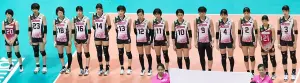
Image: Fernando Frazão / Agência Brasil / Wikimedia Commons · CC BY 2.0
Gymnastics in Japan
Several disciplines share a national sporting framework.
Gymnastics in Japan covers several organised disciplines and forms of participation rather than one uniform event. Artistic gymnastics is especially visible through international competition, but rhythmic gymnastics, trampoline and Gymnastics for All also belong to the national association’s activities. The Japan Gymnastics Association traces its founding to the All Japan Gymnastics Federation in 1930 and records a post-war reorganisation in 1946. Japanese Olympic history includes both men’s and women’s team achievements, notably at Tokyo 1964. The broader Japanese word taisō can also describe exercise, so context matters. A cultural account should distinguish competitive disciplines, representative teams and wider participation without using one medal-winning programme to stand for all three.
Disciplines
Different events need different descriptions.
Institutions
Clubs and educational bodies support the field.
Participation
Programmes extend beyond national teams.
At a glance
- Japanese term
- 体操 — taisō
- National association
- Japan Gymnastics Association — JGA
- Founding date
- 13 April 1930
- Post-war reorganisation
- 1946
- Scope
- Competitive disciplines and Gymnastics for All
01
Taisō is broader than a single competitive event
The national association provides separate contact routes for artistic gymnastics, rhythmic gymnastics, trampoline and Gymnastics for All. These labels identify different programmes. In this entry, gymnastics refers to that organised sporting field; the everyday word taisō should not automatically be read as Olympic artistic gymnastics.
02
A national organisation developed across the twentieth century
The JGA chronology begins with the All Japan Gymnastics Federation on 13 April 1930. It records the establishment of the Japan Gymnastics Association in March 1946, foundation status in 1970 and transition to a public-interest foundation in 2013. These dates describe institutional changes, not separate inventions of gymnastics.
03
Several disciplines share an organisational umbrella
The association’s current structure brings together prefectural bodies and organisations associated with university, junior-club and other participation. Its programme labels help a reader identify what kind of gymnastics an event presents before comparing results.
- Artistic gymnastics
- A distinct competitive discipline.
- Rhythmic gymnastics and trampoline
- Separate disciplines with their own events.
- Gymnastics for All
- Participation and festival programmes beyond elite competition.
04
Tokyo 1964 records include men and women
The Japanese Olympic Committee lists men’s team gold and women’s team bronze at Tokyo 1964. It also records Endō Yukio’s individual all-around gold and apparatus medals. Naming the category matters: a team result, an all-around result and an individual apparatus result recognise different achievements.
05
Clubs and education form part of the wider structure
The JGA lists student and junior-club organisations among its affiliates and identifies school-sport bodies as related organisations. That structure places organised gymnastics in more settings than the national team. It also provides a more concrete account of development than attributing performance to an undefined national character.
06
Archives preserve more than a medal table
Shōwakan’s catalogue records the association’s sixty-year history, including material on organisational development and competition. Such records complement Olympic result lists by preserving the institutions behind performances. The photograph of Uchimura Kōhei at Rio 2016 illustrates one artistic-gymnastics event, not the full range of Japanese gymnastics.
Sources
Last updated: