Music
Anison
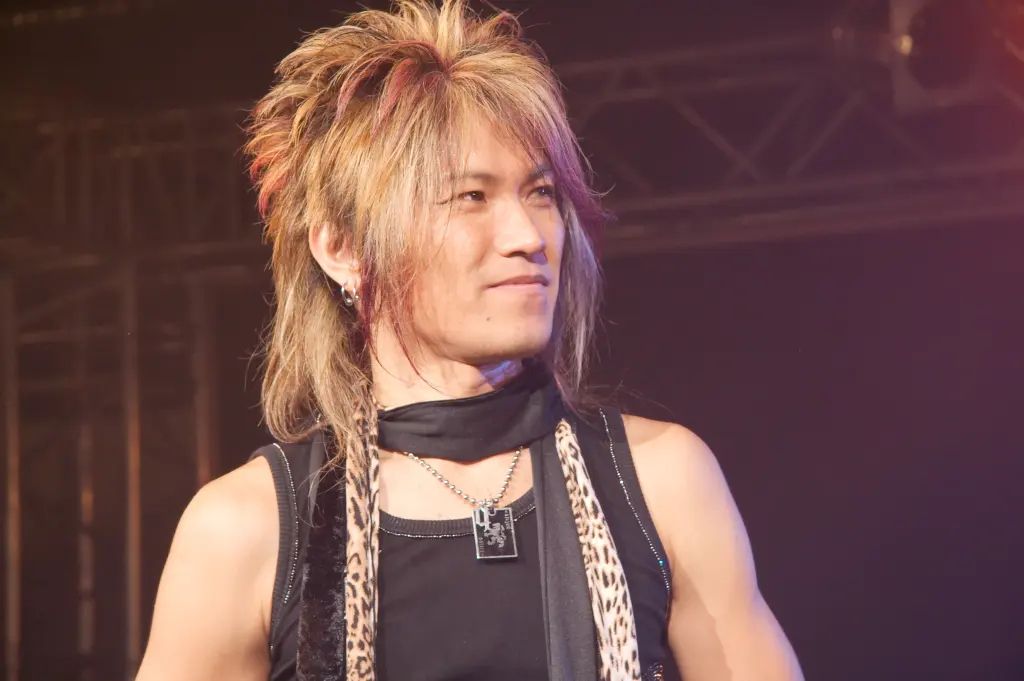
Image: Okki / Wikimedia Commons · Creative Commons Attribution-ShareAlike 3.0 Unported
Songs in an anime ecosystem
Anison is defined by connection, not one sound.
Opening, ending and insert songs connect an animated work to artists, voice actors, record labels, concerts and listeners. Their styles vary; the relationship to anime is the organising principle.
Opening, ending, scene, character or wider franchise.
Pop, rock, metal, orchestral, electronic and more.
Broadcast, releases, streaming, charts and concerts.
- Japanese terms
- アニメソング / アニソン
- Core definition
- A song connected to an anime work
- Central roles
- Opening, ending and insert song
- Adjacent forms
- Image and character songs; some game and tokusatsu music
- Not the same as
- All background score or one fixed genre
- Main circulation
- Screen, recordings, streaming, charts, concerts and fan media
01 · Definition
Start with the work–song relationship.
The Japanese expression anime song is commonly shortened to anison. The clearest cases are credited songs that open, close or appear within an animated work.
A song may be commissioned for a production, selected through a tie-up, or become strongly identified with the work through repeated use. None of those routes requires one rhythm, instrument or vocal method. J-pop and anison therefore overlap without being interchangeable.
Opening / ending / insert
The relationship is heard in the animation and normally clear in the credits.
Image / character song
The song may extend a work or character beyond the screen; usage varies by context.
Background score
Anime music, but not automatically anison because it may not be a song.
Game / tokusatsu song
Shared performers and events do not make every neighbouring title an anime song.
02 · Placements
Position changes what a song does.
The same musical style can carry a different narrative function depending on where and under whose identity it appears.
Opening theme
Introduces the recurring audiovisual identity and prepares the episode’s tone.
Ask: what promise does it make?Ending theme
Closes the episode and may create reflection, contrast or a character viewpoint.
Ask: what feeling remains?Insert song
Appears within the narrative, where timing and lyrics can become part of the scene.
Ask: why here?Image / character song
Extends a world or character through recordings, games and live performance.
Ask: who is speaking?Film works often organise music differently. A feature may concentrate its principal song at a climax or over the credits instead of using a weekly opening-and-ending pair; see Japanese Cinema for the wider screen context.
03 · Early history
Television created a repeating musical encounter.
The 1960s expansion of television animation generated continuing demand for memorable opening, ending and insert songs, together with a record market built around them.
Television-manga themes
Songs repeatedly met viewers through scheduled broadcasts and were closely associated with children’s repertoire.
A specialist record field
Record-company production, performers and creators established durable methods for theme and insert-song releases.
Work identity + singable memory
Direct naming and recognisable refrains were important tools, but never the only creative formula.
Historical frame: Hiromichi Hasebe’s study of Nippon Columbia traces how a television-theme record business took shape in the 1960s and 1970s.
04 · Audience shift
More listeners produced more ways to belong.
From around the 1980s, older anime audiences, new label participation and fan discussion widened the field without replacing its earlier work-centred forms.
“This song belongs to this anime.”
Titles, lyrics, vocal identity or arrangement closely signal the programme, character or story.
“This song can travel beyond it.”
A song may retain an artist’s established style or evoke a work indirectly while circulating as popular music.
Ken Takakusa’s study of anime-magazine correspondence documents debate over whether anime songs should remain singable for children, stay inseparable from a work, or pursue wider popularity. By the 1990s, image-song approaches had become familiar. The useful conclusion is not that one route defeated another, but that several expectations came to coexist.
05 · Production
Two systems meet in one credit sequence.
Anison is coordinated between the needs of an animated work and the people and organisations that make, publish and perform music.
Work and screen
- Producers and director
- Broadcaster or distributor
- Opening, ending, film or scene needs
Creation and release
- Label, publisher and management
- Performer or voice actor
- Lyricist, composer and arranger
- PerformerArtist, band, unit, voice actor or character name
- SongwritersLyrics and composition may have different authors
- ArrangementTurns the composition into the recorded sound
- Screen useOpening, ending, insert, film theme or promotion
06 · Sound
The category contains many genres.
Children’s chorus, orchestral writing, kayōkyoku, pop, rock, metal, hip-hop and electronic production can all become anison when joined to an animated work.
Builds a repertoire and public identity around theme songs.
May sing under a personal artist name or as a credited character.
Contributes a tie-up within a wider catalogue and established style.
Links animation, characters, games, recordings and live stages.
Do not infer function from sound alone. To identify anison accurately, check the official credits and release context as well as the audio.
One catalogue, many sounds. The Naruto Anime Songs reference separates all 84 Japanese television openings and endings across the original series and Shippuden.
One franchise, three screen positions. The Slam Dunk Anime Songs catalogue separates nine distinct openings, endings and an insert song from their repeat film appearances.
07 · Circulation
A song can outlive its original time slot.
Broadcast remains one point of encounter. Releases, streaming, charts, concerts, convention stages and fan performance give songs additional routes.
A recurring audiovisual association begins.
The song becomes independently replayable.
Different sounds are grouped as anison culture.
Memory and participation renew the connection.
Billboard Japan Hot Animation
A dedicated chart makes animation-related songs legible across artists and release types.
Animelo Summer Live
A shared annual stage brings specialist singers, voice actors, bands and franchise units together.
Touring and platforms
JAM Project’s international activity illustrates one route through which anison performance travels.
These examples demonstrate circulation, not one unified audience. A listener may meet the song before the anime, discover the work through the song, or understand each through a different language and community.
Sources
- Hiromichi Hasebe · Kyorin UniversityThe Development of Nippon Columbia’s Anison Record Business
- Ken Takakusa · Japanese Association for the Study of Popular MusicHow Japanese Anime Songs Ceased Being “for Children”
- Billboard JapanHot Animation chart
- Animelo Summer LiveAnimelo Summer Live 2026 official site
- JAM ProjectOfficial profile
Last updated: