Film & Television
Japanese TV Drama
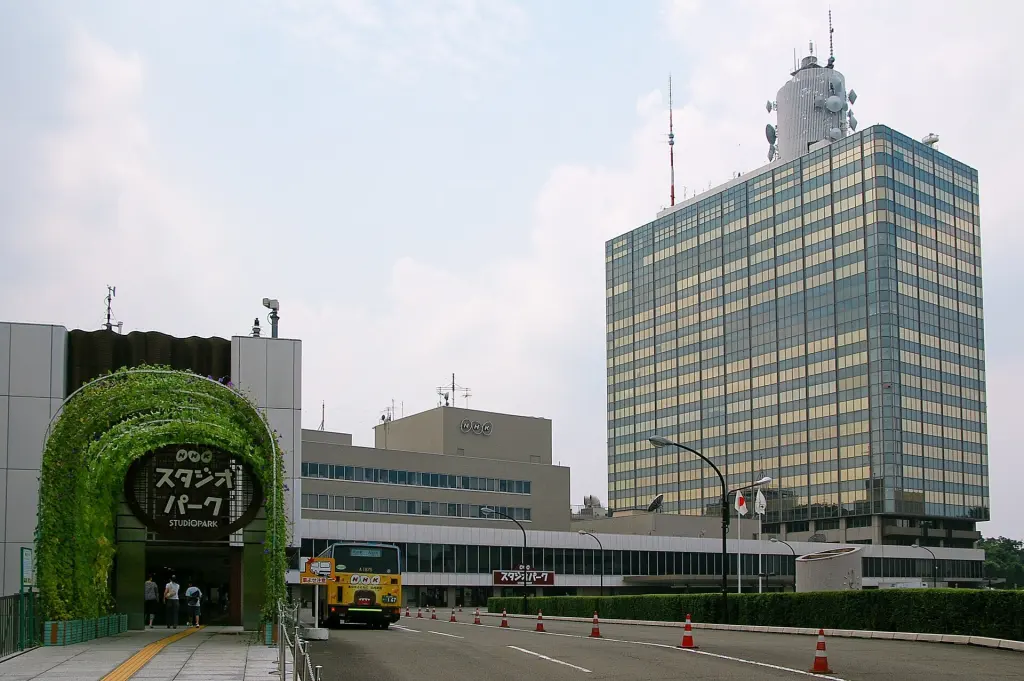
Image: J o / Wikimedia Commons · CC BY-SA 3.0
Overview
One medium.
Several scheduling cultures.
Japanese television drama is best understood through the interaction of broadcaster, format, time slot, audience, and distribution—not as one genre or one fixed episode count.
Public-service and commercial institutions set different remits, resources, and schedules.
Daily serial, seasonal series, special, and longer historical production shape different rhythms.
Broadcast, recording, streaming, sales, and remakes change where and how a drama is encountered.
- Japanese name
- 日本のテレビドラマ
- Common terms
- テレビドラマ (terebi dorama); ドラマ (dorama)
- Medium
- Scripted television fiction
- Regular television broadcasting
- Since 1953
- Major formats
- Serials, continuing daily dramas, miniseries, and specials
- Broadcast ecology
- NHK and commercial networks, with terrestrial, satellite, cable, and streaming distribution
01 Name and scope
Dorama names a broad medium—not a fixed genre.
テレビドラマ
Scripted live-action fiction made for television.
ドラマ
A common schedule and publicity term whose scope depends on context.
Not one genre
Romance, history, family, mystery, medical, school, and speculative works can all belong.
In Japanese usage, terebi dorama can include many kinds of scripted television fiction rather than one fixed genre or episode count. The shorter word dorama is common in schedules, publicity, and everyday speech. The term usually distinguishes live-action fictional programmes from news, documentary, variety, and animation, although hybrid productions and adaptations can blur those boundaries.
A useful account therefore considers format, broadcaster, time slot, intended audience, and distribution together. A morning serial and a late-night limited series may both be television dramas even though their duration, financing, performance style, and viewing habits differ substantially.
02 Broadcasting foundations
Television drama grew with the post-war broadcasting system.
- 1953
Regular broadcasting
NHK began regular television service; commercial stations expanded during the decade.
- Early television
Live-production constraints
Theatre and radio experience met limited recording technology and new studio practice.
- Domestic medium
Scheduled everyday viewing
Receivers, relay networks, advertising, and regular programmes built a national ecology.
NHK began regular television broadcasting on 1 February 1953, followed by the growth of commercial stations during the same decade. Early programmes were shaped by live production, limited recording technology, theatre and radio experience, and the practical demands of building a national broadcasting service. Surviving scripts and institutional archives are especially important because many early broadcasts were not preserved as complete recordings.
Television drama soon became one part of everyday domestic viewing. Its history belongs not only to individual titles but also to the expansion of receivers, relay networks, studios, advertising, public broadcasting, and regular programme schedules in post-war Japan.
03 Serial, seasonal, and special formats
A season is one format, not the definition.
Renzoku dorama
Successive broadcasts build a continuing story; a quarterly run is common but not defining.
Morning serial
Short instalments across many months create familiarity through repetition.
Taiga drama
A year-long public-service production interprets a historical subject.
Special
A single or multi-part production can focus attention on one story or occasion.
A renzoku dorama is a continuing serial shown across successive broadcasts. Commercial prime-time series have often been organised in seasonal programming blocks and may run for roughly one quarter of the year, but ten or eleven episodes is a convention rather than a definition. Broadcasters also commission two-part works, short late-night series, single-episode specials, and programmes with longer runs.
Episode length varies just as widely. NHK's daily serials use short instalments across many months, while prestige or commemorative productions may have extended episodes. Format influences storytelling: daily repetition can build familiarity, whereas a compact seasonal series may rely on a tightly structured arc and a special may concentrate on one event.
04 NHK and public-service drama
Public-service drama made recurring formats into institutions.
Asadora
A durable scheduling framework for fictional and historically inspired lives.
Taiga dorama
A recurring framework for interpreting people and conflicts from Japan's past.
NHK has developed durable drama institutions, including morning serials commonly known as asadora and year-long historical taiga dorama. These labels identify scheduling and production frameworks, not single genres: morning serials have followed fictional and historically inspired lives, while taiga productions interpret people and conflicts from different periods of Japanese history.
Public-service drama can combine entertainment with historical, regional, or social themes, but it should not be treated as a transparent record. Scripts select, compress, and dramatise evidence. Credits, companion programmes, archives, and historical scholarship help distinguish a production's interpretation from the events and people it depicts.
05 Commercial networks and time slots
Time slots shape expectations before the opening scene.
Commercial television developed around national networks linked to local affiliates, with advertising, sponsors, production companies, and talent agencies contributing to the programme economy. A broadcaster's named time slot can become a recognisable brand, associating a particular evening with romance, family drama, mystery, medical stories, or other recurring expectations.
Scheduling is never neutral. Prime time can signal broad reach, while late-night slots may allow smaller budgets, narrower audiences, or greater formal experimentation. Local stations and satellite services add regional and specialist production. Ratings remain influential, but recording, catch-up services, subscriptions, and online discussion have complicated the older model of a simultaneous mass audience.
06 Genres and audiences
Genre labels overlap; audiences move.
Japanese television drama includes family and workplace stories, romance, comedy, police and legal series, medical drama, school narratives, period drama, suspense, and speculative fiction. These categories overlap, and genre labels may reflect a broadcaster's marketing as much as a stable textual form. The widely discussed 'trendy drama' of the late 1980s and 1990s, for example, connected urban settings, consumer life, fashion, popular actors, and contemporary relationships without accounting for all drama made in that period.
Audience categories can also oversimplify. A programme scheduled for families, younger viewers, or a late-night niche may travel beyond that initial target through repeats, home video, streaming, fan translation, or adaptation.
07 Music, stars, and media crossings
Stories, stars, and songs travel together.
Source worlds
Novels · manga · original scripts
Television production
Actors · writers · directors · music
Further lives
Songs · films · specials · remakes
Television drama operates within a wider media economy. Novels and manga supply stories; actors may also work in film, theatre, advertising, music, and variety television; and successful programmes may generate films, specials, remakes, or merchandise. These relationships encourage audiences to follow people and properties across media rather than encounter a drama as an isolated text.
Opening, ending, and insert songs are prominent points of contact with J-pop. A drama can give a song repeated national exposure, while an established performer can draw attention to a new series. The commercial relationship is important, but music also shapes pace, memory, and emotional interpretation within the programme itself.
08 International circulation
What travels abroad is selected by rights and platforms.
Japanese television programmes have circulated overseas through public cultural exchange, broadcaster sales, regional channels, home video, remakes, and streaming. The Japan Foundation reports supplying thousands of programmes to broadcasters in more than 170 countries, while NHK's Oshin became an especially prominent example of international television circulation.
International visibility remains selective. Rights, subtitles, music clearances, platform strategy, and regional demand determine which programmes travel. Online availability can widen access while also fragmenting catalogues by territory. A title that appears globally representative may therefore reflect distribution conditions as much as its importance within Japan.
09 Reading a drama in context
Read the broadcast context as carefully as the plot.
- 01
Original broadcast
Record broadcaster, channel, time slot, and transmission dates.
- 02
Production frame
Check episode length, production company, writers, directors, and source material.
- 03
Version
Later streaming edits, titles, music, or episode divisions may differ.
- 04
Historical claim
Separate documented events, later legend, and the programme's dramatization.
A drama can be read more precisely by recording its original broadcaster, channel, time slot, transmission dates, episode length, production company, credited writers and directors, and source material. Contemporary schedules, scripts, press releases, and audience research provide different kinds of evidence. Later streaming listings may alter titles, episode divisions, or music and should not automatically replace original broadcast information.
For historical drama in particular, viewers should separate documented events, later legend, and television invention. The programme remains valuable evidence of the period in which it was produced: its casting, regional promotion, visual design, and narrative emphasis show how the past was being interpreted for a particular audience.
Sources
Last updated: