Martial Arts
Judo
Last updated August 14, 2026
Judo is a Japanese martial art and educational practice built around throwing, controlling, and learning with another person. Its name means the gentle way. In Judo, gentleness does not mean weakness: it means using balance, timing, technique, and awareness instead of meeting force with force.
From jujutsu to Judo
Judo was founded in 1882 by Jigoro Kano (1860–1938), an educator who studied several schools of jujutsu, including Tenjin Shinyo-ryu and Kito-ryu. Jujutsu contained effective methods for self-defence, but some techniques were too dangerous for frequent, full-speed practice. Kano selected, refined, and organised what could be practised safely and repeatedly.
He opened the first Kodokan dojo in Tokyo with only a small group of students. The Kodokan became the centre from which Judo grew in Japan and around the world. Kano did not intend to create only a fighting system. By changing jutsu (technique or art) to do (a way of life), he presented Judo as a path for physical training, character, and contribution to society.
Guiding ideas
Seiryoku Zenyo — best use of energy
Seiryoku Zenyo is often translated as “maximum efficient use of energy.” In a throw, a judoka looks for the right moment to break an opponent’s balance, prepare the technique, and apply it cleanly. Outside the dojo, the same idea encourages concentration, good judgement, and using one’s abilities with purpose rather than waste.
Jita Kyoei — mutual welfare and benefit
Jita Kyoei means “mutual welfare and benefit.” Judo is never learned alone. Partners take turns throwing, falling, attacking, defending, and helping one another improve. Even in a contest, respect for the other person, the referee, and the rules is essential. This principle connects personal development with care for the people around us.
Rei — respect in practice
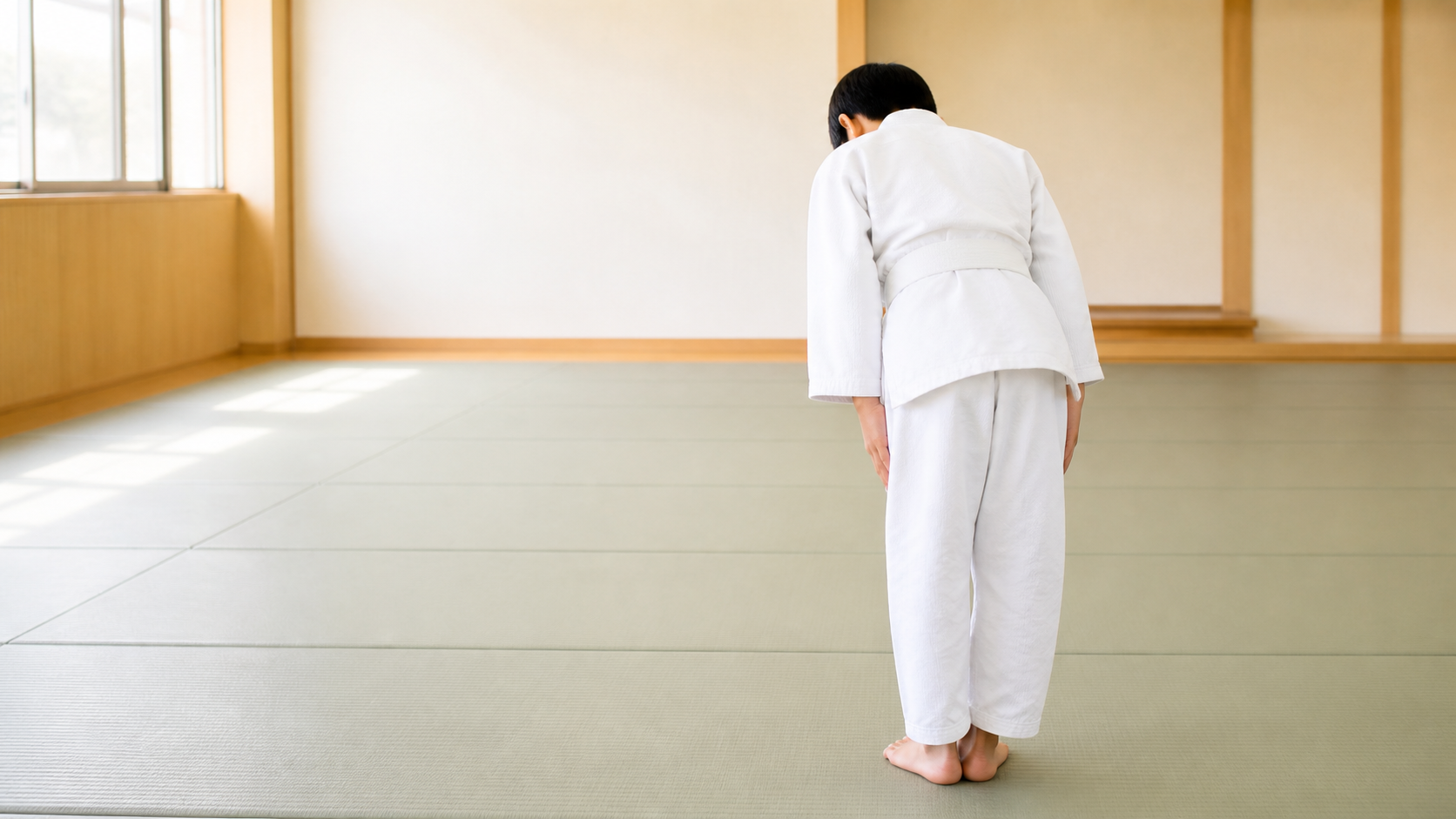
Bowing is an important expression of rei, or respect. Students bow when entering and leaving the dojo, before and after practising with a partner, and at the beginning and end of a match. Good etiquette also includes listening carefully, keeping the practice space safe, and thanking partners for training together.
How Judo is practised
A beginner first learns how to move safely and how to fall. Ukemi, or breakfall practice, teaches the body to protect the head and spread the impact of a fall. It is one of the foundations that makes active Judo practice possible.
Judo techniques are usually grouped into two main families:
- Nage-waza are throwing techniques. They include hand techniques, hip techniques, foot and leg techniques, and sacrifice techniques, in which the thrower uses their own controlled fall to create a throw.
- Katame-waza are control techniques on the ground. They include pins, strangles, and joint locks. The rules for age and level are carefully designed so that training remains safe.
Atemi-waza, or striking techniques, are preserved in some formal kata but are not used in ordinary randori or modern competition. This distinction reflects Kano’s aim of making everyday training both meaningful and safe.
Randori and kata
Randori is free practice. Partners move, respond, and try techniques in a changing situation. It develops timing, balance, confidence, and the ability to stay calm under pressure. Randori is cooperative as well as challenging: a good partner helps create a safe and useful practice.
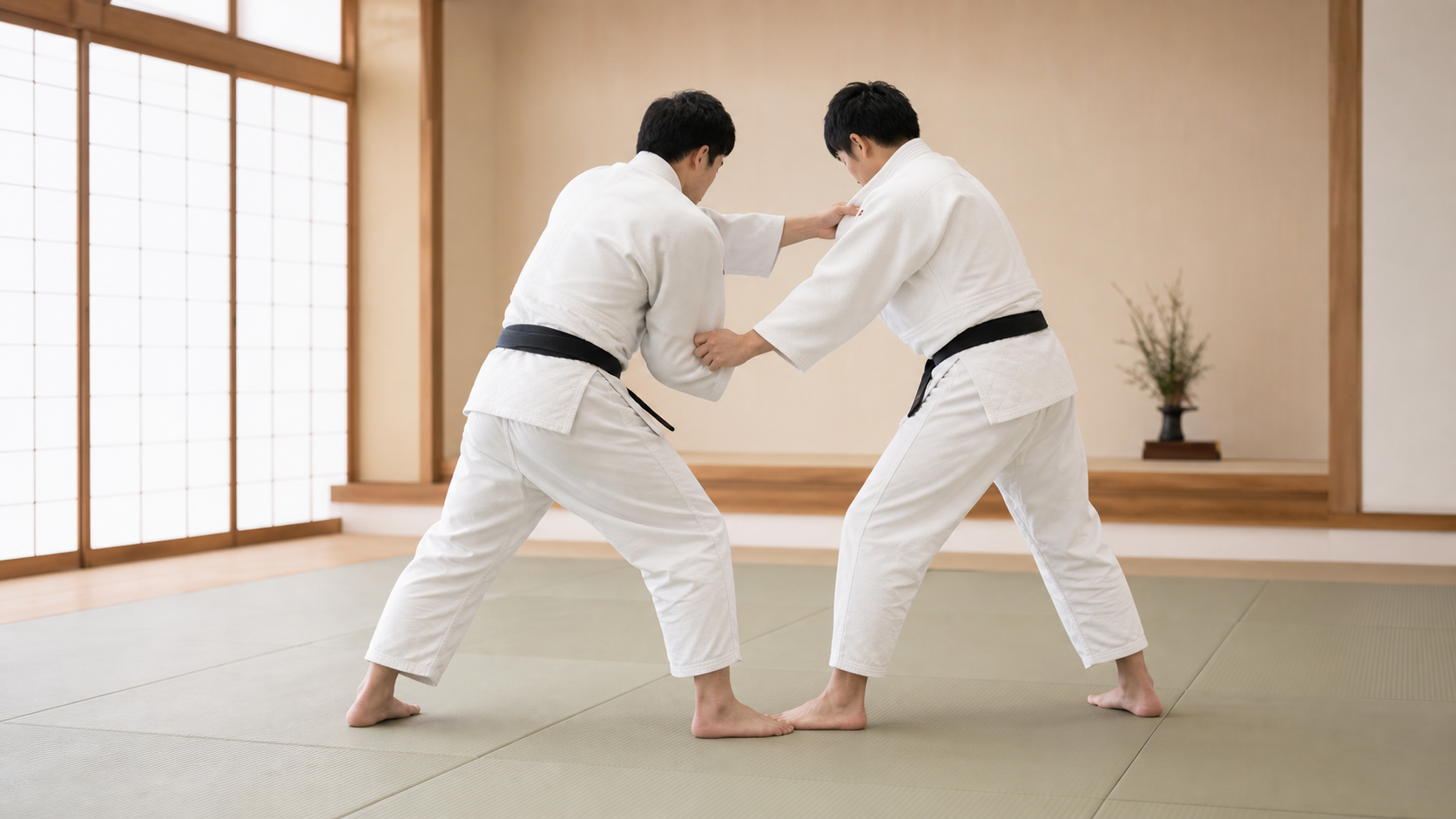
Kata is a set form performed with a partner. It preserves important principles that may not appear clearly in free practice, including posture, distance, direction, and the purpose of each movement. Randori and kata work together: one tests technique in motion, while the other helps students study its underlying ideas.
The path from white belt to black belt
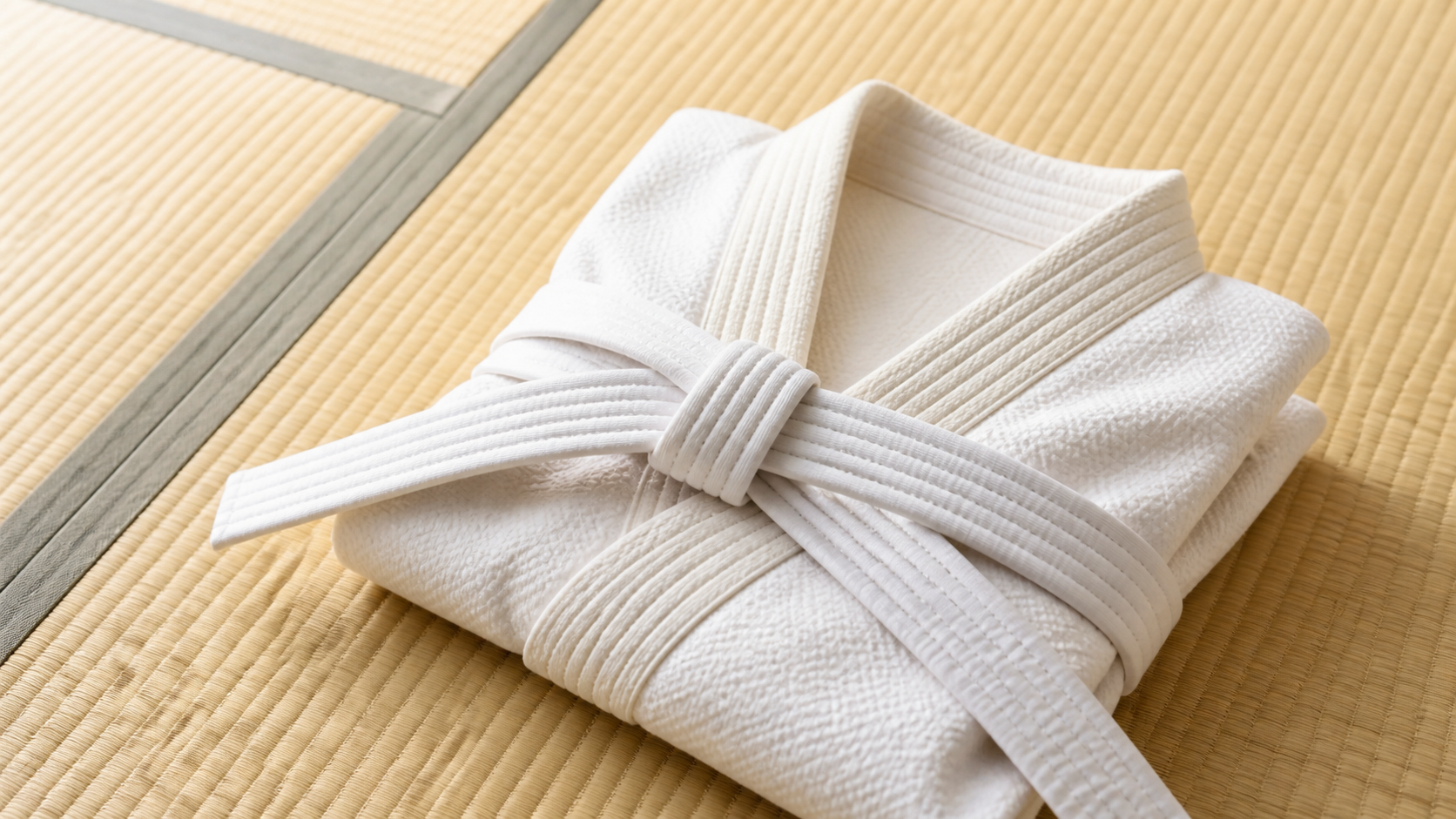
Judo uses a kyu and dan ranking system. Kyu grades describe the stages before black belt; dan grades begin at black belt. The colour and order of kyu belts differ between countries, organisations, and children’s classes, so there is no single universal sequence. White marks the beginning, while black belt represents a new stage of responsibility and continued study—not the end of learning.
More senior grades may wear red-and-white or red belts in formal settings. What matters most is not the colour itself, but the steady development of skill, safety, self-control, and good character.
Judo as a sport
In a Judo contest, the clearest victory is ippon, awarded for a decisive throw or a successful pin, strangle, or joint lock under the rules. Waza-ari recognises a near-decisive score. Penalties, called shido, discourage unsafe, passive, or unfair actions.
Competition rules have changed over time as Judo has become a worldwide sport. These changes aim to protect athletes, reward positive attacking Judo, and keep the sport understandable for participants and spectators. Competitive Judo is only one part of the art; many people train for fitness, friendship, confidence, study of Japanese culture, or lifelong learning.
From Japan to the world
Jigoro Kano was also a pioneering educator and an early member of the International Olympic Committee. His work connected Judo with modern physical education and helped introduce Japan to the Olympic movement. Judo first appeared as an Olympic sport at the Tokyo Games in 1964 and has since become a truly international discipline. Women’s Judo joined the Olympic programme in 1992.
The 1964 Tokyo Games offered a memorable symbol of Judo’s global future. Dutch judoka Anton Geesink won the open category and showed respect for his Japanese opponent and the tatami. His victory demonstrated that Judo’s values and techniques could be shared across borders. Teachers such as Keiko Fukuda also helped carry Judo to new communities and inspired generations of women judoka.
The Kodokan today
The Kodokan Judo Institute in Tokyo remains an important home for Judo history, teaching, research, and international exchange. It is a meaningful place to learn about Kano’s original vision: serious practice joined with curiosity, respect, and an open mind. Visitors who hope to observe or train should check the Kodokan’s current official guidance before going, since schedules and participation rules can change.
A small glossary
- Dojo: a place for training in a martial way.
- Judoka: a person who practises Judo.
- Judogi: the strong white training uniform worn for Judo.
- Tatami: the mat used for Judo practice and competition.
- Uke / tori: the partner receiving a technique / the partner applying it.
- Kuzushi: breaking an opponent’s balance before a technique.
Why Judo matters
Judo is a powerful window into Japanese culture because it brings together tradition and modern education. It values courage without aggression, discipline without humiliation, and individual effort linked to the well-being of others. Whether a person practises for a competition, a school club, or the joy of learning a new movement, Judo invites them to keep asking the same question: how can I use my strength wisely and help the people around me grow too?