Martial Arts
Aikido
Last updated August 14, 2026
Aikido is a modern Japanese martial art created by Morihei Ueshiba (1883–1969). It is practiced with a partner and is known for moving with an incoming action, guiding balance, and applying a controlled technique rather than meeting force with force. Aikido training joins physical skill with attention, respect, and the ability to keep a calm mind.
What the name means
The word aikido is commonly written with three Japanese characters: ai (harmony or joining), ki (energy or spirit), and do (a path or way). The name points to an important idea in practice: instead of treating a partner only as an opponent, practitioners learn to connect, redirect, and bring an encounter safely under control.
Origins and Morihei Ueshiba
Morihei Ueshiba studied several older Japanese martial traditions. His experience included jujutsu, sword-related training, and intensive physical and spiritual practice. In the 1920s he began teaching in Ayabe, Kyoto; in 1927 he moved his main activities to Tokyo. The Kobukan Dojo was established in Shinjuku in 1931, and the name Aikido was adopted in 1942.
Ueshiba’s art was shaped by older martial systems, especially Daito-ryu aiki-jujutsu, but it developed its own training culture and aims. He taught that budo should be more than winning a fight. This idea is still reflected in the way most aikido dojo emphasize careful practice, self-control, and consideration for the training partner.
How practice works
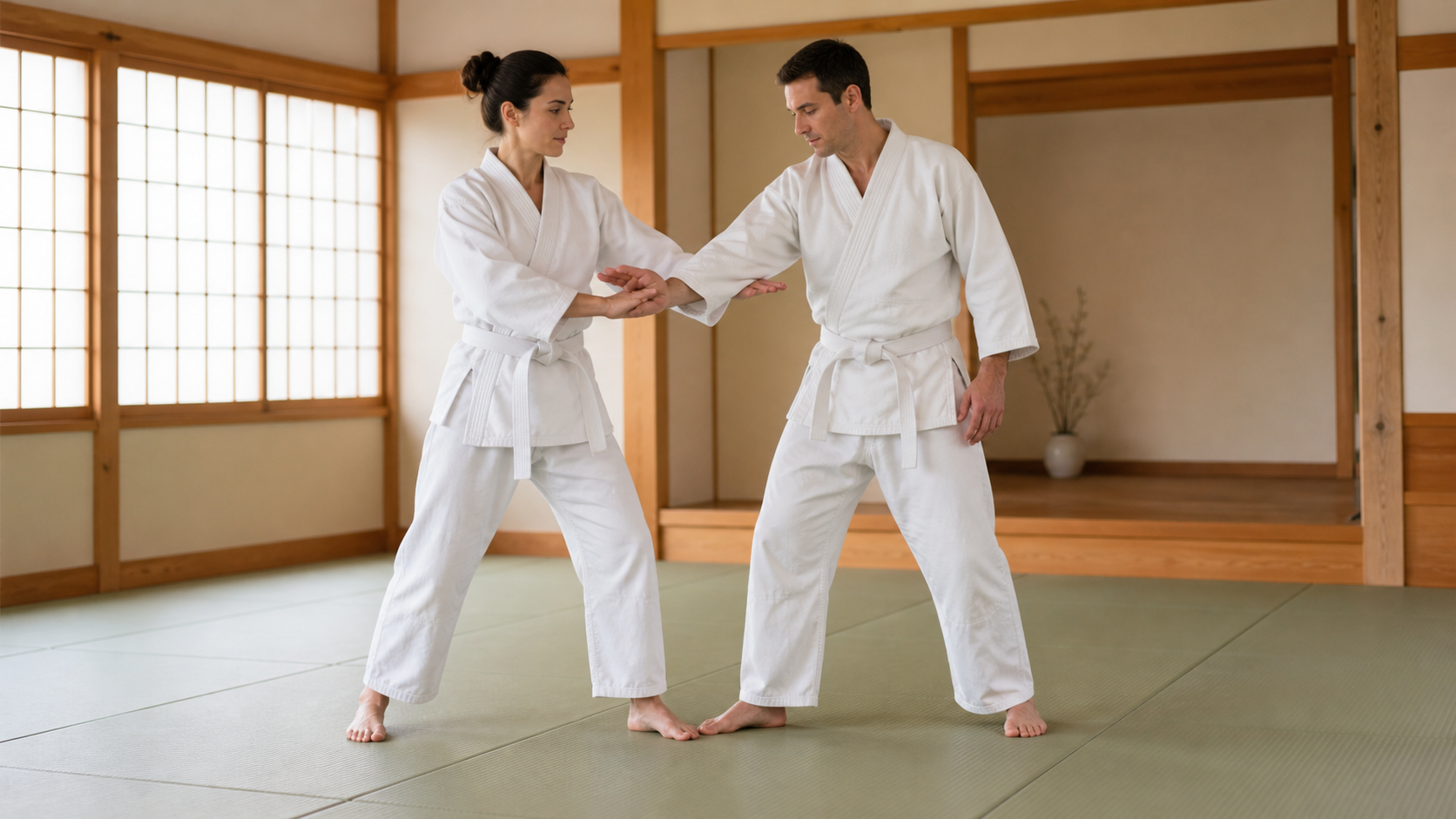
Aikido is normally learned in pairs. One person, the uke, offers a prescribed attack or grip; the other, the tori or nage, receives it and applies a technique. The partners then change roles. This allows both people to learn how a technique feels, how to fall or roll safely, and how to keep the training cooperative.
Foundational practice includes tai sabaki (body movement), ukemi (safe falling and rolling), pins, joint controls, and throws. Many dojo also practise jo (staff) and bokken (wooden sword) exercises, which can help students study distance, posture, and movement. Exact forms and emphasis vary among organizations and instructors.
Principles in motion
- Awareness: noticing distance, direction, and a partner’s movement.
- Balance: keeping one’s own center while guiding the other person’s balance.
- Timing: moving early enough to avoid a collision, but without rushing.
- Control: finishing a technique in a way that protects both partners.
- Ukemi: learning to receive a technique safely and confidently.
Dojo etiquette
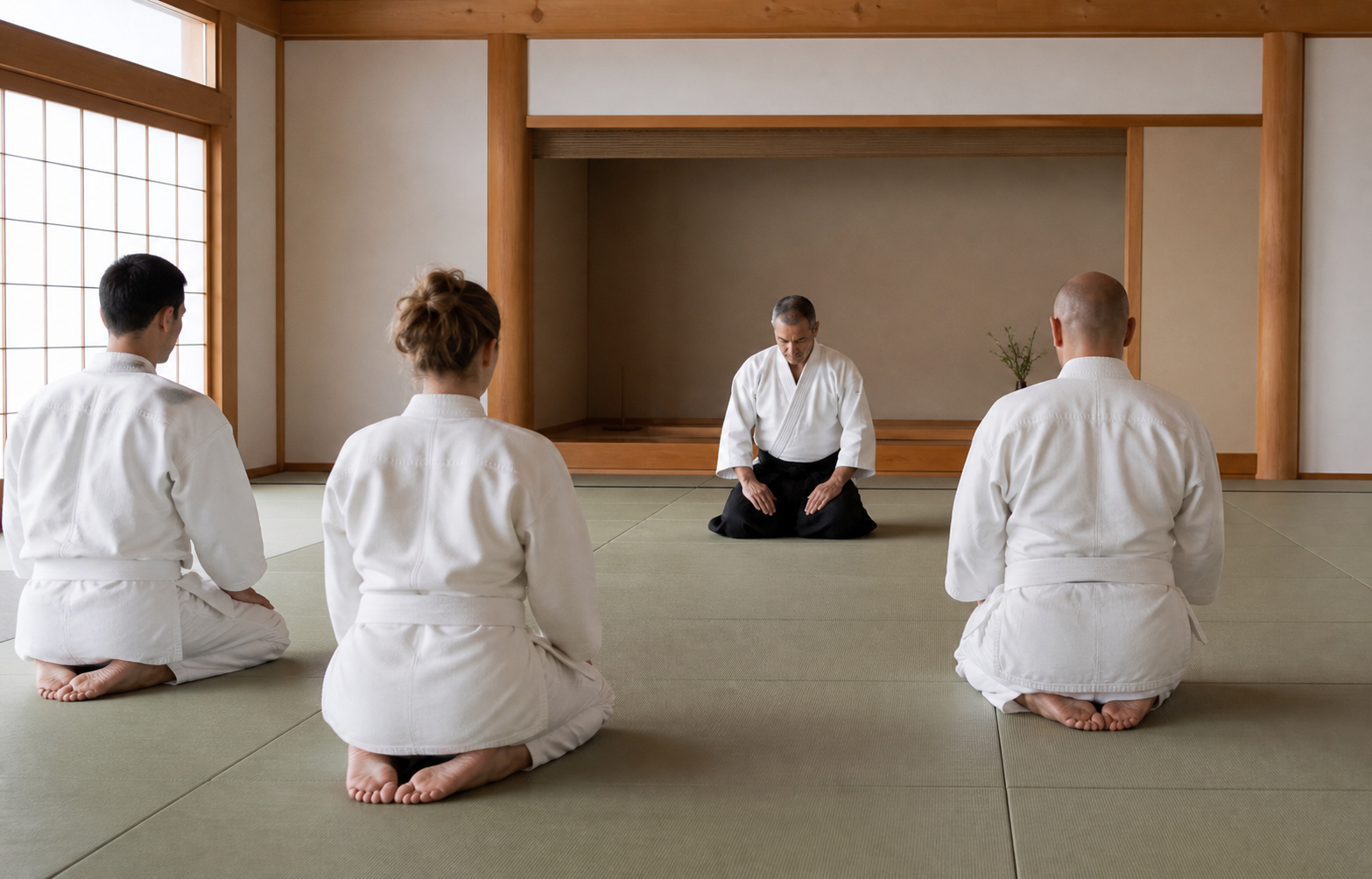
Training begins and ends with a bow. Students usually wear a white keikogi; advanced practitioners in some traditions also wear a black hakama. Aikido etiquette is practical as well as ceremonial: it helps a busy training space stay safe, focused, and welcoming. Listening to instructions, training at an appropriate speed, and thanking one’s partner are all part of the lesson.
From Tokyo to the world
After the Second World War, Ueshiba’s son Kisshomaru Ueshiba helped establish a regular teaching schedule at Aikido Hombu Dojo in Tokyo and supported the art’s international growth. The Aikikai Foundation was recognized in 1948, and public demonstrations and overseas teaching helped Aikido reach new communities. Today it is practised in many countries, with different schools sharing common roots while teaching their own details and styles.
Aikido and other Japanese martial arts
Aikido is often discussed alongside Judo, Karate, and jujutsu. Each has its own history, rules, and technical focus. Judo developed a prominent sport format; Karate is known for striking, forms, and partner work; Aikido usually focuses on paired practice without competition. Comparing them is a useful way to see how Japanese budo can take many different forms.
Glossary
- Dojo: a place for training.
- Uke: the partner who receives a technique.
- Tori / nage: the partner applying a technique.
- Ukemi: safe falling, rolling, and receiving.
- Hakama: traditional divided garment worn in many aikido schools.
- Hombu Dojo: the Aikikai World Headquarters dojo in Shinjuku, Tokyo.
Learn more
For a detailed official history and current information, visit the Aikikai Foundation’s history of Aikido and its introduction to Aikido.