Martial Arts Figures
Mataemon Tanabe

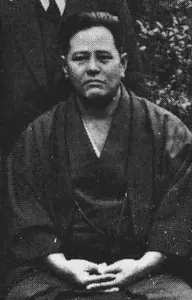
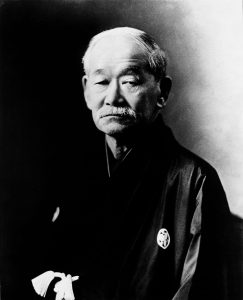
Image: Unknown photographer / Wikimedia Commons · Public domain
Mataemon Tanabe (1869–1946) was a Japanese jujutsu teacher, fourth-generation head of Fusen-ryū Jūjutsu, and later a judo hanshi. He became prominent in the 1890s through contests with practitioners connected to the Kodokan, where his ability to continue a match on the ground challenged opponents better known for throwing. Tanabe taught in Okayama, Tokyo, Hiroshima, and Kobe and worked within police, prison, and Dai Nippon Butokukai settings. His career is frequently used to claim that Fusen-ryū supplied all of Judo’s groundwork. The evidence supports a narrower conclusion: Tanabe was a highly successful newaza specialist whose matches became part of early judo history, while Fusen-ryū itself retained a broader jujutsu curriculum and Kodokan groundwork had more than one source.
Overview
| Japanese name | 田邊 又右衛門 (modern form: 田辺 又右衛門) |
|---|---|
| Born | 1869, Okayama Prefecture, Japan |
| Died | 1946 |
| Occupation | Jujutsu instructor and judoka |
| Tradition | Fusen-ryū Jūjutsu |
| Recognition | Judo hanshi (1927) |
| Known for | Newaza and early contests with Kodokan practitioners |
Fusen-ryū lineage
Tanabe was born in Okayama Prefecture into a family that transmitted Fusen-ryū. Historical martial-arts research identifies him as the tradition’s fourth-generation head and records that he received menkyo kaiden, a licence of complete transmission, in 1886.
Fusen-ryū was not simply a ground-fighting system. Like other classical Jujutsu traditions, its curriculum included standing and ground methods, controls, and other forms of unarmed practice. Tanabe’s personal competitive specialization should therefore not be used as a complete definition of the school.
Teaching career
Okayama historical references place Tanabe as an instructor at the Shizutani school and in the Kojima and Oku areas. His career later extended beyond the prefecture to appointments connected with the Tokyo Metropolitan Police and the Hiroshima military prison.
He eventually opened the Senshikan dojo in Kobe and served as a teacher and examiner in the Hyogo branch of the Dai Nippon Butokukai. These positions show that his career was not limited to challenge matches: it included sustained teaching within the institutions through which jujutsu and judo were standardized in modern Japan.
Matches with Kodokan practitioners
Tanabe’s reputation grew through matches with early Kodokan practitioners, including Takisaburō Tobari and Hajime Isogai. Later historical studies describe victories achieved after the contest moved from standing exchanges into pins or submissions on the ground.
The exact sequence, rules, and institutional meaning of every reported contest are not equally well documented. It is more accurate to describe a series of encounters within the competitive environment of Meiji-period jujutsu and judo than a single match in which one complete system defeated another.
Newaza strategy
Tanabe was known for newaza, techniques applied after a match entered ground position. His approach used control, time, and leverage to neutralize opponents whose strongest attacks occurred while standing.
Groundwork was already present in older jujutsu and early Kodokan practice. Tanabe’s documented importance lies in demonstrating how decisive specialized ground skill could be under contest rules, not in inventing all pins, chokes, or joint locks later used in judo.
Relationship to Kodokan judo
Tanabe’s successes encouraged attention to ground strategy among judoka, but the common statement that Jigoro Kano simply copied Fusen-ryū after one defeat is not supported by the available evidence. Kodokan judo developed through Kano’s earlier jujutsu training, the work of many instructors, competition, and repeated curriculum revision.
Tanabe later worked inside the wider judo establishment and received the teaching title hanshi in 1927. His career therefore crossed the boundary often drawn between an older jujutsu school and modern judo.
Butokukai and recognition
The Dai Nippon Butokukai created national systems for ranks, teaching titles, demonstrations, and examinations. Tanabe’s work in its Hyogo branch placed him among instructors who translated regional practice into a modern organizational framework.
His recognition as judo hanshi did not erase his Fusen-ryū identity. Instead, it illustrates how senior jujutsu teachers could participate in institutions increasingly organized under the name of judo.
Sources and misconceptions
Much popular writing about Tanabe descends from memoirs, oral accounts, and later histories. The Okayama Prefectural Library’s reference record is valuable because it identifies regional histories and a 1955 article by Eizaburō Nakayama, who knew Tanabe, while also showing where particular claims originated.
Recent republication of a dictated account has renewed interest in Tanabe but uses a polemical frame. A neutral biography compares such testimony with institutional records and scholarship, distinguishing firsthand recollection from later claims that make him the sole origin of modern grappling.
Legacy
Tanabe occupies an important place in the history of Japanese grappling because his matches exposed the tactical consequences of specialized groundwork. He also represents the many local jujutsu teachers whose knowledge entered police, educational, and national martial-arts organizations during the Meiji and Taishō periods.
His legacy is clearest when neither minimized by a Kodokan-only narrative nor enlarged into a direct, single-person origin story for every later form of ground fighting.
Timeline
- 1869 — Born in Okayama Prefecture.
- 1886 — Received Fusen-ryū menkyo kaiden, according to historical research.
- 1890s — Became known through contests with Kodokan practitioners.
- Early twentieth century — Taught in police, prison, regional, and dojo settings.
- 1927 — Received the judo teaching title hanshi.
- 1946 — Died.
Related
Sources
- National Diet Library Reference Collaborative Database, Mataemon Tanabe teaching record.
- Carl De Crée, historical research on Kodokan judo kata and early jujutsu.
- CiNii Books, Jūjutsu no Ikon: Tanabe Mataemon Kōjutsu Hikki.
- Martial Arts Studies, research on Kodokan judo and early British jujutsu.
Image: Portrait of Mataemon Tanabe, published in 1934. Unknown photographer; Wikimedia Commons. Public domain in Japan and the United States.
Last updated: