
Jujutsu
Jujutsu Terminology

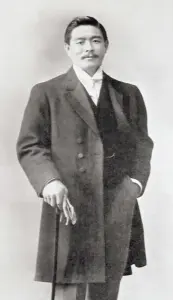
Image: J. W. Robertson Scott publication; photographer unknown / The Foundations of Japan via Project Gutenberg and Wikimedia Commons · Public domain
Japanese terms used in Jujutsu, organised by meaning, practice and historical context.
Start with these 8 terms
New to Jujutsu terminology? Begin with these core words before exploring the full glossary.
See how the terms connect
Read from name and principle through practice, technique and transmission. Select any term to jump to its full entry.
Common confusions
Some terms look interchangeable but carry different historical, linguistic or school-specific implications.
Jūjutsu / Jujutsu / Ju-jitsu / Jiu-jitsu
- Jūjutsu
- A romanisation that marks the long vowel in jū.
- Jujutsu
- A widely used spelling without macrons.
- Ju-jitsu / Jujitsu
- Alternative spellings established through particular historical and organisational usage.
- Jiu-jitsu
- A spelling widely associated today with Brazilian Jiu-Jitsu and related traditions.
RememberSpelling alone does not prove a school’s lineage, age or technical content.
Tori vs Uke
Performs the designated technique.
Receives the designated technique.
These are practice roles, not permanent ranks or identities. The roles may alternate during training.
Ryū vs Ryūha vs Koryū
- Ryū
- A school, tradition or stream.
- Ryūha
- A lineage, branch or school tradition.
- Koryū
- An old or classical tradition; precise use depends on historical context and scholarly criteria.
Do not assume that every organisation using ryū is historically classified as koryū.
Menkyo vs Menkyo kaiden
- Menkyo
- A licence or permission within a transmission system.
- Menkyo kaiden
- A term commonly understood as a licence of complete transmission, although its requirements and significance vary by school.
ImportantNeither term should automatically be converted into a modern kyū or dan grade.
Full glossary
Search by romanised spelling, Japanese writing or English meaning.
Romanised spelling, Japanese writing and English meanings are searchable. Macrons are optional.
26 terms
| Term | Japanese | Simple meaning | Context / note |
|---|---|---|---|
Jūじゅう Name & principle | 柔 | Adaptable, flexible or yielding. | In martial usage, jū points to adapting force, position, timing and method rather than relying only on direct strength. Note It does not require passivity, and no single English word captures every historical use. |
Jutsuじゅつ Name & principle | 術 | An art, method, technical practice or system. | Jutsu can name a method or organised body of technical practice. Its scope is often broader than one individual technique. Note Usage varies by compound and source; jutsu and waza should not be treated as perfect synonyms. TokyoWaltz: Jutsu and Dō in Japanese Martial Arts |
Jūjutsuじゅうじゅつ Name & principle | 柔術 | A broad family of Japanese fighting and control traditions. | The name covers historically diverse schools and modern organisations rather than one uniform technical system. Note A shared label does not establish identical techniques, curricula or lineage. TokyoWaltz: Jujutsu |
Wazaわざ Name & principle | 技 | A technique or skill. | In martial arts terminology, waza commonly refers to an individual technique or technical skill. It appears in compounds such as nage-waza, kansetsu-waza and atemi-waza. Note The boundary between waza and broader uses of jutsu depends on context. |
Ryūりゅう Lineage | 流 | A school, tradition or stream. | Ryū is used in the names of many Japanese martial traditions and may indicate a recognised stream of teaching or practice. Note The word alone does not prove the date, continuity or status of an organisation. |
Ryūhaりゅうは Lineage | 流派 | A school, lineage or branch of a martial tradition. | Ryūha can emphasise a lineage, school tradition or branch through which teachings are organised and transmitted. Note Its precise scope depends on the school and the source using it. TokyoWaltz: Takenouchi-ryū |
Koryūこりゅう Lineage | 古流 | An old or classical tradition. | Koryū is a modern umbrella term used for classical Japanese traditions and can include arts beyond Jujutsu. Note Precise classification depends on historical context and scholarly criteria; not every organisation using ryū is koryū. TokyoWaltz: Kitō-ryū Jūjutsu |
Dōjōどうじょう Practice | 道場 | A place of practice. | A dōjō is the setting in which training and instruction take place. The term can refer to a dedicated hall or another recognised practice space. Note Customs, layout and etiquette may differ between schools. TokyoWaltz: Dōjō Etiquette |
Keikoけいこ Practice | 稽古 | Practice undertaken as study and refinement. | Keiko describes training as an ongoing process of studying, repeating and refining what a tradition teaches. Note The format and purpose of keiko are defined by the school or organisation. TokyoWaltz: Dōjō Etiquette |
Kataかた Practice | 形/型 | A prescribed form used to transmit principles and techniques. | Kata can preserve movement, timing, tactical assumptions, roles and etiquette through structured practice. Note Content and performance conventions vary substantially between traditions. |
Reiれい Practice | 礼 | Courtesy, etiquette or a bow. | Rei can refer to an expression of respect and, in practice, to a bow performed at particular points in training. Note Procedure and meaning should be read within the etiquette of the relevant school. TokyoWaltz: Dōjō Etiquette |
Toriとり Practice | 取り | The person performing the designated technique. | In paired practice, tori commonly identifies the person assigned to complete the technique being studied. Note This is a practice role, not a permanent rank or identity; terminology can vary by school. |
Ukeうけ Practice | 受け | The person receiving the designated technique. | In paired practice, uke commonly identifies the person who receives or enables the assigned action so it can be studied. Note This is a practice role, not a permanent rank or identity; the roles may alternate. |
Ukemiうけみ Practice | 受身/受け身 | Methods of receiving a technique or fall safely. | Ukemi develops ways to receive force, maintain awareness and reduce injury risk when balance is broken or a fall occurs. Note Methods and training progressions differ between schools; safe instruction and suitable surfaces matter. |
Nage-wazaなげわざ Technique | 投技 | Throwing techniques. | Nage-waza is a broad label for techniques that throw or project a partner by disrupting balance and controlling movement. Note Schools may classify throws differently, and later sport categories should not be projected automatically onto older curricula. TokyoWaltz: Judo |
Kansetsu-wazaかんせつわざ Technique | 関節技 | Joint techniques. | Kansetsu-waza applies controlled leverage or pressure to a joint for restraint, control or submission, depending on the system. Note Targets, safety rules and classifications vary between traditions and competition systems. TokyoWaltz: Judo, Jujutsu and Brazilian Jiu-Jitsu |
Shime-wazaしめわざ Technique | 絞技 | Constriction or choking techniques. | Shime-waza is used for techniques that constrict the neck area to control or produce submission within a defined practice system. Note Terminology, permitted methods and safety protocols differ; these techniques require qualified supervision. TokyoWaltz: Judo, Jujutsu and Brazilian Jiu-Jitsu |
Atemi-wazaあてみわざ Technique | 当身技 | Striking techniques directed at vulnerable areas. | Atemi-waza covers strikes used for impact, distraction, breaking posture or creating an opening, depending on the tradition. Note Training method and technical purpose are strongly school-specific. |
Osaeおさえ Technique | 抑え | A hold, restraint or act of controlling. | Osae is a general expression for holding down, checking or controlling a person or movement. Note Its technical scope depends on the surrounding compound and the school using it. |
Osaekomiおさえこみ Technique | 抑込/抑え込み | Holding or pinning control. | Osaekomi refers to maintaining a controlling hold. In modern arts it may also be defined by formal rules and time criteria. Note Do not assume a sport-specific definition applies unchanged to every Jujutsu school. |
Toriteとりて Technique | 捕手/取手 | Seizing, arresting or restraining methods. | Torite appears in historical martial contexts for methods of taking hold of, controlling or apprehending a person. Note Writing, scope and technical content vary by period and tradition. |
Kogusokuこぐそく Technique | 小具足 | A historical term associated with light armour and close combat. | Kogusoku can describe equipment or methods for grappling and weapon use at close range in particular historical traditions. Note Its meaning should be checked against the period, document and ryūha rather than treated as a universal modern category. TokyoWaltz: Takenouchi-ryū |
Denshoでんしょ Transmission | 伝書 | Documents used to transmit a school’s teachings. | Densho may preserve teachings, catalogues, genealogies, diagrams, explanations or licences within a tradition. Note A document’s title, contents and authority must be interpreted within its school and historical setting. TokyoWaltz: Tenjin Shin’yō-ryū Jūjutsu |
Mokurokuもくろく Transmission | 目録 | A catalogue, list or named stage of transmission. | A mokuroku can catalogue teachings or designate a level represented by such a document within a school’s transmission system. Note Contents and position in a curriculum vary by ryūha. |
Menkyoめんきょ Transmission | 免許 | A licence or permission within a transmission system. | Menkyo identifies a licence granted under the conventions of a particular tradition. It can record permission, attainment or teaching authority. Note Requirements and significance vary by school; it should not be converted automatically into a modern kyū or dan grade. TokyoWaltz: Kitō-ryū Jūjutsu |
Menkyo kaidenめんきょかいでん Transmission | 免許皆伝 | A licence of complete transmission in systems that use the term. | Menkyo kaiden is commonly understood as recognition of complete transmission of a defined curriculum or body of teaching. Note Its requirements and significance vary by school, and it is not automatically equivalent to a modern belt grade. TokyoWaltz: Takenouchi-ryū |
No terms match this search and category. Clear the search or choose another category.
One vocabulary, many traditions
Historical context
Image: J. W. Robertson Scott publication; photographer unknown / The Foundations of Japan via Project Gutenberg and Wikimedia Commons · Public domain
Jujutsu terminology developed across many schools, periods and training environments.
A shared word does not always indicate an identical technique, curriculum or transmission structure. Historical schools may organise methods by circumstance, equipment or teaching sequence rather than by later sport categories.
Classical traditions including Takenouchi-ryū, Kitō-ryū and Tenjin Shin’yō-ryū provide useful examples of why terms must be read within a particular lineage.
How the vocabulary appears in related arts
Shared words can travel into distinct technical and institutional systems.
Judo
Shares many Japanese technical terms, although classifications and formal definitions follow Judo-specific systems.
Aikido
Uses overlapping Japanese vocabulary, but role names and technical interpretation should be read within Aikido practice.
Brazilian Jiu-Jitsu
Uses terminology shaped by its own history and international development. Japanese-derived terms may coexist with Portuguese and English vocabulary.
How to use Jujutsu terms accurately
A four-step check for definitions, translations and rank claims.
- Step 1Identify the school
Identify the school or organisation using the term.
- Step 2Place the source
Check whether the source is historical, modern, Japanese or international.
- Step 3Use first-party context
Read the school’s own curriculum, documents or official explanations.
- Step 4Avoid false conversion
Avoid converting terms directly between unrelated ranking or transmission systems.
ExampleA technique in a Takenouchi-ryū document should not automatically be assigned the later Kodokan classification merely because an English translation looks similar.
Working ruleContext matters more than spelling alone.
Related TokyoWaltz entries
Continue from vocabulary into histories, comparisons and practice context.
Sources
Institutional, scholarly and school-specific starting points for terminology in context.
- Takenouchi-ryū, Introduction.
- Takenouchi-ryū Sōdenke, English Introduction.
- Japan Kobudo Promotion Society, Member Schools.
- International Journal of Sport and Health Science, The Principle of Jū.
- Research Journal of Budo, Historical Changes from Jujutsu to Kodokan Judo.
- Nippon Budokan, Introduction of Budō Disciplines.
Last updated:



_in_an_agricultural_school.jpg)