
Tsukidashi
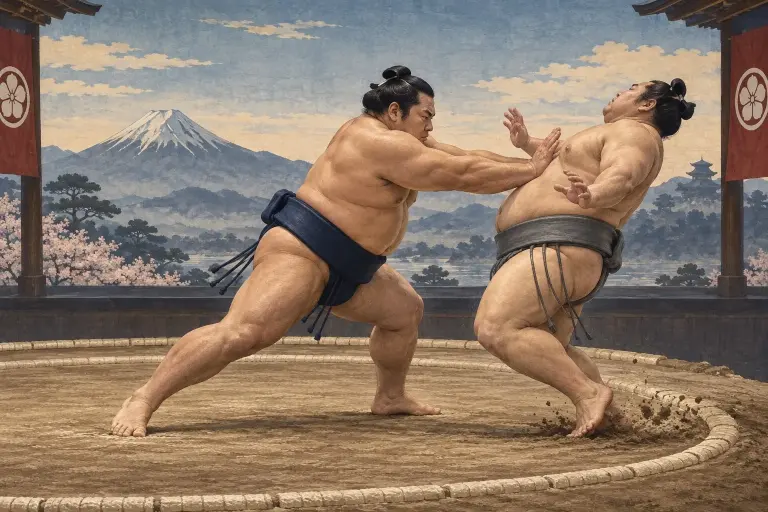
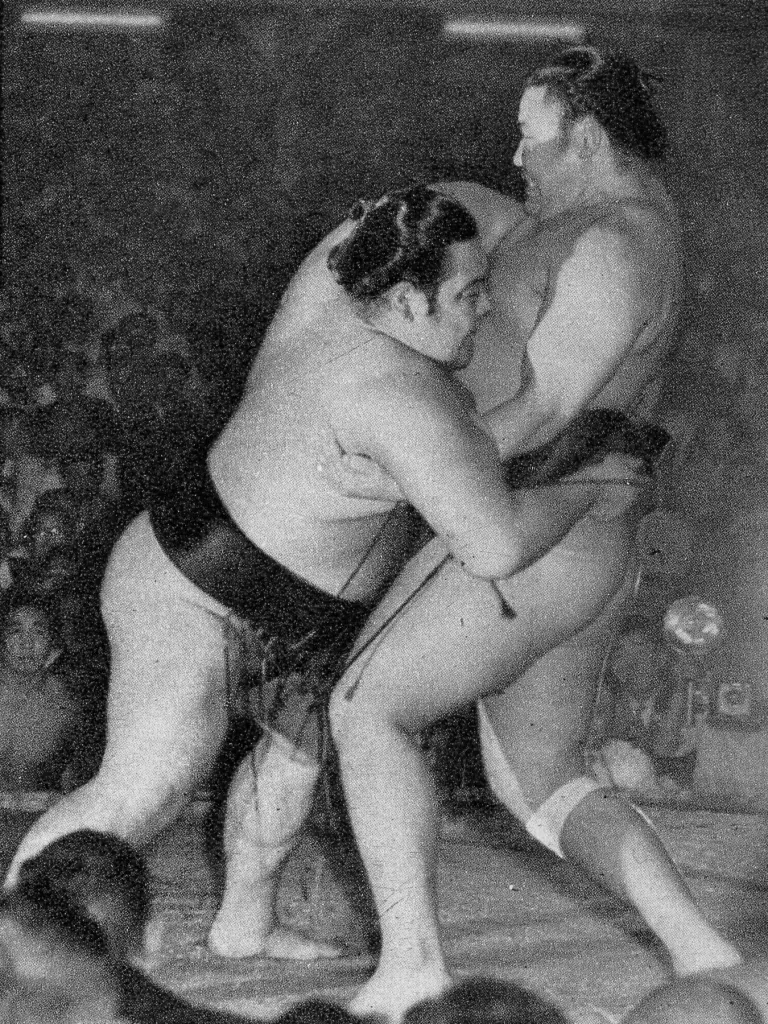
Tsukidashi is an official sumo kimarite in which repeated strong palm thrusts to the chest or shoulders drive the opponent out.
Tsukidashi is an official sumo kimarite in which repeated strong palm thrusts to the chest or shoulders drive the opponent out.
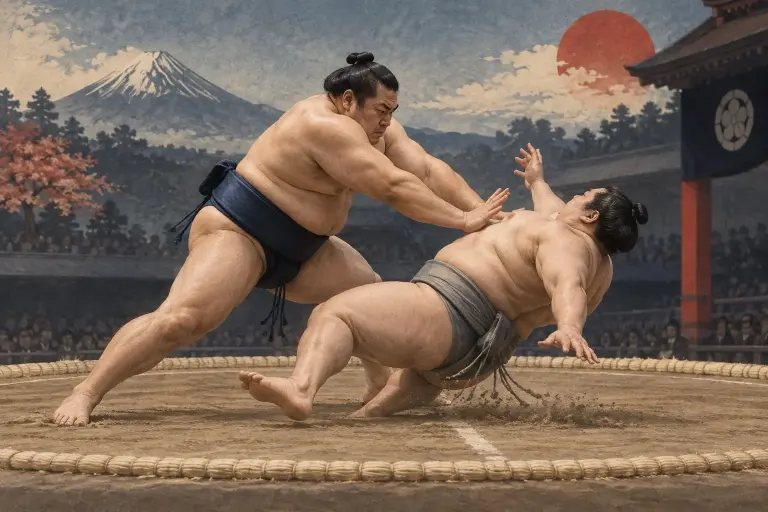
Tsukitaoshi is an official sumo kimarite in which strong palm thrusts knock the opponent down, whether the fall occurs inside or outside the ring.
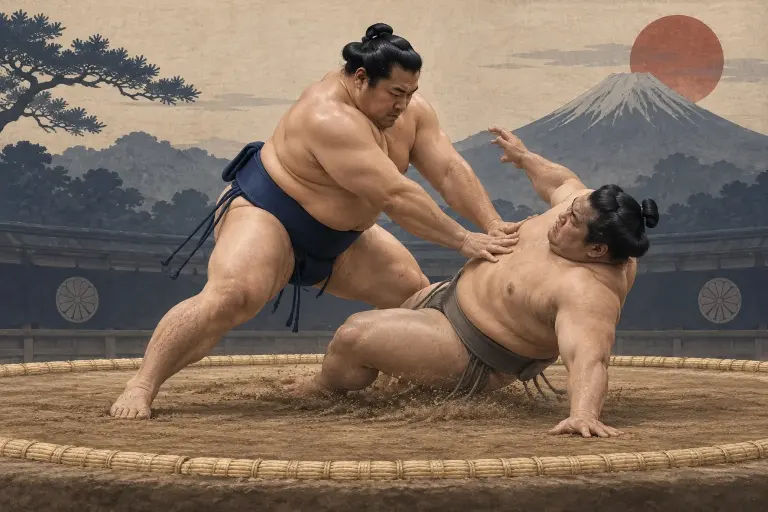
Oshitaoshi is an official sumo kimarite in which one or both hands, opened in a hazu shape, push the opponent down.
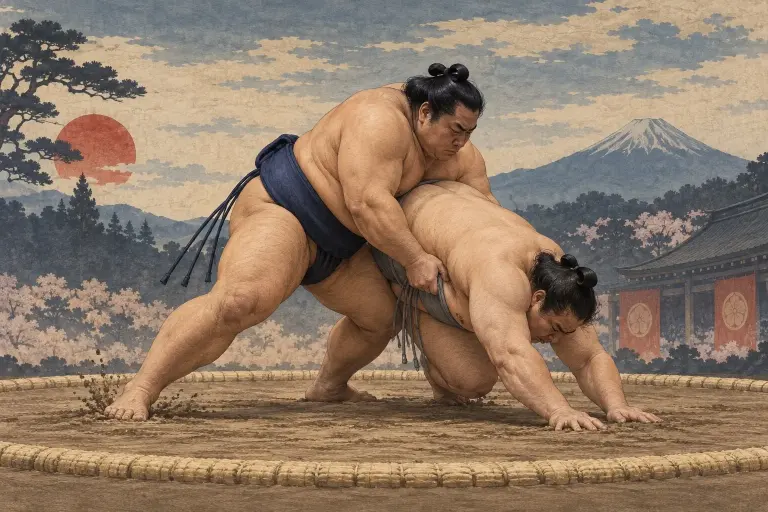
Yoritaoshi is an official sumo kimarite in which close body pressure advances the opponent and then forces the opponent down.
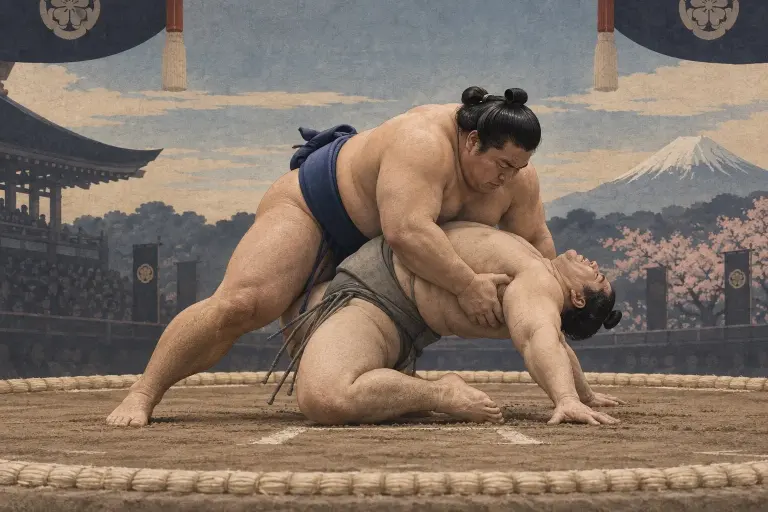
Abisetaoshi is an official sumo kimarite in which the attacker places full body weight over an opponent who is arched backward or bent low and crushes the opponent down.
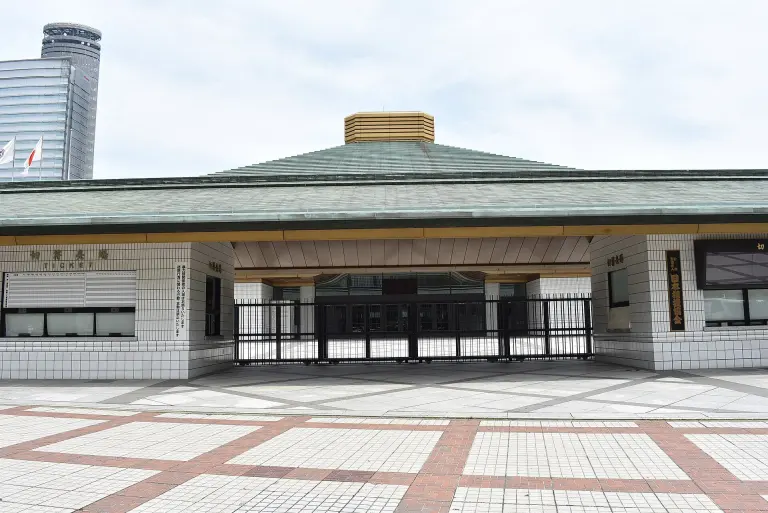
Tokyo’s principal Grand Sumo arena, institutional headquarters, museum setting, and landmark in the Ryōgoku neighbourhood.
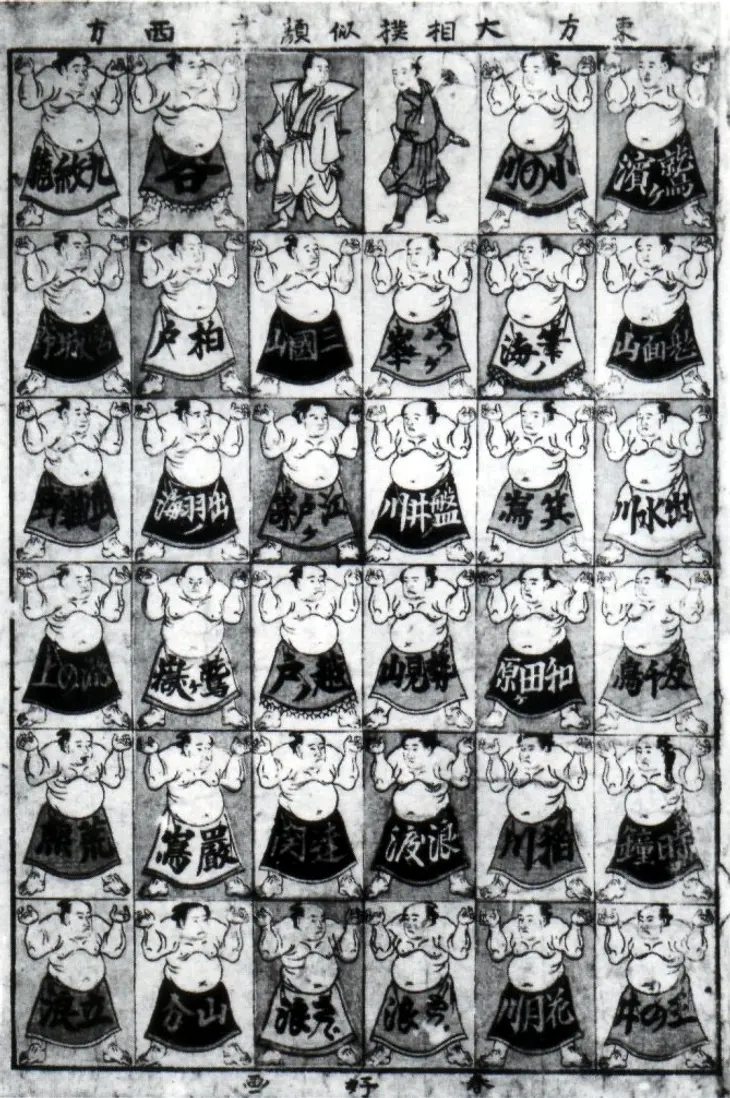
A clear guide to professional sumo’s six divisions and the named ranks within the top makuuchi division.
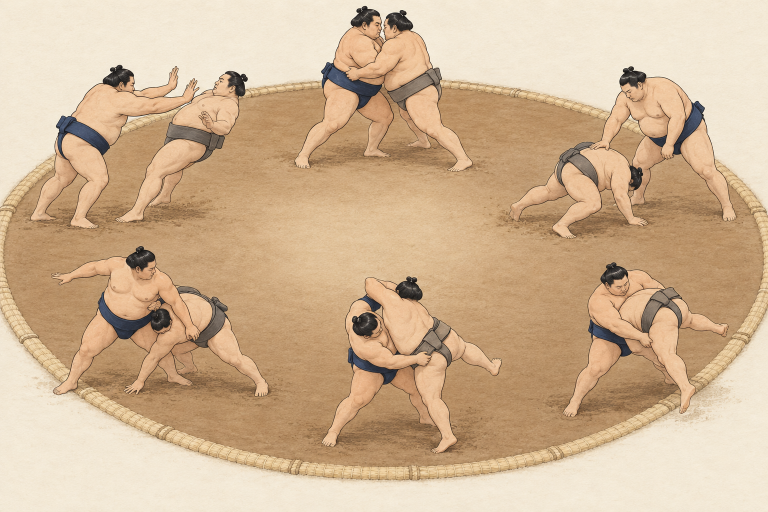
A category-by-category index to the Japan Sumo Association’s 82 kimarite, with five non-technique results identified separately.
The officially recorded winning techniques and non-technique outcomes used to describe how professional sumo bouts are decided.
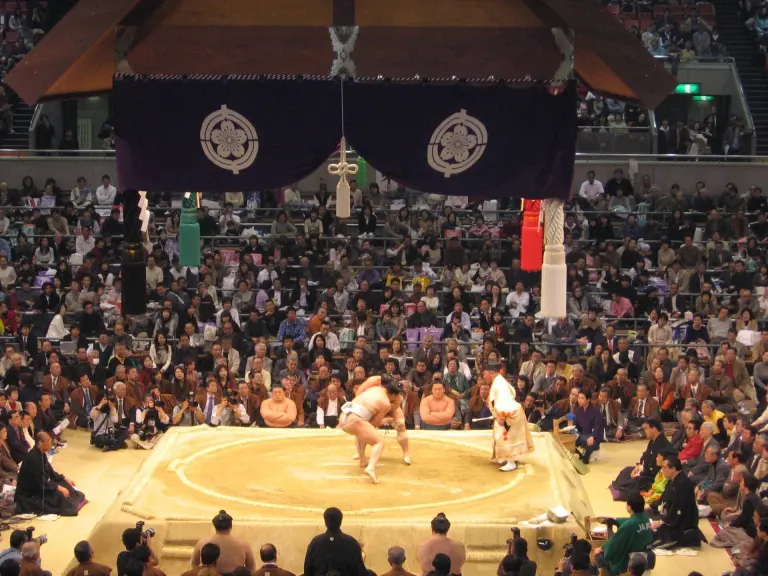
A dohyō is sumo’s prepared contest area: a marked ring, built surface, ritual setting, and decisive boundary whose form varies by context.