
Ochiai · Textile craft
Build a pattern, one colour at a time.
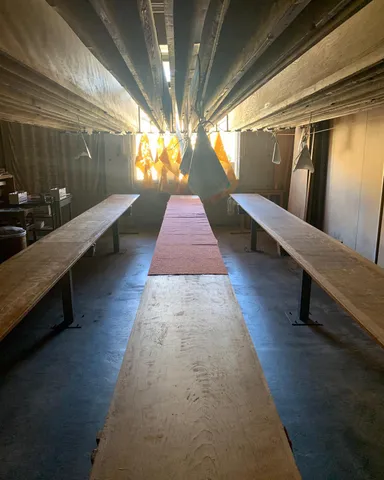
In Shinjuku’s Ochiai neighbourhood, a working dyeing studio opens a window onto Edo sarasa. A reserved stencil-dyeing session lets you see how separate layers gradually become a detailed textile pattern.
- Regular experience
- Sarasa stencil-dyed table runner
- Workshop price
- ¥4,840 including materials and tax
- Duration
- About 2–2½ hours
- Booking
- Reserve by the previous day
- Bring
- An apron
- Shop hours
- Tuesday–Sunday, 11:00–17:00
See a design take shape
The regular table-runner session uses fourteen stencils and seven dye colours, with guidance from a craftsperson. It is a chance to notice the alignment and repetition behind a patterned cloth.
Reserve the right session
Regular sessions are listed for Saturday afternoons and Sunday mornings, with some Wednesdays. Check the booking calendar for your date. Shop hours and workshop start times differ; confirm language support before booking if you need instruction in English.
A studio with a continuing craft
The organisation carries forward a dyeing business founded in 1920 and has worked to preserve its historical stencils. Other experiences, such as bag dyeing and seasonal designs, have separate schedules and prices. Children below fourth grade need an accompanying guardian for the regular session.
Location & access
Some no Sato Ochiai
2-3-6 Kami-Ochiai, Shinjuku-ku, Tokyo 161-0034
Neighbourhood
Ochiai / Nakai
About four minutes on foot from Nakai Station on the Seibu Shinjuku and Toei Oedo lines. Follow the studio address rather than assuming the experience is near Shinjuku Station.
Understand the craft before your visit
Read Japanese Textile Arts to place stencil dyeing alongside weaving, resist dyeing and other approaches. During the session, look for how each colour layer contributes to the pattern.
Continue to Monozukuri for a broader discussion of materials, design and making, or compare the process with the Sokichi cut-glass experience.
Keep exploring
Sources & planning links
- Official experiences — current prices and reservations
- Official workshop and access information
- Studio press release — heritage and stencil preservation
Visitor information reviewed on 12 October 2026. This guide uses published sources. Confirm current hours, prices and availability before visiting.